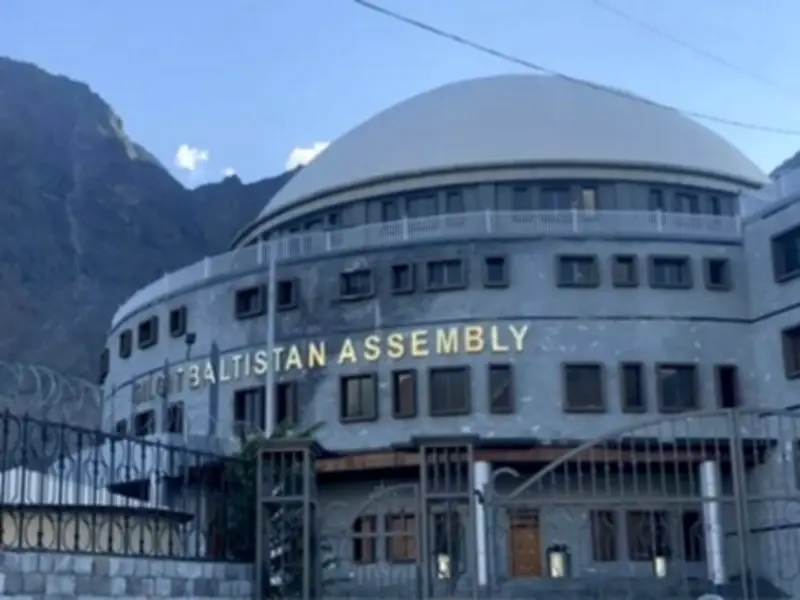
The Pakistan Peoples Party (PPP) and Pakistan Muslim League-Nawaz (PML-N) have reportedly finalized a power-sharing formula to form a government in Gilgit-Baltistan. However, PML-N's decision to occupy the opposition benches while pledging support to the government has drawn sharp criticism from political analysts, who describe the arrangement as a bizarre proposition that mocks parliamentary norms.
Analysts Call Arrangement a Mockery of Parliamentary System
Former caretaker Punjab Chief Minister Hasan Askari Rizvi stated that having a leader of the opposition who belongs to the ruling coalition effectively makes a mockery of the parliamentary system. "This is a personalized rule, though there is no authority that can check such distortions. It is interesting that the three major players in G-B are allies in the central government in Islamabad. That says everything about this current hybrid system," Rizvi said.
Senior journalist and political commentator Mazhar Hussain noted that when the ruling alliance itself does not hide the hybrid nature of the system, no political development, no matter how unusual, should come as a surprise. "Democracy only exists in name," he remarked, recalling the 1992 political development when Muzaffar Hussain Shah became Sindh chief minister despite the PPP holding the majority, followed by the MQM. "He interestingly was from neither of two," Hussain added, arguing that discussing democratic norms and ethics has become largely pointless. "We have political parties, elections and parliament but no democracy."

IPP Gains Seats Despite No Electoral Victory
Commenting on the Istehkam-e-Pakistan Party (IPP), Rizvi noted that despite failing to win a single seat in the Gilgit-Baltistan elections, the party effectively received five seats after independent candidates joined its ranks. He cautioned that this gift of seats should not be overinterpreted, as the party is unlikely to receive similar political gains elsewhere in the country. He described the phenomenon of independents joining a relatively unknown party while both the ruling party and its principal ally were fully active in the electoral arena as extremely rare and virtually unprecedented in Pakistani politics.
Mazhar Hussain expressed belief that the IPP had been awarded these seats by the powers that be as a counterweight to the PPP. "To ensure that PPP functions as per their whims, for in-case-otherwise situation, an alliance with remaining parties to bring in a new government, is a threat that they have left dangling on PPP's head," he said.
PILDAT President Highlights Democratic Concerns
Political scientist and President of the Pakistan Institute of Legislative Development and Transparency (PILDAT), Ahmad Bilal Mehboob, said PML-N's decision to occupy the opposition benches effectively deprives genuine opposition members of their voice, as its alliance with the government also makes it a partner in the incoming administration. He observed that such situations can arise in democracies, although they remain politically contentious.
Regarding the IPP, Mehboob noted that so-called "king's parties" have historically benefited from such political advantages, adding that there was nothing particularly surprising about the development in countries like Pakistan. He said the political windfall would enhance the IPP's stature across the country and demonstrated that the party continued to enjoy relevance within influential power circles.