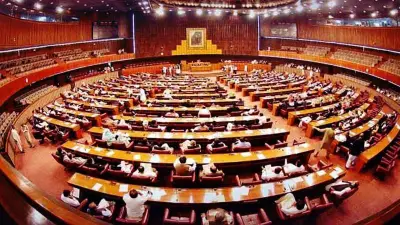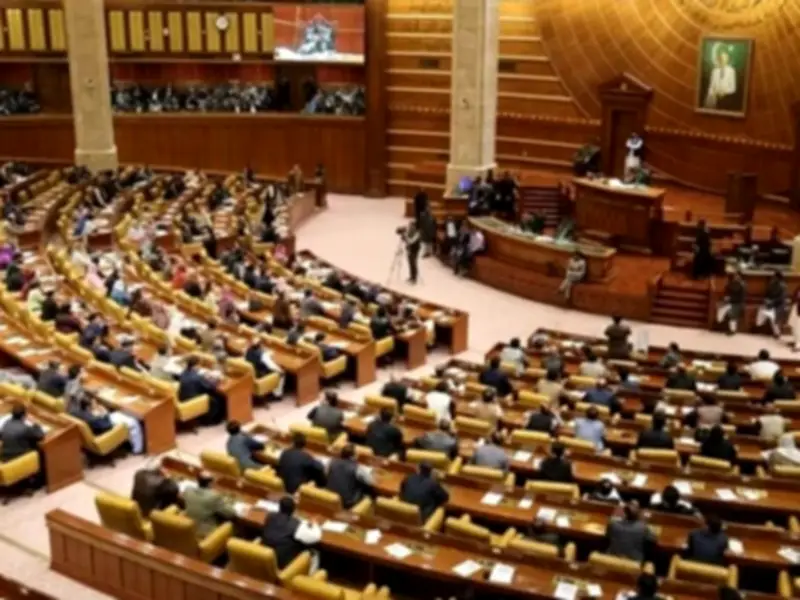
The Punjab Assembly on Thursday witnessed heated exchanges as Opposition Leader Moin Riaz Qureshi strongly criticised the provincial government's Rs5.903 trillion budget for 2026-27, while treasury lawmakers defended the financial plan, describing it as a roadmap for development and public welfare.
Opposition's Criticism
Opening the general debate on the budget, Qureshi accused the government of prioritising political branding over public welfare and alleged that substantial funds had been allocated to new schemes while several previously announced projects remained incomplete. He questioned the government's development priorities, claiming that despite large development allocations, citizens continued to face inflation, unemployment, inadequate healthcare, shortcomings in education and law-and-order challenges.
The opposition leader alleged that several major projects had received budgetary allocations but had witnessed limited utilisation of funds. He also criticised the naming of public projects after political personalities and called for development schemes to be depoliticised. Qureshi proposed the establishment of an online parliamentary budget monitoring system to enable lawmakers to track allocations, expenditures and project implementation in real time.

During his speech, he also raised concerns about the outsourcing of public schools, agricultural policies, flood management, sanitation services and rural infrastructure development. He alleged that farmers had been adversely affected by government policies and claimed that promised development projects in several sectors had not materialised.
The opposition leader further reiterated his party's stance on the February 8 general elections and expressed concerns regarding the incarceration of PTI leaders, including party founder Imran Khan. PTI lawmakers accompanying him chanted slogans in support of their party leadership during the session.
Treasury's Response
The proceedings turned tense when Punjab Finance Minister Mujtaba Shuja-ur-Rehman objected that the opposition leader was focusing on political matters rather than the budget. The minister announced a boycott of the proceedings by treasury members, saying the debate should remain centred on budgetary issues.
In response, Qureshi accused the government of avoiding criticism and lacking tolerance for opposing viewpoints. Deputy Speaker Zaheer Iqbal Channar criticised the boycott, describing it as inconsistent with democratic norms, and urged treasury members to return to the House. He later tasked Pakistan Peoples Party parliamentary leader Ali Haider Gilani and other lawmakers with persuading treasury members to rejoin the session.
Following negotiations, treasury lawmakers returned to the assembly and the budget debate resumed. Responding to the opposition's criticism, Communications and Works Minister Sohaib Ahmad Bharth defended the government's performance and rejected allegations that development funds had remained unused. He said the government had undertaken extensive infrastructure projects across Punjab and maintained that spending details were publicly available.
Treasury lawmakers praised the budget for increasing allocations to healthcare, education, local government and social welfare programmes. They highlighted initiatives including free medicines, farmer support schemes, electric buses, the Apni Chhat Apna Ghar programme, Himmat Card and Minority Card schemes. Government members also claimed improvements in law and order through the Crime Control Department (CCD) and credited the leadership of Nawaz Sharif, Prime Minister Shehbaz Sharif and Chief Minister Maryam Nawaz for development initiatives in the province.
Other Remarks
Meanwhile, PPP lawmaker Mumtaz Chang called for the creation of a Seraiki province and expressed concern over what he described as the continued underdevelopment of southern Punjab. Opposition members maintained their criticism of the budget, questioning development priorities and alleging insufficient attention to the needs of farmers, the education sector and healthcare services.
The session remained marked by slogan chanting, interruptions and sharp exchanges between treasury and opposition lawmakers, reflecting deep political divisions over the provincial budget proposals.