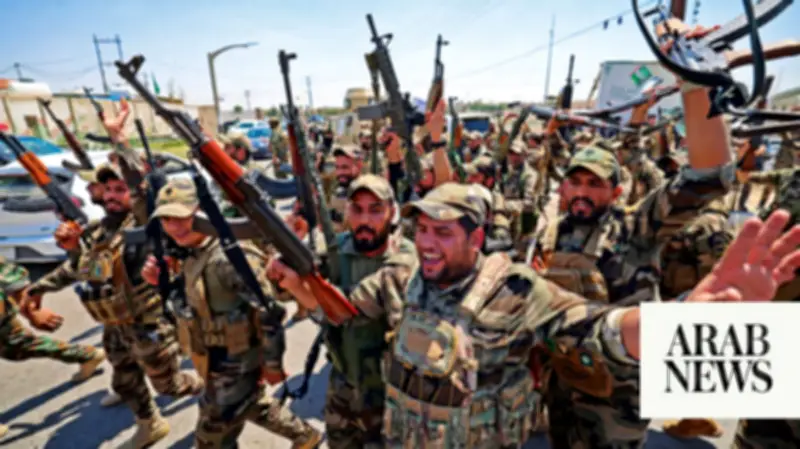
Iraqi officials often declare that the era of militias is coming to an end. Recently, several Iran-aligned factions, including Asaib Ahl Al-Haq and Kataib Al-Imam, along with cleric Muqtada Al-Sadr's Saraya Salam, announced they would place their weapons under state control. However, many Iraqis question whether these groups, which have built extensive arsenals and economic networks, will truly surrender power.
Prime Minister Al-Zaidi's Agenda
Since taking office in May 2026, Prime Minister Ali Al-Zaidi has prioritized bringing weapons under state control. This move aims to satisfy both domestic demands and Washington's long-standing pressure to rein in militias. US special envoy Tom Barrack praised the announcement as a significant step forward. For Al-Zaidi, progress on this issue is essential for maintaining international relations and proving Iraq's sovereignty.
Challenges and Skepticism
Hayder Al-Shakeri, a research fellow at Chatham House, notes that while US pressure makes the militia issue unavoidable, there is little appetite for direct confrontation that could destabilize the new government. The Popular Mobilization Forces (PMF), formed in 2014 after a fatwa by Ayatollah Ali Al-Sistani, have evolved into a powerful entity with over 200,000 members and a substantial budget. Critics view the PMF as a state within a state, controlling territory and involved in border commerce and public contracts.

International partners seek assurances that Iraq will not be used as a launchpad for attacks. Amid the US-Israel war with Iran, Washington has struck militia sites in Iraq and threatened sanctions. These actions highlight the risks posed by armed groups operating outside Baghdad's control.
Public Opinion and Divisions
Ordinary Iraqis are divided. Many want weapons under state control but are skeptical about genuine reform. They fear that a rushed process could trigger violence or merely repackage militia power within new state structures. Among armed groups, some see institutionalization as a way to secure salaries and status, while hard-line factions view disarmament as a threat to their identity and regional role.
Proposed Structural Overhaul
Baghdad is debating a structural overhaul that could include a Federal Security Ministry to house the PMF, Federal Police, Rapid Response Force, and Border Guards. However, no draft law has been published, and skeptics worry that this might result in rebranded units without genuine disarmament. Lahib Higel of the International Crisis Group notes that while disarmament is welcome, rank-and-file members want assurances of future employment within security forces.
Obstacles and Future Prospects
So far, only Saraya Al-Salam has dissolved its PMF brigades and handed over weapons. Other factions have pledged to follow but face obstacles, as some hard-line groups refuse to disarm until all US troops leave Iraq. For those invested in electoral politics, integration is a way to secure political continuation, while committed resistance axis members are unlikely to surrender weapons soon.
Prime Minister Al-Zaidi benefits from a rare alignment of domestic and external pressures but leads a coalition tied to the very factions he must restrain. The crucial next step is whether Asaib Ahl Al-Haq and Kataib Al-Imam Ali will follow through. The US presence in Iraq, scheduled to end by September 2026 under an agreed drawdown, adds uncertainty. On Wednesday, government spokesperson Haider Al-Aboudi set the end of September as a disarmament deadline, increasing pressure.
Al-Shakeri warns that if Al-Zaidi pushes too hard, he risks confrontation with armed actors and their political allies. If he accepts partial integration without weapons control and independent oversight, it could undermine reform. The dilemma is not unique to Iraq; similar struggles exist in Lebanon and Yemen. Formalization alone is not a solution. Without enforceable chains of command and state control of heavy weapons, integration might strengthen the grip of these groups.
For the first time, some influential factions publicly endorse submitting weapons to the state, while the government explores redesigning the security architecture. If this leads to genuine dismantling of the state within a state, it could mark a new chapter for Iraq.