Christian Communities Deny Netanyahu's Annexation Allegations
Christian leaders in southern Lebanon have firmly rejected Israeli Prime Minister Benjamin Netanyahu's claim that some border villages sought annexation by Israel, dismissing the remarks as an attempt to pressure the Lebanese authorities into disarming Hezbollah. Communities from about 13 Christian-majority border villages insisted their futures lie solely with the Lebanese state, while warning that years of conflict have left their communities trapped between Israeli military operations and Hezbollah's armed presence.
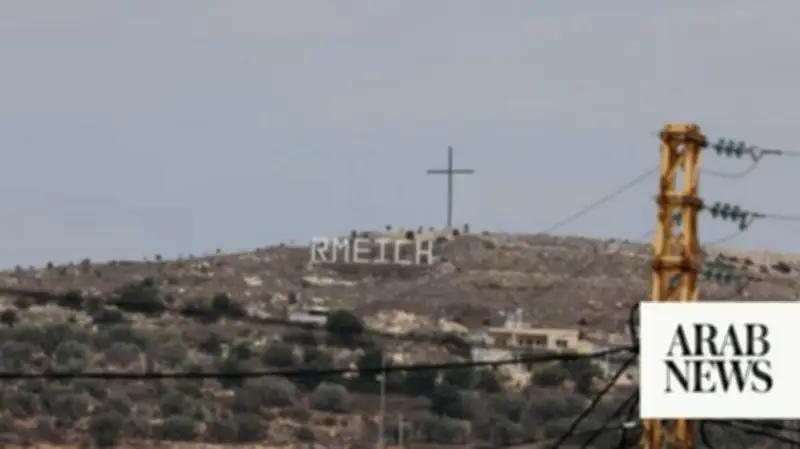
"For three years now, we have been suffering because the Lebanese state failed to extend its sovereignty over its own land," Gaby Al-Hajj, a civil activist from the town of Rmeish, told Arab News. "That left us at the mercy of illegal weapons, and we are paying for it now. The Israelis have us under siege — yet we refused to leave our villages. We have not turned our backs on Lebanon and we will not. We have held on, regardless of the cost."
Netanyahu's Remarks Spark Outrage
The denial came after Netanyahu told Fox News that Christian villages in southern Lebanon had asked to be annexed "because we protect them against the Hezbollah fanatics who want to kill them, and we do the same things with Christian everywhere." Within hours, Christian municipalities across the Marjayoun district issued a joint statement dismissing the claim as "utterly devoid of truth" and reaffirming their commitment to Lebanon's sovereignty.

Rmeish Mayor Hanna El-Amil, declining to elaborate beyond the joint statement, told Arab News the communities had said all they needed to say. "The border villages have remained committed to the Lebanese state and its legitimacy throughout the war without wavering. Their residents take pride in their national identity and regard Lebanon as their final and permanent homeland, with no alternative on offer."
Joint Statement Reaffirms National Identity
The statement added: "They reject any attempt to twist their position or exploit their suffering in the service of agendas that have nothing to do with them. The fabricated reports serve only one purpose: to damage the reputation of the border communities and sow confusion." The villages reaffirmed that, since the outbreak of the Israel-Hezbollah war, they ensured their coordination with the Lebanese authorities, religious leaders and international bodies to keep humanitarian corridors open, maintaining continued links between the border communities and Lebanese state institutions.
The statement was signed by the municipalities and community leaders of the following villages: Alma Al-Shaab, Al-Qaouzah, Debel, Rmeich, Ein Ebel, Deir Mimas, Burj Al-Moulouk, Qlayaa, Sarda, Jdeidet Marjayoun, Ebel Al-Saqi, Kawkaba, Al-Bouaida, Rachaya Al-Foukhar and Abu Qamha.
Decades of Conflict on the Front Line
For many residents, Netanyahu's remarks reopened old wounds in a region that has spent decades on the front line of the Arab-Israeli conflict. Southern Lebanon's border villages have lived through repeated cycles of violence since Israel's establishment in 1948, from the arrival of Palestinian armed factions under the 1969 Cairo Agreement to Israel's 1978 invasion and the creation of a buffer zone that remained in place until the Israeli army withdrew in 2000.
The territory Israel has occupied in southern Lebanon since March 2 following the latest war is estimated to cover more than 450 sq. km. The area stretches across parts of the Tyre and Bint Jbeil districts, including several Christian villages, as well as the Marjayoun and Arkoub regions, where Christian, Sunni and Druze communities, alongside Shiite villages, remain under Israeli occupation. It also extends into the Nabatieh district, encompassing the towns of Zawtar Al-Charkieh, Zawtar Al-Gharbiyah, Yohmor Al-Shaqif and Arnoun, while Israel continues to maintain its presence in Nabatieh Al-Fawqa and Kfar Tebnit.

Humanitarian Crisis and Daily Struggles
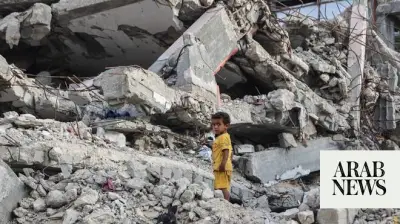
Since the war began, some Christian villages in southern Lebanon have endured Israeli shelling and airstrikes, displacement and infrastructure damage. Most have remained inhabited despite Israeli evacuation orders, with residents choosing to stay to protect their homes, churches and farmland, though some villages were partially or fully evacuated. Al-Hajj said residents of the villages that have been under siege for four months cannot leave their homes to seek treatment or obtain essential supplies without prior approval from the Mechanism committee, which must obtain authorization from the Israeli authorities.
"This involves submitting the names, photographs, and the photos and plate numbers of the vehicles. During the war, we relied on the convoy of the Vatican's ambassador who often accompanied it to deliver food and other necessities to the villages, accompanied by UNIFIL forces," Al-Hajj told Arab News. Rmeish is home to about 6,000 residents, while the neighboring Christian villages of Debel and Ain Ebel each have a population of about 1,400. Most residents rely on farming, self-employment or public sector jobs for their livelihoods.
Uncertain Future Despite Ceasefire
Despite the framework agreement between Lebanon and Israel, residents say the border communities continue to face severe humanitarian and security challenges, with little sign of a return to normality. Israeli forces remain stationed in parts of southern Lebanon, movement remains restricted and widespread destruction in surrounding villages continues to hamper recovery. "People can no longer earn a living and many have started using up their savings," Al-Hajj said. "We are grateful to the president and the prime minister for continuing to pay public sector salaries, even though many employees cannot reach their workplaces."
Basic services also remain scarce, he said. "We don't have a hospital — only a small medical dispensary staffed by four doctors, and there isn't even a laboratory to carry out blood tests," he said. Al-Hajj added that security had improved since the ceasefire, although residents remain far from feeling safe. "Life has become calmer because Hezbollah is no longer shelling the area as it did from time to time," he said. Residents of the villages rely almost entirely on humanitarian aid convoys, which are permitted to enter once a week, whereas during the war they were allowed in only once a month. Civilians have previously been killed while moving between villages, despite having obtained crossing permits, which has heightened the locals' sense of insecurity.
UNIFIL's Role and Limited Support
Despite the decline in hostilities, Christian villages that have taken in displaced families from more heavily exposed border communities remain gripped by uncertainty. Residents say they continue to live with anxiety over the future of the so-called "yellow zone" following the widespread destruction caused by the war and the challenges of restoring normal life to the region. "This is usually the time of year when expatriates return to their villages," Al-Hajj said. "In Rmeish alone, we would normally expect between 400 and 500 visitors. But this year many postponed their trips to Lebanon, and even couples who had planned to celebrate their weddings in the village moved the ceremonies to Beirut."
Despite the relative calm, he said daily life remains overshadowed by uncertainty. "There is effectively no state presence in our villages today, so we have to manage our own affairs," he said. "We're trying to adapt. We watch the World Cup just to distract ourselves from the constant fear that the wait for Hezbollah's disarmament and for the state to reassert its authority could drag on after decades of living with illegal weapons."
Fear of Displacement and Loss of Identity
Al-Hajj said residents fear the prolonged uncertainty could eventually force families to abandon their homes. "The question people keep asking is: if this situation continues, how do we live without a hospital or a reliable supply route?" he said. "Do we leave our land and risk losing our identity, or do we stay and bear the consequences?" He added that many residents remain uncertain about the future despite the ceasefire arrangements. The security agreement links Israel's withdrawal from southern Lebanon to Hezbollah's disarmament, but Israel also says it will keep its forces there as long as it considers Hezbollah a security threat.
Asked whether the agreement had encouraged residents to return to villages south of the Litani River and restored a sense of security, Kandice Ardiel, spokesperson for UNIFIL in southern Lebanon, said peacekeepers had seen civilians gradually returning to some communities. "In recent weeks, peacekeepers have seen the return of civilians to their villages in south Lebanon," Ardiel told Arab News. "When communities reach out for help, we see if we can provide support or refer their requests to humanitarian partners."
She said UNIFIL's operations remain constrained in areas where security conditions are still unstable. "We're not able to offer support in areas where the situation remains volatile," she added. "But we are continuing to remove rubble and unexploded ordnance from roads to allow passage, while supporting municipalities and repairing essential infrastructure such as water and electricity. The sooner people can return home, the better for long-term stability." UNIFIL patrols and supply convoys heading to the Christian towns of Rmeish, Ain Ebel and Debel pass through a recently erected Israeli military barrier at Iskandarounah, on the northern approach to Naqoura, where the peacekeeping force is headquartered. Beyond that point, however, the occupied stretch from Naqoura and Shamaa to Khiam remains largely deserted, with few signs of normal life after months of conflict.