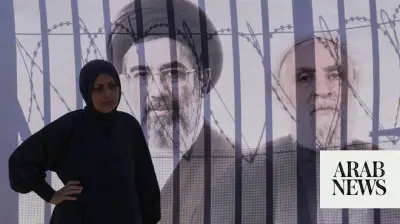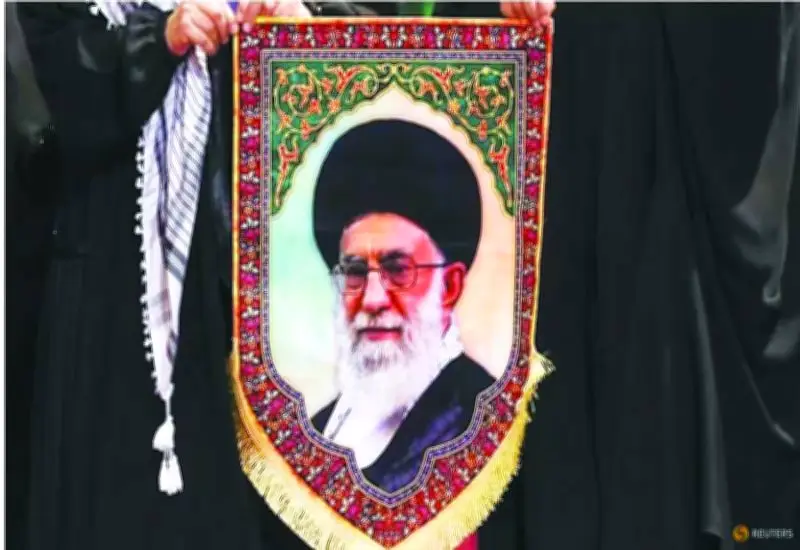
Prime Minister Shehbaz Sharif attended the funeral ceremony of Iran's late Supreme Leader, Ayatollah Seyyed Ali Khamenei, in Tehran on Friday. The body of Ayatollah Khamenei lay in state in a vast hall as clerics, officials, foreign dignitaries and mourners paid their respects. Khamenei was killed in the opening Israeli-American airstrikes of the war against Iran on February 28.
High-Level Pakistani Delegation in Tehran
The prime minister led a high-level delegation from Pakistan that included Deputy Prime Minister Ishaq Dar, Chief of Army Staff and Chief of Defence Forces Field Marshal Syed Asim Munir, Interior Minister Syed Mohsin Naqvi, Information Minister Attaullah Tarar, Chairman Pakistan Peoples Party Bilawal Bhutto Zardari and other senior government officials. He participated in the funeral at the invitation of Iranian President Dr Masoud Pezeshkian.
On this solemn occasion, the prime minister recalled the lasting contributions of the late Supreme Leader for Islam. He paid rich tribute to the late Supreme Leader, who guided the Iranian nation for decades with remarkable wisdom and sagacity. The prime minister expressed full solidarity with Supreme Leader Ayatollah Seyyed Mojtaba Hosseini Khamenei, President Dr Masoud Pezeshkian and the brotherly people of Iran in this moment of national grief and prayed to Allah Almighty for forgiveness of the departed leader.

Parliamentary Delegation and COAS Meeting
A parliamentary delegation led by Chairman Senate Syed Yousaf Raza Gillani and Speaker National Assembly Sardar Ayaz Sadiq, along with parliamentarians and Chief Minister Sindh Syed Murad Ali Shah, also attended the funeral. Field Marshal Syed Asim Munir held a meeting with Iranian Foreign Minister Abbas Araghchi in Tehran. During the meeting, the Field Marshal paid tribute to the late Ayatollah Ali Khamenei for his services to Iran. Syed Asim Munir visited Tehran to attend the final funeral rites of Iran's late Supreme Leader. After attending the funeral prayers, he departed for home. Iranian Interior Minister Eskandar Momeni, along with senior civil and military officials, bade farewell to Field Marshal Munir.
Week of Mass Funeral Processions
Iran is staging a week of mass funeral processions for Khamenei, who held power for 37 years, in a show of public devotion to the Islamic Republic's theocratic state and revolutionary zeal. Khamenei's body is expected to be taken to Qom, Najaf and Kerbala, the great Shi'ite centres of Iran and Iraq, before being laid to rest on Thursday in Mashhad, home to the country's holiest pilgrimage shrine. His coffin was unveiled late on Thursday to a throng of sobbing supporters, swaying and beating their heads in time to a sung lament as flowers were thrown from the bier into the crowd. On Friday, the coffin — and those of family members killed with him — was laid in state in the great prayer hall built to honour his predecessor, Ayatollah Ruhollah Khomeini.
Critical Moment for Iran
The funeral is taking place at a critical moment for Iran, where the clerical rulers backed by the Islamic Revolutionary Guard Corps are riding high from surviving what they saw as an existential war against their greatest and most powerful foes. But nearly five decades after the 1979 revolution, and for all the official proclamations of national unity in the run-up to Khamenei's funeral, the Islamic Republic has rarely been so internally fractured. Support for the clerical leadership is paper-thin, analysts say, and the new Supreme Leader, Khamenei's son Mojtaba Khamenei, has not been seen in any new image since being wounded in the strike that killed his father. Years of crippling sanctions have paralysed the economy as accelerating bouts of mass nationwide protests have been put down by security forces with increasing force — culminating in the killing of thousands of demonstrators in January.

State Display of Power
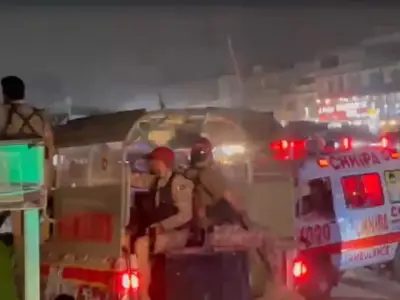
Those deep problems have been brushed aside this week, with the authorities mounting a display of state power and mass support, mobilising what they hope will be millions of mourners to take part in the funeral. Tehran streets were tightly controlled, with military and police vehicles lining the major roads and police and members of the black-shirted volunteer Basij paramilitary force patrolling on motorbikes. Iran warned the United States and Israel against any attacks during the funeral. After the coffins arrived on Friday, borne high across the upraised hands of a waiting crowd, they were laid in the prayer hall on a white, stepped dais before a high, intricately tiled, arched recess, flanked by national and black mourning flags. A black turban, worn by clerics claiming descent from Islam's Prophet Mohammed, lay on the coffin on a folded chequered scarf, a symbol in Iran of militant revolutionary ideals and solidarity with Palestinians.
International Attendance and Symbolism
Representatives from Russia and China were expected to attend. Top Iraqi, Armenian and Pakistani politicians arrived in Tehran for the funeral. Families of Hezbollah terror group leader Hassan Nasrallah and senior commander Imad Mughniyeh, close Lebanese allies of Iran killed in Israeli strikes, attended the ceremony. Iran's own political leaders — the president, parliament speaker, foreign minister and others — filed in to weep and pray on Friday morning. A group of generals stood saluting in front of the coffin. In Iran's theocratic system, Khamenei was not only head of state and leader of a revolutionary movement, but the representative on earth for Shi'ite Islam's 12th imam, who disappeared in the ninth century. His death in an enemy attack plays into a powerful Shi'ite tradition of martyrdom and mourning, in which processions of flagellants beat their chests or backs. That potent symbolism has been evident in the black funeral flags hanging over city streets since his death, referencing the seventh-century martyrdom of Shi'ism's third imam, Hossein. Burials are meant to be conducted within a day of death in Islam, but because of the risks of holding a big funeral during the war, it was postponed until after last month's interim truce deal was agreed.