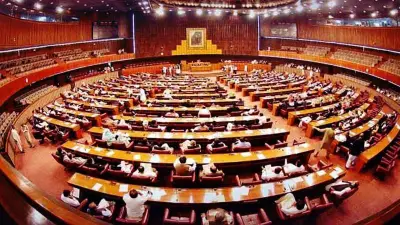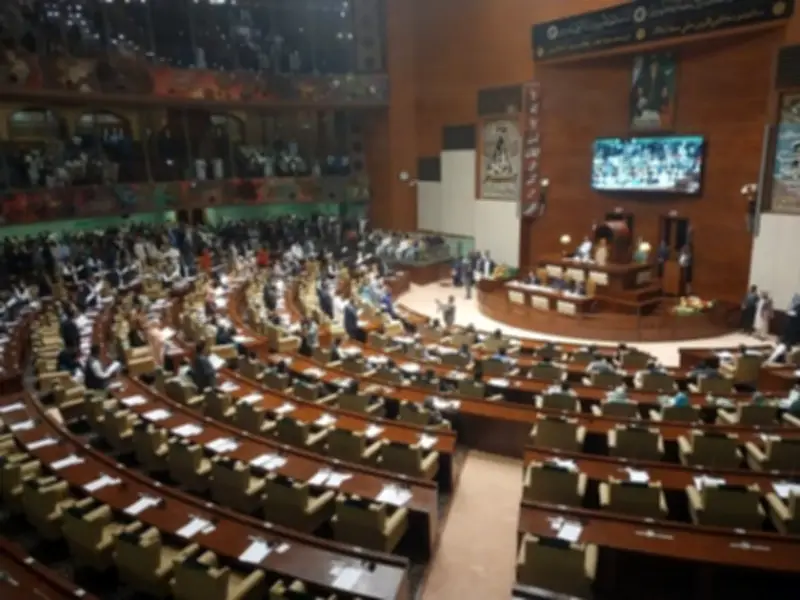
The opening day of the Sindh Assembly's debate on the 2026-27 provincial budget exposed deep political fault lines, as treasury and opposition lawmakers traded barbs over governance, development priorities, and Karachi's share of resources.
PPP Defends Budget as People-Centric
Members of the ruling Pakistan Peoples Party (PPP) praised Chief Minister Syed Murad Ali Shah for presenting what they described as a balanced and people-centric budget despite difficult economic conditions. In contrast, opposition legislators, particularly from the Muttahida Qaumi Movement-Pakistan (MQM-P), dismissed the financial plan as disappointing and discriminatory.
The budget debate began on Friday under the chairmanship of Speaker Awais Qadir Shah. MQM-P lawmakers continued their protest during the session, carrying placards bearing slogans against the provincial government.

Treasury Highlights Achievements
Opening the debate, PPP lawmaker Dr Sohrab Sarki defended the government's performance, highlighting investments in education and noting that more than 74,000 teachers had been recruited on merit across Sindh. He said the provincial government had continued to deliver development projects despite challenging circumstances.
PPP members repeatedly described the budget as welfare-oriented and aimed at improving public services. MPA Tanzila Umme Habiba praised the government's social initiatives and referred to the housing programme announced by PPP Chairman Bilawal Bhutto Zardari, claiming that one million people had benefitted from housing support.
Several treasury members credited the government for infrastructure development, including the completion of Shahrah-e-Bhutto, public-private partnership projects in Karachi, and investments in transport services. They also defended the government's efforts to address Sindh's water shortages and development needs in rural districts.
Opposition Launches Scathing Attack
Opposition lawmakers launched a scathing attack on the budget and the provincial administration's performance. MQM-P member Shariq Jamal argued that Sindh had received trillions of rupees over the past 18 years, yet public problems remained unresolved. He alleged that poor governance had pushed Karachi into decline and declared that his party did not accept the budget.
MQM-P legislators repeatedly complained that opposition constituencies had been ignored in development allocations. MPA Qurat-ul-Ain Khan remarked that the opposition's share in the budget amounted to 'zero,' while questioning why Karachi, despite contributing the highest tax revenues, continued to suffer from crumbling infrastructure and inadequate services.
Amir Siddiqui of MQM-P criticised the government for failing to consult Karachi's elected representatives during budget preparation. He questioned whether the massive allocations for education and health were producing tangible results, noting that many public representatives continued to seek treatment at private hospitals.
Karachi at the Centre of Debate
Karachi remained at the centre of much of the debate. Opposition lawmakers accused the provincial government of neglecting the city, claiming residents were receiving traffic e-challans instead of meaningful civic improvements. They demanded greater financial autonomy and called for substantial funds to be allocated directly to the Karachi mayor.
The session also witnessed fiery exchanges between treasury and opposition benches. PPP lawmakers accused MQM-P of boycotting constructive engagement and using protests for political gain, while opposition members alleged corruption, poor governance, and unequal treatment.
In one of the more pointed remarks of the day, MQM-P member Muhammad Dilawar called on Pakistan's Field Marshal to help eradicate corruption after 'ending the war,' a statement that drew attention across the assembly floor.
Water Scarcity and Other Concerns
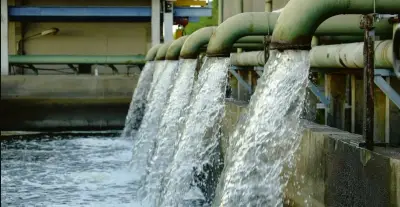
Water scarcity emerged as another major theme, with lawmakers from both sides expressing concern over Sindh's dwindling water supplies. Several PPP members urged the federal government to ensure Sindh receives its due share under the 1991 Water Accord.
The debate also featured demands for improved healthcare facilities, additional educational institutions, support for farmers, and accelerated completion of development schemes in various districts.

Following the conclusion of the first day's proceedings, the Speaker adjourned the session until 10 am on Saturday, when discussions on the provincial budget will resume.