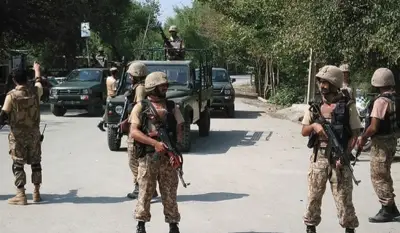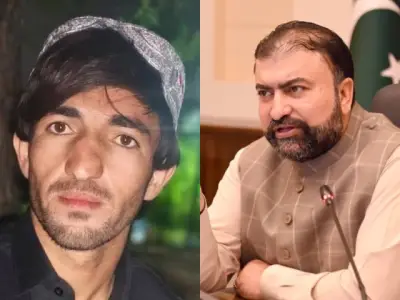
Azad Jammu and Kashmir is in a dilemma. The days leading up to 9 June 2026, the day that JAAC had selected for its major protest, saw some of the most disturbing scenes in the region's recent history. In the town of Rawalakot, gunmen affiliated with the banned Joint Awami Action Committee fired upon police officers in a pre-planned and coordinated attack, according to police. Four police officers were martyred, and 20 others were injured in the fierce clashes. Men were shot by those who attacked CMH Rawalakot Hospital. It was no act of civil disobedience. This was not a peaceful protest. This was simply violence.
The government of AJK, backed by Islamabad, did not arrive at this crisis without first trying every peaceful avenue. For months, federal and regional authorities engaged in good-faith negotiations with JAAC. A high-level committee negotiated with JAAC and reached an agreement covering 36 out of 38 demands, most of which were administrative in nature. The government showed patience, flexibility, and restraint. It was JAAC that refused to accept that some demands, specifically the abolition of 12 refugee seats in the AJK Legislative Assembly, simply could not be delivered through executive action alone. Why not? Because the Constitution says so.
The AJK Supreme Court, in a landmark advisory opinion, explicitly stated that neither the Government nor the Prime Minister possessed the legal authority to concede to JAAC's demand through executive action, regardless of political pressure. The refugee seats are not a bureaucratic quirk that can be removed with a signature. They are constitutionally protected and cannot be altered through administrative measures, political agreements, or public pressure. Any change requires a formal constitutional amendment, a process that belongs to elected representatives in the Legislative Assembly, not to street agitators. This is the core issue that JAAC chose to ignore. The movement framed the refugee seats as a simple 'administrative matter', but the highest court in AJK firmly disagreed. The Court made clear that the Constitution is not a 'document to be honoured when convenient and discarded when inconvenient'. When JAAC could not get what it wanted through negotiations, because the government literally lacked the legal power to deliver it, the movement chose escalation over engagement.

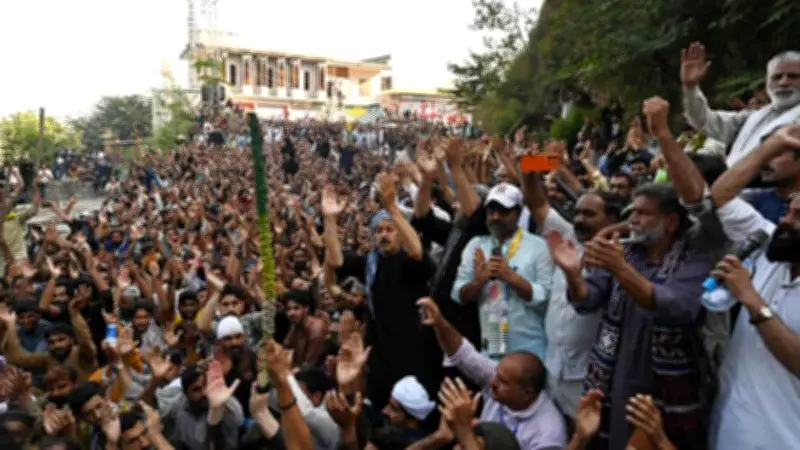
The streets of Rawalakot have been cleared. The Constitution of AJK stands. Now let the ballot box speak. JAAC has long presented itself as a champion of democratic rights. But democracy is not just about expressing demands loudly. It is also about respecting the rules through which demands are met. The Court stated clearly that no individual or group can override constitutional provisions through pressure or unrest, and that the exercise of one group's rights must not come at the expense of others. When JAAC blocked highways, shut down businesses, and disrupted daily life, it was not exercising rights; it was violating the rights of ordinary citizens: traders, students, patients, and working families who had nothing to do with the refugee seat debate.
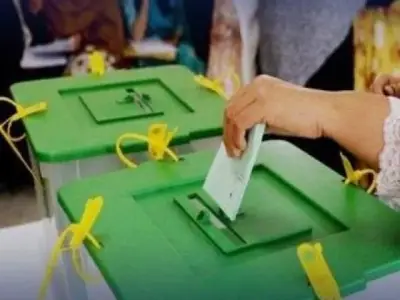
The timing of the crackdown on JAAC also needs to be understood in context. AJK legislative elections are scheduled for 27 July. The AJK government remained legally obligated to hold elections within the time stipulated by the Constitution. Any disruption to that process, which JAAC's escalation clearly threatened, would itself have been a constitutional violation. The government had a duty to protect the electoral process, and it fulfilled that duty.
The government's approach throughout this crisis has been measured and lawful. It negotiated in good faith, referred constitutional questions to the proper forum, sought judicial clarity through a presidential reference, and only moved against JAAC when credible intelligence pointed to weapons acquisition and planned violence, a threat that was unfortunately confirmed in Rawalakot. Following the operations, roads were reopened and markets began functioning normally across the region. Order has been restored. The democratic process can now proceed.

The lesson here is deeper, and one for all of Pakistan: if one has a genuine grievance, it must be addressed through the proper channels, and the governments of AJK and Pakistan did precisely that. But legitimate grievances do not give any group the right to arm itself, attack hospitals, martyr police officers, and hold a region hostage. In a resolution passed by the AJK Legislative Assembly, it was declared that the representation of Kashmiri refugees through 12 seats is both historical and constitutional, and that any changes can only be brought about by the Assembly. There is a constitutional route: elections, the Assembly, and a democratic mandate. The streets of Rawalakot have been cleared. The Constitution of AJK stands. Now let the ballot box speak.