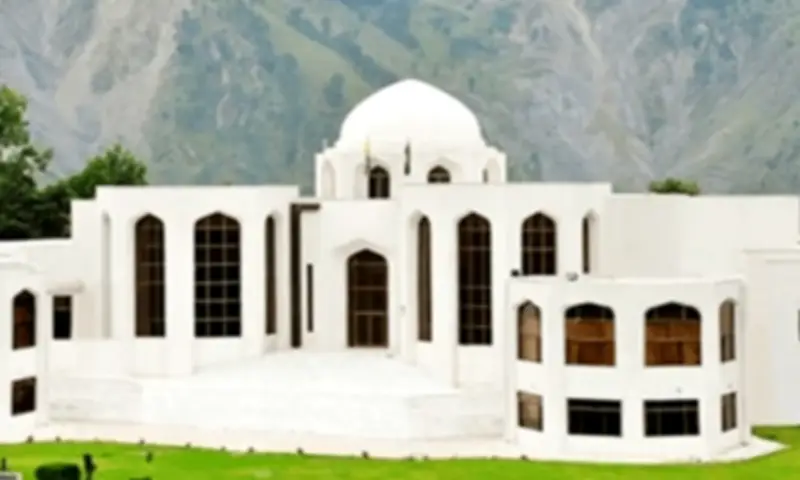
The Supreme Court of Azad Jammu and Kashmir (AJK) has issued a constitutional opinion on a Presidential Reference, upholding the government's position on refugee seats and rejecting the politics of protest as a means of resolving constitutional issues. The Presidential Reference was submitted by the President of AJK on the advice of the government under Article 46-A of the Constitution.
Constitutional Interpretation
In its response, the court provided a comprehensive constitutional interpretation, ruling that any changes to refugee seats require a constitutional amendment under Article 33. The court stated that the 12 refugee seats enjoy constitutional protection under Article 22 and cannot be altered through any administrative decision.
Legal Foundations
The court noted that the legal and historical foundation of these seats is rooted in the laws of 1960, 1964, and 1970, the Interim Constitutional Arrangements, the 1974 Constitution, and the 1975 Act. According to the court, any modification to the refugee seats must be carried out through a formal constitutional amendment process under Article 33, which requires a public mandate, parliamentary debate, and adherence to all constitutional procedures.

The Supreme Court further emphasized that constitutional supremacy, rather than street protests, is the decisive force in Azad Kashmir. The court also endorsed the government's position that remaining constitutional matters should remain within the jurisdiction of the elected Legislative Assembly.
Elections and Constitutional Process
The court ruled that the timely conduct of elections under Article 22(4) is mandatory and that no protest or political dispute can obstruct this constitutional process. It also clarified the interpretation of Articles 22(3) and 22(4), outlining the powers and tenure of the Assembly. The Supreme Court stated that ensuring the conduct of elections and maintaining law and order are constitutional responsibilities of state institutions.
Peaceful Protest vs. Disruption
While recognizing peaceful protest as a constitutional right, the court clarified that blocking roads, exerting pressure, or disrupting public life does not fall within the scope of constitutional protection. The opinion further stated that the exercise of rights by any individual or group cannot justify depriving other citizens of their fundamental rights. The administration, it added, is obligated to maintain public order, constitutional governance, and the rule of law under all circumstances.
Legal and Political Implications
Legal experts believe the court's opinion has strengthened the legal basis for action against those seeking to interfere with elections or state institutions. According to analysts, the Supreme Court has made it clear that constitutional change must come through the Assembly and the ballot box, not through pressure tactics or confrontation. Experts also noted that the ruling reinforces the principles of constitutional supremacy, the rule of law, and state stability, and could serve as an important precedent for resolving future constitutional and political disputes in Azad Kashmir.