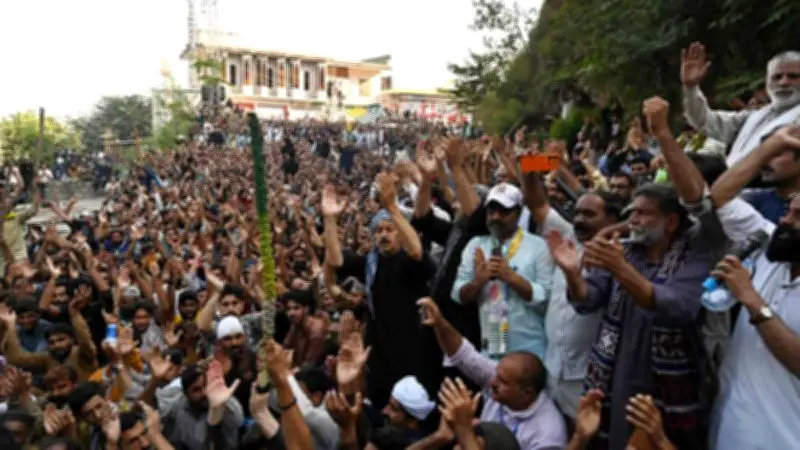
The current agitation by the Joint Awami Action Committee (JAAC) in Azad Jammu and Kashmir comes at a particularly sensitive moment for the Kashmir cause. What began as a movement centred on inflation, electricity tariffs and governance concerns has increasingly shifted towards constitutional questions and political confrontation as AJK approaches elections. Whatever the motivations of its organisers, the movement raises a larger question: who benefits when attention is diverted from the unresolved international dispute over Kashmir to internal political disputes within Pakistan-administered territory?
Core Issue of Self-Determination
For nearly eight decades, the core issue in Kashmir has remained unchanged. The dispute persists because the UN Security Council resolutions calling for the exercise of self-determination have never been implemented. Kashmir is not merely a question of local administration, constitutional arrangements or electoral politics. At its heart lies the unresolved question of whether the majority Muslim people of Jammu and Kashmir should be allowed to determine their own political future. This distinction is crucial because, while political energies are increasingly consumed by unrest in Pakistan-administered Kashmir, India continues to consolidate the consequences of the constitutional changes it imposed in August 2019.
India’s Post-2019 Consolidation
The revocation of Articles 370 and 35A fundamentally altered the legal and political status of the territory under Indian control. Since then, New Delhi has introduced new domicile provisions, amended land laws, restructured political representation and deepened direct administrative control. Whether described as demographic engineering, political restructuring or settler colonialism, these measures have moved Kashmir further away from the conditions under which a genuine act of self-determination could take place. The central question is whether political actors are helping keep international attention focused on the unfinished struggle for Kashmiri self-determination or contributing, intentionally or otherwise, to its marginalisation.

Pakistan’s Stance and AJK’s Role
This is why Kashmir occupies a unique place in Pakistan's national consciousness. Unlike ordinary territorial disputes, it is linked to the unfinished legacy of partition and to Pakistan's long-standing commitment to the principle that the people of Jammu and Kashmir should decide their own future. Pakistan's handling of AJK and Gilgit-Baltistan reflects that position. While residents of both territories elect their own governments and participate in political life, Islamabad has avoided unilaterally altering their disputed status and has maintained that the final disposition of the territory remains subject to a broader settlement.
The controversy over refugee representation in AJK must be understood in this context. The reserved seats are not merely a constitutional arrangement. They symbolise Pakistan's position that the dispute encompasses the entirety of the former princely state and acknowledge Kashmiris displaced by decades of conflict and upheaval. Reasonable people may disagree about the future of those provisions, but reducing the Kashmir debate to refugee seats risks obscuring the much larger challenge confronting the region.
Timing and Geopolitical Implications
The tragedy is that the current agitation comes at a moment when international attention should be focused elsewhere. The real story in Kashmir today is not constitutional disputes in AJK. It is India's continuing effort to persuade the world that Kashmir has effectively been settled. This objective aligns with New Delhi's long-standing attempt to portray Kashmir as an internal matter rather than an internationally recognised dispute. Pakistan's position has consistently been the opposite: that the future of Jammu and Kashmir cannot be determined unilaterally and must ultimately reflect the wishes of its people.

The political dimension of the current unrest cannot be ignored. With elections approaching in AJK in July, constitutional questions that should ordinarily be resolved through democratic institutions are increasingly being contested on the streets. Critics of the movement argue that political actors seeking advantage in a changing electoral environment have encouraged this shift. Whether that assessment is correct or not, it is clear that constitutional disputes are becoming intertwined with broader political competition.
Balancing Governance and National Interest
None of this means that legitimate grievances should be dismissed. Governance shortcomings must be addressed through dialogue, democratic participation and institutional reform. Yet the state also has a responsibility to uphold the rule of law and prevent violence from becoming a substitute for constitutional politics. The challenge is to respond to genuine public concerns while ensuring that public frustration is not transformed into a crisis that damages the larger national interest.
The timing is particularly noteworthy. Over the past year, Pakistan has enhanced its international standing through a combination of military resilience, diplomatic activism and regional engagement. From the strategic consequences of the 2025 conflict with India to its role in efforts aimed at de-escalating the Iran crisis, Islamabad has increasingly been viewed as a consequential regional actor. Such developments inevitably challenge New Delhi's preferred narrative of Pakistan as an isolated and unstable state. Against this backdrop, prolonged turmoil in AJK serves to divert attention from Pakistan's recent diplomatic gains while reinforcing precisely the narratives that India's diplomacy has long sought to project internationally.
Conclusion: The Larger Struggle
The debate over Kashmir should not lose sight of what is ultimately at stake. The central question is not whether governance problems exist in AJK. Every democratic society faces governance challenges. The central question is whether political actors are helping keep international attention focused on the unfinished struggle for Kashmiri self-determination or contributing, intentionally or otherwise, to its marginalisation. At a moment when India is seeking to consolidate the post-2019 order in the territory under its control, diverting attention away from that reality does not strengthen the Kashmir cause. It weakens it. The greatest danger posed by the current agitation is therefore not simply political instability in AJK. It is the risk that attention shifts away from the unresolved question of self-determination and towards disputes that, however important locally, are secondary to the larger struggle that has defined Kashmir for generations.