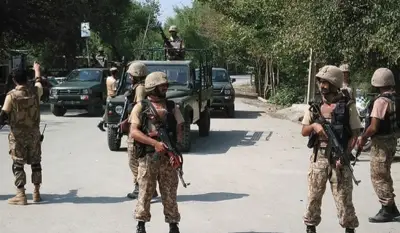
The mountains around Rawalakot have witnessed bloodshed before. But the violence that erupted there in early June 2026, leaving at least eleven people dead and dozens wounded in clashes between security forces and protesters, carried a particular and dispiriting quality. The tragedy is not only the lives lost but that they need not have been. A political process was yielding ground, slowly but perceptibly, before the barricades went up.
The JAAC Movement and Legitimate Grievances
The Joint Awami Action Committee (JAAC), which has led rolling protests across Azad Jammu and Kashmir (AJK) since 2023, frames itself as a movement of the dispossessed, a grassroots uprising driven by socioeconomic and political grievances. AJK does face real hardships: inflation bites hard, infrastructure lags, and unemployment among the young is stubborn. These are legitimate grievances deserving of a political response. What is not legitimate, nor remotely conducive to resolution, is the translation of those grievances into barricades, armed confrontation and the surrounding of a military hospital. The JAAC's tactics have not advanced its cause. They have endangered the civilians it claims to represent.
Federal Fiscal Support to AJK
Before rehearsing the JAAC's demands, it is worth pausing on a number that rarely features in its rallies. Pakistan transfers approximately Rs140 billion annually to AJK through federal current expenditure allocations. It absorbs a further Rs108 billion in electricity tariff differentials, effectively paying the gap between what AJK consumers are charged and the actual cost of generation. In 2024 alone, Islamabad approved a further Rs23 billion ($83m) subsidy package, cutting the price of a 40kg bag of wheat flour from Rs3,100 to Rs2,000 and capping residential electricity rates well below the national average. AJK's total budget for 2025-26 stands at Rs310 billion; the federal contribution underwrites the overwhelming bulk of it.

Dialogue and Escalation
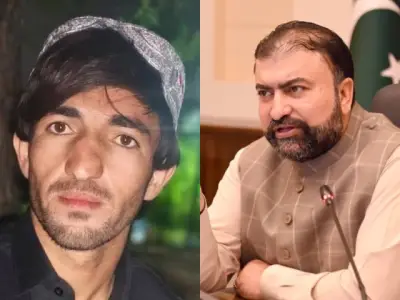
None of this means that criticism of the centre is illegitimate. Fiscal dependence and political frustration can coexist. The AJK Prime Minister, Faisal Mumtaz Rathore, extended an invitation to resume talks even as clashes raged, reflecting a pattern of engagement, not stonewalling. Earlier rounds of dialogue produced concessions. The JAAC's answer, each time momentum toward resolution builds, has been to raise the temperature rather than the argument.
The Refugee Seats Controversy
The proximate trigger for the current unrest is the JAAC's demand to abolish the twelve seats reserved in the 53-member AJK Legislative Assembly for Kashmiri refugees, those who fled Indian-administered Jammu and Kashmir during the conflicts of 1947 and 1965 and settled in cities across Pakistan: Karachi, Lahore, Rawalpindi and Sialkot. Six seats represent refugees from the Jammu division; six from the Kashmir Valley.
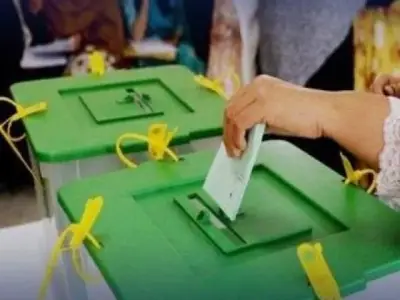
The JAAC presents these seats as an affront to the people of AJK, an imposition by outsiders on local democracy. The AJK Supreme Court, in a ruling issued just days before the latest round of violence, saw the matter differently. The seats, the court affirmed, are constitutionally protected under Article 22 of the AJK Constitution. They cannot be abolished by executive fiat, political agreement reached under duress, or the pressure of a street movement. They require a constitutional amendment, a process that demands consensus among elected representatives sitting in the very assembly the JAAC has chosen to circumvent.
The Deeper Purpose of Reserved Seats
The deeper purpose of these seats is worth understanding. They encode AJK's constitutional claim to represent the whole of the former princely state of Jammu and Kashmir, not merely the territory it administers. To abolish them is not simply to redraw a few electoral boundaries; it is to amputate a core element of AJK's political identity and its historic solidarity with Kashmiris on the other side of the Line of Control. The JAAC could, had it chosen, have contested elections, built a legislative coalition and made its case from within the assembly for reducing or restructuring these seats, perhaps to six or four, as part of a negotiated reform that preserved the symbolic claim while addressing genuine concerns about representational imbalance. Instead, it chose the street.

Historical Context and Strategic Dangers
To dress this movement in the colours of Kashmiri identity is to ignore what that identity was actually built on. The foundational act of Azad Kashmir's existence was itself a revolt, the Poonch uprising of 1947, when Muslim subjects of the Maharaja Hari Singh, ground down by punishing taxation and the neglect of tens of thousands of veterans who had served in the Second World War, took up arms. Their aspiration was unambiguous: union with Pakistan. The uprising liberated territory from the Maharaja's control and gave birth to the Provisional Azad Government. The creation of AJK was, in its origins, an act of pro-Pakistan will.
That inheritance is not merely sentimental. It is a political statement about where the loyalties of this territory lie. AJK sits at the geopolitical fault line of a long-running territorial dispute. Destabilisation of the region serves specific interests, none of them the interests of the ordinary family in Muzaffarabad or Rawalakot struggling with a power bill. India's foreign ministry was quick to exploit the bloodshed in Rawalakot for diplomatic advantage, condemning the deaths as evidence of Pakistani human rights abuses. That opportunism alone should give pause to anyone considering whose purposes the chaos serves.
Critique of JAAC Tactics
This is not to impute bad faith to every JAAC supporter. Many are animated by genuine economic pain. But a movement's emotional authenticity does not sanctify its methods. Inciting confrontations that kill civilians and law enforcement officers alike, blocking highways that strangle local commerce, and surrounding medical facilities are not acts of resistance. They are the instruments of chaos, and chaos, in a territory of this strategic sensitivity, is never politically neutral.
However, the designation of the JAAC as a proscribed organisation under anti-terrorism legislation, rather than a political adversary to be defeated in argument and at the ballot box, risks lending the movement a martyrdom it has not earned. Force and dialogue are not equivalents, but both sides must now recognise that the present course leads nowhere worth going.
Path Forward
Constitutional change is possible. The refugee seat arrangement is not sacred; its precise form can be revisited through legitimate process. Economic grievances can be addressed through sustained federal engagement. But these things require interlocutors willing to sit at a table rather than occupy a road. The JAAC has the popularity, demonstrated in its rallies, to contest elections, win seats and shape legislation. It has chosen instead to besiege the institutions it wishes to reform. That choice has cost lives. It has handed India a propaganda gift. And it has made the very reforms its supporters desire harder to achieve, not easier. Azad Kashmir's people deserve better than this, better than leaders who dress coercion as courage and mistake the loudness of a protest for the justice of its means.
Marium Zia Khan. The writer is a development sector professional who is from Rawalakot, Azad Jammu & Kashmir.