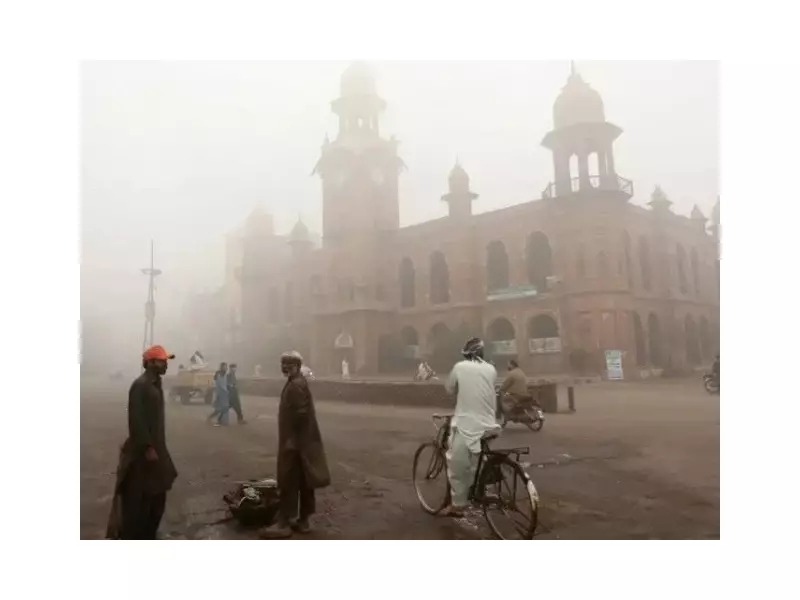
Dense, hazardous smog continued to engulf major parts of Punjab on Monday, severely degrading air quality and pushing Lahore into the ranks of the world's most polluted major cities, as per official and real-time data.
Lahore and Punjab Grapple with Hazardous Air
The provincial Environmental Protection Agency (EPA) reported that the average Air Quality Index (AQI) for Punjab stood at 198 during the day, a level considered unhealthy for sensitive groups. However, Lahore emerged as the epicenter of the crisis. The city recorded an alarming average AQI of 375 between 8:00 am and 3:00 pm, placing it in the 'very unhealthy' category.
Specific locations within Lahore became extreme pollution hotspots. The air quality reading at the University of Engineering and Technology (UET) soared to a dangerous 565. Other critical areas included the EPA headquarters (AQI 427), Town Hall (AQI 420), Lahore Waste Management Company zone, Safari Park, Punjab University, and several hospital vicinities, illustrating the smog's pervasive spread across the city.

A Regional Pollution Crisis
The deteriorating conditions propelled Lahore to a grim international distinction. According to global live air quality rankings, Lahore was the second most polluted major city in the world on Monday, with an AQI of 366. India's Delhi led the list with an AQI of 555, followed by Dhaka, Kolkata, and Bishkek, highlighting a severe air quality crisis across South and Central Asia.
The smog was not confined to Lahore alone. Several other cities across Punjab registered unhealthy air. Rahim Yar Khan, Faisalabad, Bahawalpur, Narowal, and Gujranwala all posted AQI readings well above 200. Gujrat and Khanewal remained in the 'unhealthy for sensitive groups' range. Even cities with relatively better readings, such as Rawalpindi, Sargodha, and Multan, failed to achieve safe air quality levels.
Causes and Forecast Offer Little Hope
Environmental experts point to a toxic combination of factors behind the persistent smog. Vehicular emissions, industrial pollution, and crop residue burning are primary contributors. These pollutants are trapped near the ground by dense fog and unfavorable weather conditions, which were reported across large parts of Punjab and upper Sindh.
The Pakistan Meteorological Department noted that a westerly weather system is affecting the country's northern areas, bringing intermittent rain and snowfall to Gilgit-Baltistan, upper Khyber-Pakhtunkhwa, and Kashmir. However, for most plains, including Punjab, cold and dry conditions are expected to prevail. Meteorologists have warned that moderate to dense fog is likely to continue over the plains of Punjab for the next two days, which means the hazardous air quality situation may persist, offering little immediate relief to millions of residents.