Origins of the Baloch Insurgency
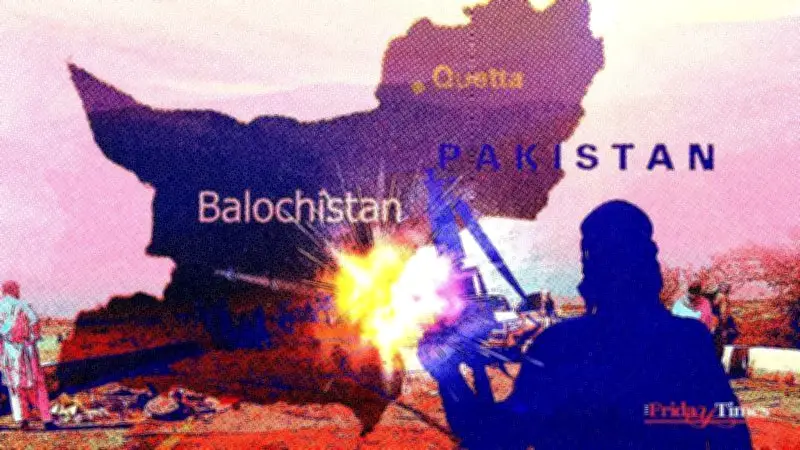
The Baloch insurgency in Pakistan's southwestern province has persisted since the country's founding in 1947. The roots trace back to the post-Partition era when the Treaty of Accession of Kalat to Pakistan was signed in 1948. Abdul Karim, brother of the Khan of Kalat, revolted against the accession. Though the insurgency ended within a year with his surrender, it marked the first phase of Baloch unrest. The contentious accession process fueled nationalist demands for self-determination, which resurfaced in the second phase in 1958.
Phases of Insurgency: From PLF to BLA
In 1963, a new generation of Baloch leaders emerged, blending Marxist-Leninist ideology with Baloch resistance. The People’s Liberation Front (PLF) of Sher Muhammad Murri exemplified this third phase. The fourth phase erupted in the 1970s under Zulfikar Ali Bhutto's government, which dismissed Chief Minister Sardar Attaullah Mengal after the Shah of Iran raised concerns about unrest in Iranian Balochistan. The fifth phase in the 1990s stemmed from political fragmentation and socio-economic grievances. The Baloch Liberation Army (BLA) was formed by Hyrbyair Marri in 1996, with Aslam Baloch (also known as Achu) as chief commander in Bolan. Aslam, who killed a policeman during a 1996 protest, is considered the father of modern BLA guerrilla warfare. In 2018, he was expelled from the BLA on disciplinary grounds, joined BLA-J, and was mysteriously killed in Kandahar, Afghanistan.
Escalation in the 2000s and CPEC Targeting
In 2000, Nawab Khair Bakhsh Marri, Hyrbyair Marri's father, was arrested for the murder of a high court judge in Quetta, becoming a flashpoint between the state and insurgents. The BLA was born after this incident. From the early 2000s, enforced disappearances emerged as a key grievance, with Baloch nationalist parties alleging state security apparatus involvement. During the same period, the China-Pakistan Economic Corridor (CPEC) and Chinese nationals became primary targets, with insurgents claiming they symbolized external exploitation of Baloch resources.

Fragmentation Within the BLA
The BLA, declared a banned outfit by Pakistan, the US, Australia, and the UK, operates through decentralized local commanders and cells. Initially, it targeted government infrastructure, railway lines, and communication networks using dynamite, rockets, and landmines, particularly against the Frontier Corps. In 2003, the Balochistan Liberation Front (BLF) was launched as a sister organization to push the separatist agenda into middle-class strongholds like Makran. Internal rifts led to a split: BLA spokesman Azad Baloch cut ties with Aslam Baloch, and Bashir Zaib broke away to head BLA-J. BLA-J revived the Majeed Brigade suicide unit after seven years of dormancy. BLA-A focused on lower-intensity tactics like ambushes and IED strikes, while BLA-J targeted high-profile attacks, distancing itself from the 2008 Chinese consulate attack and Dalbandin bus bombings.
Urban Evolution and Suicide Bombings
With accelerated urbanization due to CPEC and migration, the insurgency shifted from rural to urban areas. Social media platforms like X (formerly Twitter) and Facebook provided the BLA space for propaganda and victimhood narratives, eroding internal divisions and radicalizing Baloch nationalism. Since 2025, the BLA has intensified attacks on civilian targets. The Jaffar Express attack by BLA Jeeyand faction led to Operation Green Bolan, resulting in 30 casualties (26 passengers, 4 rescuers) and 33 terrorists killed. The government claims 354 hostages were rescued, though militants disputed the number. Four suicide attacks by male and female bombers have occurred, along with temporary occupations of suburban districts. BLA-J and other factions have also attacked Karachi, including suicide bombings.

Mahrang Baloch and the BYC Controversy
Mahrang Baloch, a leading voice against enforced disappearances, has become a polarizing figure. Pakistani security institutions view the unrest as a sustained insurgency externally supported, notably by India. Following the Jaffar Express hijacking in 2025, the Director General of Inter-Services Public Relations (DG ISPR) alleged on May 23, 2025, that the Baloch Yakjehti Committee (BYC) and its leadership acted as facilitators and proxies for militant groups. In June 2026, Mahrang was convicted and sentenced to life imprisonment by an anti-terrorism court in Quetta for the death of a Frontier Corps soldier killed by a mob during a 2024 protest. Allegedly, she had referred to FC personnel as occupiers. Her father, Abdul Ghaffar Langove, was a BLA commander, and her cousin, who served as her bodyguard, was an active BLA fighter allegedly killed in 2025. Reports indicate she glorified BLA suicide bomber Wadood Satakzai. BLA, BLF, and BRA commanders publicly voiced solidarity with her after the conviction.
Allegations of Youth Recruitment
Officials allege that the BYC has served as a platform for recruiting minors. One cited case is Sarfaraz, an 18-year-old from Kharan, who was allegedly drawn into the BYC for protests and road blockades before being recruited into militancy by Jahanzeb (Mehrban), a 20-year-old. Security analysts argue the BYC operates as a "human rights shield," reframing perpetrators as victims and running international advocacy, particularly in Europe, reflecting external sponsorship. The government describes it as a deepening radicalization crisis and has announced rehabilitation centers in Quetta focusing on psychological counseling and social reintegration.