The cheers were deafening. Canada were producing one of the most memorable performances in their football history, overwhelming Qatar and moving a step closer to the World Cup knockout stages. The goals kept coming, the crowd kept celebrating, and a nation dared to dream. Then, in an instant, everything changed. As Ismaël Koné collapsed to the turf following a challenge, the atmosphere inside the stadium shifted dramatically. The excitement gave way to concern, the celebrations to silence. Within minutes, one of Canada's brightest talents was being stretchered from the field with a serious leg injury, ending his World Cup campaign and casting a shadow over what should have been a historic night.
Football has always balanced beauty with brutality. Behind the goals, trophies and celebrations lies a history marked by devastating injuries that have altered careers, changed teams and, in some cases, transformed the sport itself.
A History of Heartbreak
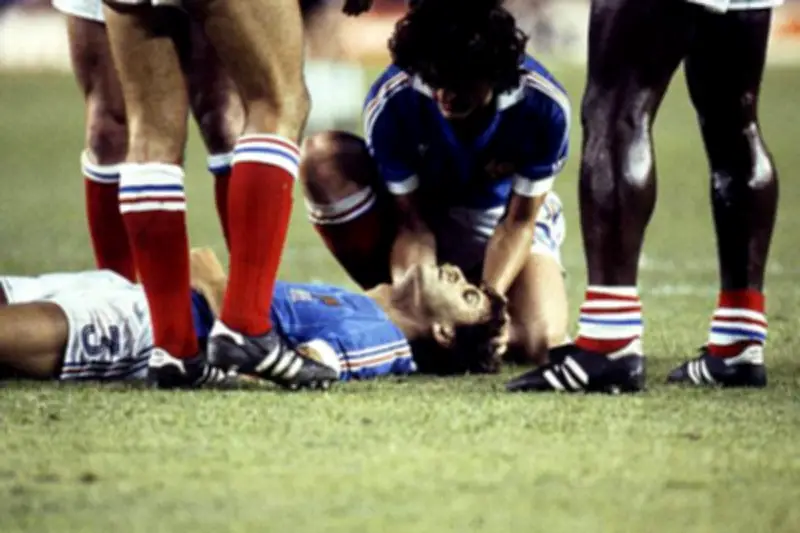
The story begins long before the modern era. In 1982, French defender Patrick Battiston suffered one of the most infamous injuries in World Cup history. During the World Cup semi-final between France and West Germany, goalkeeper Harald Schumacher collided violently with Battiston, knocking him unconscious. Battiston lost teeth, suffered damaged vertebrae and briefly fell into a coma. The incident shocked viewers worldwide and remains one of football's most controversial moments.

A decade later, tragedy struck Dutch football icon Marco van Basten. Persistent ankle injuries that began in the late 1980s worsened throughout the early 1990s. Despite multiple operations, the pain never disappeared. In 1995, at just 30 years old, one of the greatest strikers in football history officially retired. Many historians believe the sport lost several peak years from a player who had already won three Ballon d'Or awards.
Turning Points
The next major turning point came in 2000. During a Premier League match, Luc Nilis suffered a horrific double compound fracture of his right leg while playing for Aston Villa. The injury was so severe that it ended his career immediately. Nilis had been regarded as one of Europe's most technically gifted forwards, making the incident particularly heartbreaking.
In 2004, Swedish striker Henrik Larsson suffered a broken leg and damaged knee ligaments while playing for Celtic FC. At the time, many feared his career was over. Instead, Larsson produced one of football's great recoveries, returning stronger and later starring for both club and country.
Comebacks and Resilience
Two years later came one of football's greatest comeback stories. In October 2006, goalkeeper Petr Čech suffered a depressed skull fracture following a collision during a Premier League match. Surgeons worked quickly to save his career and potentially his life. Remarkably, Čech returned just three months later wearing the protective helmet that became synonymous with his career. He would go on to win major honours and become one of the greatest goalkeepers of his generation.
In 2008, football witnessed one of its most graphic injuries. Arsenal striker Eduardo da Silva suffered a broken fibula and dislocated ankle after a challenge from Martin Taylor. Television broadcasters around the world refused to replay the incident due to its severity. Although Eduardo eventually returned to football, many observers believe he never fully rediscovered the form that had made him one of Europe's most feared forwards.
The year 2010 brought another horrifying moment. Welsh midfielder Aaron Ramsey suffered a double leg fracture following a challenge from Ryan Shawcross. Ramsey faced nearly a year on the sidelines but eventually rebuilt his career, later becoming a key figure for Arsenal and Wales.
In 2015, English defender Luke Shaw suffered a double fracture of his right leg during a UEFA Champions League match. The injury required multiple surgeries and raised fears about his future. Years later, Shaw completed a remarkable comeback and re-established himself at the highest level.

One year later, in 2016, French defender Kurt Zouma ruptured his anterior cruciate ligament (ACL) during a Premier League match. The injury sidelined him for months and highlighted the increasing prevalence of serious knee injuries in the modern game, where speed and intensity place enormous stress on players' joints.
In 2019, the football world fell silent as Portuguese midfielder André Gomes suffered a fracture-dislocation of his ankle. Players from both teams were visibly distressed by the incident. Yet within months, Gomes was back playing professional football, demonstrating the remarkable progress of modern sports medicine.
Koné's Chapter
Now, in 2026, Ismaël Koné has become the latest player to join this unfortunate list. The Canadian midfielder's broken leg not only ended his World Cup campaign but also raised questions about how Canada will cope without one of its most influential players. More importantly, it serves as a reminder that football remains a sport where fortunes can change in a single moment.
What separates these stories is not the injuries themselves but the responses that followed. Some careers ended abruptly. Others were reborn through determination, rehabilitation and sheer mental strength. Van Basten's story became one of unfulfilled potential. Čech's became one of survival. Ramsey's became one of resilience. Eduardo's became one of heartbreak.
Koné's story is still being written. At just 24 years old, he has time on his side, modern medicine at his disposal and the support of an entire football community behind him. While his World Cup dream has been interrupted, football history shows that some of the sport's most inspiring chapters begin not with victory, but with adversity.
The goals Canada scored against Qatar will be remembered. The result will be recorded in the history books. But the image that may endure longest is that of Koné leaving the field. It is a reminder that football's greatest stories are not always about lifting trophies. Sometimes, they are about finding the strength to rise again.