FIFA announced on Thursday that it will review its ticketing strategy for the 2030 World Cup following widespread anger over the skyrocketing prices for the 2026 finals being held in Canada, Mexico, and the United States.
Market Reality in North America
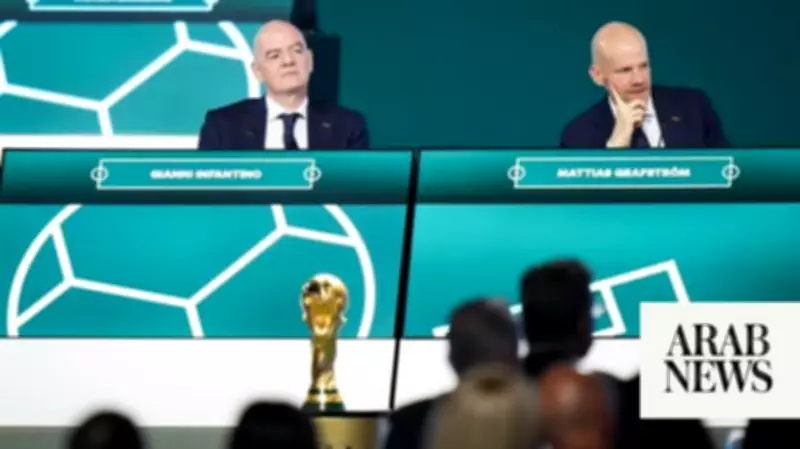
Speaking to reporters after the conclusion of the FIFA Congress in Vancouver, Secretary-General Mattias Grafstrom explained that the high ticket prices for this year's tournament reflected "the reality of the market in North America." He acknowledged fan concerns but noted that there is a wide array of ticket prices, some cheap and some more expensive. "We listen, we take into account the comments, and of course, as for every World Cup, we will review and see how we do it for the next one," Grafstrom added.
Fan Organizations Cry Foul
FIFA has faced severe criticism over the soaring ticket prices for the 2026 World Cup. Fan organization Football Supporters Europe branded the pricing structure as "extortionate" and a "monumental betrayal" of fans. Last month, the group filed a lawsuit with the European Commission targeting FIFA over what they called "excessive ticket prices" for the tournament.

Dynamic Pricing and Demand
FIFA President Gianni Infantino insists that the ticket prices are simply a consequence of huge demand. "In the US in particular, there is this thing called dynamic pricing, meaning the prices will go up or down," depending on the match, Infantino has said. Reports indicate that FIFA's own ticket resale exchange this week showed four tickets for the July 19 World Cup final at MetLife Stadium listed for an eye-watering $2 million apiece. Other resale platforms commonly show tickets for the final costing tens of thousands of dollars.
Legacy and Revenue
When asked if he was concerned that anger over ticket prices would harm the legacy of the 2026 World Cup, Grafstrom pointed out that the revenues from the tournament—estimated to generate up to $13 billion—would be reinvested into football. "The legacy is also what we'll be able to do with the money that it generates," he said. "This is a true legacy through the Forward program and in order to really develop the game of football in our member associations, and this will have a true impact."