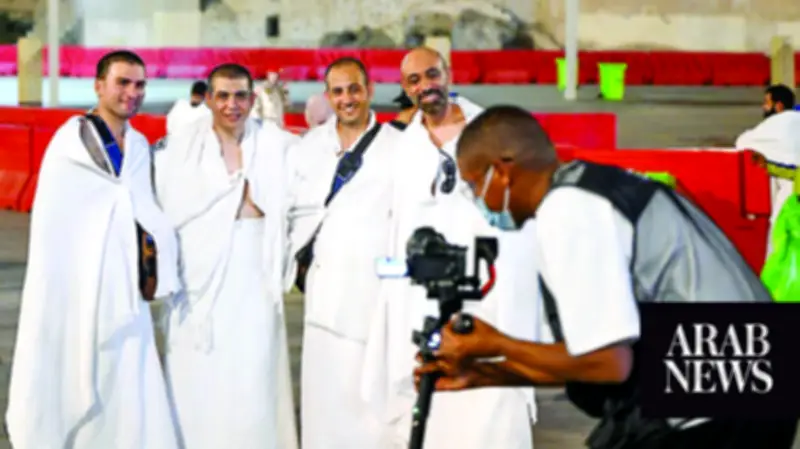
Beyond its significance as a pillar of Islam, Hajj has always been a time for building spiritual connection, cultivating empathy, and practicing patience. Previous Hajj performers shared with Arab News how their experiences created serene and meaningful evenings for contemplation and connection, altering their perception of the world through conversation and playful competitions.
Evenings of Connection and Reflection
Othmane Elammouni described the unique rhythm of Hajj evenings: "After a long day of manasik (Hajj rituals), evenings had a really different rhythm, almost like stepping into another dimension after the intensity of the day." Former pilgrims recall evenings filled with prayer and storytelling after completing the day's rituals. Groups would gather outside in circles, trading stories about their lives back home. Cultural differences and food were popular topics.
After Maghrib prayer, staff organized question games and trivia-style competitions with prizes. "It sounds simple, but it was honestly one of the highlights. You'd have people from completely different countries on the same team, laughing and getting competitive over questions," Elammouni said. The evening typically closed with a lesson from a university professor or scholar, followed by one-on-one sessions for deeper questions.

A Memorable Moment of Service
Elammouni recalled a poignant moment when a man in a wheelchair asked him to be his companion. Intending to stick close to the guide for correct ritual performance, he shifted his plan: "Being chosen to assist someone in need, in that place of all places, felt like a blessing I hadn't expected." As they navigated crowds, people parted for the wheelchair. "Even in queues, priority was given. Flags from every corner of the world, faces from a hundred different races, all moving as one and answering in a single unbroken voice, 'Labbayka Allahumma labbayk' — it sends a shiver through your skin just remembering it," he said.
First-Time Pilgrim Experiences
Abeer Sultan performed Hajj for the first time last year. Despite preparation, she felt uncertain. "I still felt like I was going to the unknown, but after seeing the amount of people in the tent, it kind of felt familiar but so new, since everything was shared and there was no longer any privacy," she said. Mornings started with Fajr prayer, a light breakfast, and Nescafe 2-in-1. "It only tastes good there," she noted. Due to extreme heat around 40 degrees Celsius, some stayed in rooms praying and reading the Qur'an.
Unexpectedly, their tent had a "supervisor of happiness." In evenings, a female preacher organized sessions on various topics, and the supervisor would create competitions. "Even at the men's section, I would hear them singing 'Ya Taybah' like it's the last day of their lives," Sultan recalled. The supervisor asked them to decorate their tent for Eid. "My mom got excited and voted to put me and my sister in charge. The funny thing was that there was nothing to use, so we started using umbrellas, tissues, fans, etc., and it was a way for us to bond," she said.
After returning home, Sultan's Hajj memories were filled with journeys that brought people from around the world to her tent. The patience she cultivated gave her "a sort of new perspective on how we choose to live and what we dedicate our lives to."
Shared Activities and Women's Circles
Jumana Shaheen performed Hajj during her mid-teens. Her group held board game nights and played chess, but most evenings involved women sitting together, sharing challenges, life lessons, and prayers that helped them through difficult times. "At that time in Saudi (over 10 years ago), it was very different, so things that they did to make life more enjoyable, how they created other women's circles in their houses to support one another," she told Arab News.
On other evenings, people would sit alone to contemplate, pray, manifest, or journal. "What I found super powerful is the conversations that women would share, whether it's certain prayers or rituals," said Shaheen. "I remember I learned about moon water — you put water out when the moon is full and use it to water plants. They shared how this brought more fullness and abundance in their homes."