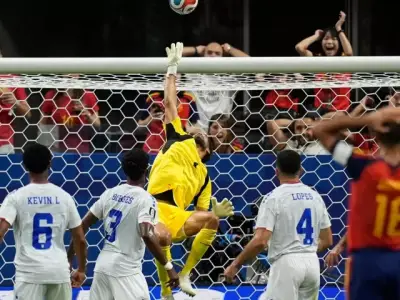
A week into the 2026 FIFA World Cup, the familiar stars are doing familiar things. Kylian Mbappé's two goals against Senegal made him France's all-time leading scorer. Erling Haaland marked his World Cup debut for Norway with a brace against Iraq. Lionel Messi went one better: a hat-trick against Algeria that drew him level with Miroslav Klose as the joint-leading scorer in World Cup history. At the other end, Cristiano Ronaldo's drought stretches to ten consecutive matches at major tournaments without a goal.
Newcomers Make Their Mark
But the World Cup has always been as interested in arrivals as it is in greatness. Curaçao, Jordan, Uzbekistan and the Democratic Republic of Congo have all scored their first-ever World Cup goals, while DR Congo and Qatar secured their first-ever points. These moments carry none of the historical weight of Messi's latest masterpiece, but they matter just as much. World Cups are remembered not only for champions but for who shows up.
The appearance of Zidane Iqbal for Iraq drew little attention outside South Asia, but it should have drawn more. Born in Manchester to an Iraqi mother and a Pakistani father, Iqbal became the first player of Pakistani heritage to appear at a FIFA World Cup. For most countries, that statistic would barely register. In Pakistan, where World Cup participation remains an elusive dream, it is a rare thread connecting the country to football's biggest stage.

Expansion and Opportunity
The tournament's expansion to 48 teams has drawn plenty of criticism, much of it fair. But football's history suggests opportunity matters: countries improve by participating, not by watching from home. Curaçao's first World Cup goal, scored by a nation of just 158,006 people, may prove insignificant in competitive terms. It still carries a lesson for much larger ones. Footballing success is rarely a function of demographics alone.
The point was visible again in England's 4–2 victory over Croatia, arguably the tournament's finest match so far. Played at a relentless tempo and rich in technical quality, it showcased two nations with vastly different populations but similarly deep footballing traditions. England's population exceeds 55 million; Croatia's is under four million. Yet both continue to produce elite players because football occupies a central place in their culture, institutions and everyday life. Success at this level is rarely accidental. It is usually the product of decades of participation, coaching and development.
Pakistan's Football Paradox
Why do some nations consistently produce world-class footballers while others struggle despite vastly larger populations? Pakistan provides perhaps the most striking example. The country is home to roughly 250 million people, the fifth most populous nation on earth. Yet its men's team is ranked 198th out of 211 FIFA member associations and has never qualified for a World Cup, an Asian Cup or any major continental competition beyond South Asia. India and Bangladesh tell a similar story. Between them, the three countries account for almost two billion people, yet remain peripheral to elite football.
Population is one of the weakest predictors of sporting success. If demographics determined outcomes, South Asia would dominate world football. Instead, countries such as Uruguay and Croatia, each with fewer than four million people, have produced generations of elite players. The real explanation lies in culture and institutions. Great footballing nations are built from the bottom up: the sport conquered England's industrial towns long before it became a global business, and Brazil and Argentina built identities rooted in neighbourhoods, schools and streets. By the time a sport reaches the boardroom, it has already conquered everyday life.
Institutional Failures
This is where Pakistan, India and Bangladesh have struggled. Millions follow football passionately. Premier League matches draw huge television audiences, and European clubs command devoted local support. But watching football and producing footballers are not the same thing. A nation starts producing elite athletes when children play a sport not because they are told to, but because they cannot imagine doing anything else. Cricket achieved that status across much of South Asia. Football never quite did.

Institutional failures have compounded the problem. Pakistan has spent decades wrestling with financial embezzlement, federation disputes, administrative crises, suspensions and inconsistent league structures: FIFA-funded Goal Projects, promised across eight cities, that mostly ended in unfinished buildings and dirt fields. Talent can emerge anywhere, but it needs pathways. Without functioning competitions, qualified coaching and long-term planning, even countries with enormous populations struggle to convert potential into performance.
Iqbal's Story as a Mirror
Iqbal's story makes the point cleanly. If a footballer with Pakistani roots can reach the World Cup through the development systems of England and Iraq, the issue plainly is not a lack of ability. Talent is universal. Opportunity is not, and Pakistan's relationship with the sport is replete with that contradiction. The official ball at this tournament, the Adidas Trionda, is manufactured in Sialkot by Forward Sports. Pakistan has never qualified for a World Cup, yet footballs made there have appeared at generations of them. The country sits outside football's competitive map while remaining central to its supply chain.
The Messi Lesson
Consider Messi himself, whose hat-trick against Algeria was the defining moment of the tournament's opening week. His career is usually told as a story of genius, but it is just as much a story of opportunity. As a child in Rosario, he was diagnosed with a growth hormone deficiency that placed serious financial strain on his family. Barcelona saw enough in him to invest: funding treatment and providing an apartment for his family near the Camp Nou, building an environment in which his talent could actually develop. Talent matters, but it rarely succeeds alone. Behind every great player stands a network of coaches, clubs and institutions willing to recognise potential before anyone else can see it and take calculated risks.
That is the truth this World Cup keeps reflecting, underneath the spectacle, the sponsors and the politics: every player at this tournament began as a child kicking a ball somewhere. Nations do not succeed because they discover talent. They succeed because they build environments where talent gets the chance to discover itself.
Irtiza Shafaat Bokharee is a freelance columnist and a social scientist.