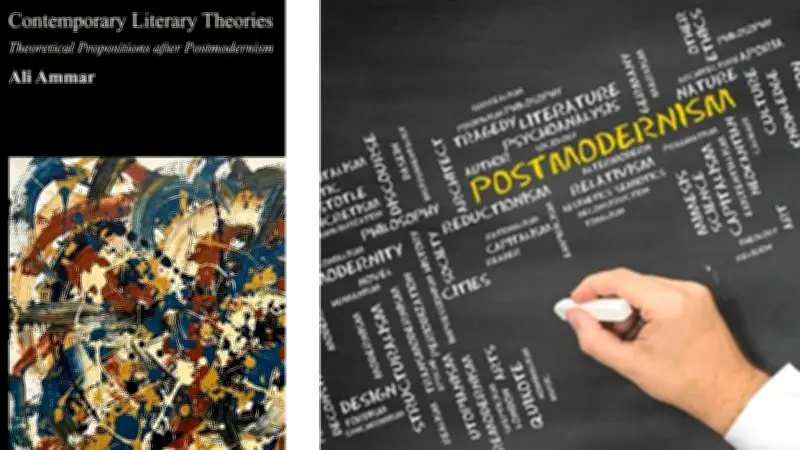
Ali Ammar, a Pakistani scholar with a PhD from Air University, Islamabad, has published a significant new book on contemporary critical theory, filling a long-standing void in indigenous scholarship within English Studies in Pakistan. The book, titled Contemporary Literary Theories: Theoretical Propositions after Postmodernism, was released by Cambridge Scholars Publishing, Newcastle upon Tyne, UK, and offers a refreshing departure from conventional textbooks that trace literary theory from New Criticism to Ecocriticism in a predictable manner.
The Research Deficit in Pakistani English Studies
While universities in Pakistan have multiplied, turning higher education into an industry with increasingly easier degree acquisition, the quality of research remains unsatisfactory. In English Studies, the scarcity of impactful critical scholarship by indigenous researchers has been particularly acute. Although recent contributions in feminism and theorisation of Pakistani Anglophone literature have begun to narrow this gap, the area of critical theory remained barren, with virtually no indigenous monographs used for teaching literary theory despite its centrality to contemporary literary research.
Ammar's work addresses this deficit by engaging with an era skeptical of postmodernism's rejection of grand narratives, irony, pastiche, privileging of subjective experience, and trivialisation of emotions and human values. He introduces emerging theoretical paradigms including metamodernism, performatism, renewalism, remodernism, digimodernism, altermodernism, cosmomodernism, post-postmodernism, hypermodernism, Irmtraud Huber's concepts of reconstructive fantasies and present-tense narration, as well as globalism and planetarism.

A Lucid and Interdisciplinary Approach
A notable strength of the book is Ammar's lucid and engaging style. He explains each theory not only through literary texts but also by drawing examples from music, Hollywood films, independent cinema, and streaming platforms like Netflix and Prime Video. This interdisciplinary approach enhances accessibility, allowing young researchers to grasp complex concepts through familiar cultural texts.
According to the author, these theories reflect his conviction that researchers should engage with intellectual paradigms addressing contemporary complexities rather than remain confined to twentieth-century Western theoretical labyrinths.
The Intellectual Journey Behind the Book
The idea for the book appears to have originated from Ammar's research article 'Labeling Contemporary Literary Theory: Attitudes of Depressiveness and Happiness' published in the December 2017 issue of the Journal of Social Sciences (Government College University, Faisalabad). In that article, he introduced several theoretical approaches examined in greater depth in the present volume. The book thus represents the culmination of an intellectual journey spanning several years, demonstrating the hallmark of a serious researcher: commitment to a line of inquiry, refining and deepening ideas over time to make substantive scholarly interventions.
Significance for English Studies in Pakistan
Ammar's work heralds a new chapter in English Studies in Pakistan. For decades, English departments were dominated by Anglo-American literary and critical texts. Beginning in the early 2000s, they gradually embraced literatures in English and incorporated twentieth-century critical theories. However, even that framework now appears insufficient to address rapidly changing intellectual and cultural realities of the twenty-first century. In this context, Contemporary Literary Theories: Theoretical Propositions after Postmodernism emerges as a timely, relevant, and much-needed contribution by a scholar whose work deserves serious attention from students and researchers alike.