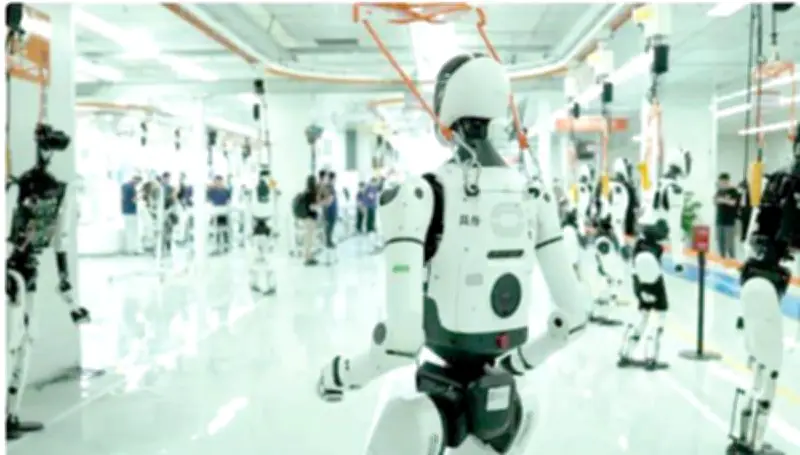
When humanoid robots dominated the stage of last year’s Spring Festival Gala with sleek dance routines, Ai Lin saw more than a spectacle. He saw a business. Soon after, the e-commerce livestreamer in Hangzhou shelled out $30,000 for his first android and turned it into a rental venture.
Brisk rental business reveals robot limitations
Business has been brisk. For 3,000 yuan ($443) a day, customers can hire an android to attract crowds at exhibitions, perform at events or even help stage a marriage proposal. But his venture has also revealed what viral videos of dancing, flipping Chinese robots have not: the heavily promoted technology is still years away from replacing human labor, whether on a factory floor or in a household.
“The market for humanoid sales hasn’t really taken off yet because today’s robots still can’t operate on their own – they’re basically oversized toys,” Ai Lin said.

Beijing’s strategic bet on humanoids
Still, Beijing is betting billions of dollars on humanoid robots as a strategic technology that could increase productivity as economic growth slows and its workforce shrinks. Getting a leg up in the burgeoning industry could also help China pull ahead of the US and other rivals in artificial intelligence and advanced technology.
“Traditionally, industrial capabilities have been controlled by countries like Germany, Japan and the US,” said Lian Jye Su, chief analyst focusing on artificial intelligence and humanoid robots at research firm Omdia. “But with humanoids, it represents a rare opportunity where the whole world may be looking to China for this next pivotal moment.”
Market potential and China’s dominance
The potential for the industry is immense. Investment bank Morgan Stanley estimates there could be one billion humanoids in use by 2050, representing a market of over $5 trillion, though adoption will not pick up speed until at least a decade from now. China already dominates the manufacturing and deployment of industrial robots, such as robotic arms in factories. And its humanoid robot makers accounted for the vast majority of the global android deliveries last year, far outpacing American competitors like Tesla and FigureAI.