Microsoft has announced a sweeping slate of AI initiatives at its annual Build developer conference in San Francisco, including autonomous workplace assistants, new gadgets powered by Nvidia chips, and a proprietary reasoning model. The company is aiming to move beyond traditional apps and remake computing around artificial intelligence.
New Devices and Project Solara
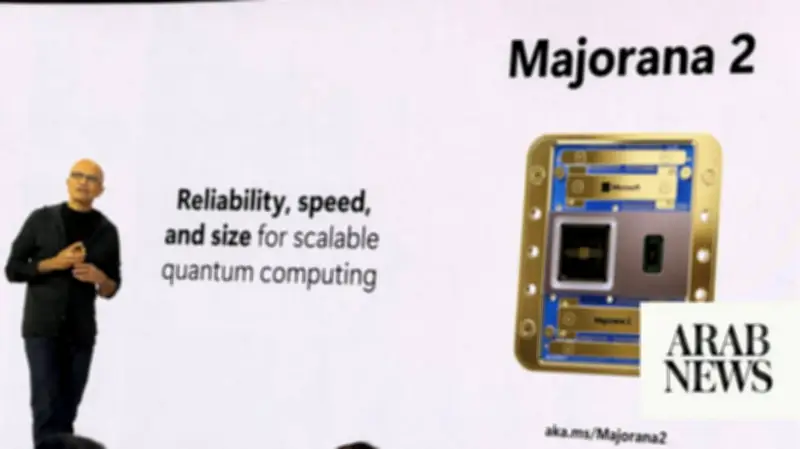
CEO Satya Nadella unveiled the Surface RTX Spark Dev Box, a new computer loaded with an Nvidia chip, calling it a “dream machine” and noting he is on the wait list to buy it. The company also revealed Project Solara, a family of prototypes ranging from smart speaker-sized devices to keycard badge-sized gadgets, based on chips from Qualcomm and MediaTek. These devices feature screens and microphones but do not run a traditional operating system; instead, they host AI agents that communicate with cloud-computing systems to perform specific tasks, such as documenting a medical visit with a nurse.
“Whenever these new platforms come, you get to rewrite even the rules of how new platforms operate,” Nadella said during his keynote. “That’s what we’re trying to get done with Project Solara, so that you, as developers and enterprises, have the flexibility to imagine the form factors that you want and have your agents be ubiquitous.”

Nvidia-Powered PCs and OpenClaw Integration
Microsoft is competing with rivals to sell cloud-based AI tools while also encouraging customers to run AI on Windows PCs. The Surface RTX Spark Dev Box follows a laptop introduced with Nvidia this week, and executives demonstrated it running an AI model with 120 billion parameters, a feat most PCs cannot achieve. The new PCs are priced to compete with Apple’s premium offerings, but analysts anticipate a slow adoption rate among businesses.
Microsoft also announced tools to help Windows run OpenClaw, open-source software that can direct groups of AI agents to carry out everyday tasks. The goal is to make OpenClaw safe for businesses to use on computers with sensitive corporate data. During a demo, executives showed how a corporate IT department could prevent users from inadvertently deleting all files on their desktops. “You can totally run OpenClaw inside your company now,” said Peter Steinberger, the software engineer who created OpenClaw, speaking on stage.
New AI Agents and Models
Microsoft introduced a new AI agent called Scout within its Copilot software. Scout can perform tasks such as gathering emails or messages that require user decisions to move forward. The company also provided updates from its AI unit focused on “superintelligence.” To catch up with Anthropic and OpenAI, the unit released what it claims is the most efficient transcription AI model among cloud hyperscalers, along with an image model to compete with Google’s.
Microsoft’s first reasoning model, MAI Thinking-1, matches the performance of Anthropic’s Claude Opus 4.6, launched this year. Anthropic recently announced Opus 4.8. These models underscore Microsoft’s efforts to build frontier AI independently of OpenAI, the lab it has long backed.
Healthcare AI Partnership with Mayo Clinic
One distinguishing aspect of Microsoft AI’s work is its focus on medical diagnostics, announced late last year. The company has now reached a deal with the Mayo Clinic to develop frontier healthcare AI, leveraging Microsoft’s reasoning and compute capabilities alongside Mayo Clinic’s clinical expertise and data. In a joint interview, Microsoft AI leader Mustafa Suleyman and Mayo Clinic CEO Gianrico Farrugia said the partnership emerged from meetings between Farrugia and Nadella. The goal is to improve patient outcomes with AI that acts as a team member, helping to “get to a diagnosis faster and better,” Farrugia said.