Chinese authorities have set their sights on a new target in the country's fiercely competitive food delivery industry: ghost kitchens. These are restaurants that do not physically exist but appear on food delivery apps, outsourcing orders to third-party vendors at lower costs to maximize profits.
Authorities have discovered thousands of such ghost kitchens across China, raising serious concerns that the low prices come at the expense of food safety. Starting this week, food delivery apps must verify restaurants' licenses and addresses, and merchants must ensure their online listings match their physical businesses, specifying if they offer dine-in services.
Origin of the Crackdown
The scrutiny of ghost kitchens began last year after a man in Beijing filed a complaint about an unsatisfactory cake topped with inedible flowers, which he had ordered through a food delivery app, according to state media. Officials found that the cake chain he ordered from listed nearly 380 locations on major e-commerce platforms but had no physical stores, and its online shops allegedly used forged business licenses.

As investigations continued, it was revealed that the chain accepted orders that were then transferred to a different platform, where orders were outsourced to various third-party vendors based on the lowest bid. Authorities found a total of 3.6 million cake orders across two order-transfer platforms, according to state news agency Xinhua last month. They also recorded 67,000 ghost shops across seven major food delivery apps, which together with the order-transfer sites formed an illegal supply chain through mutual collusion.
Industry Competition and Consequences
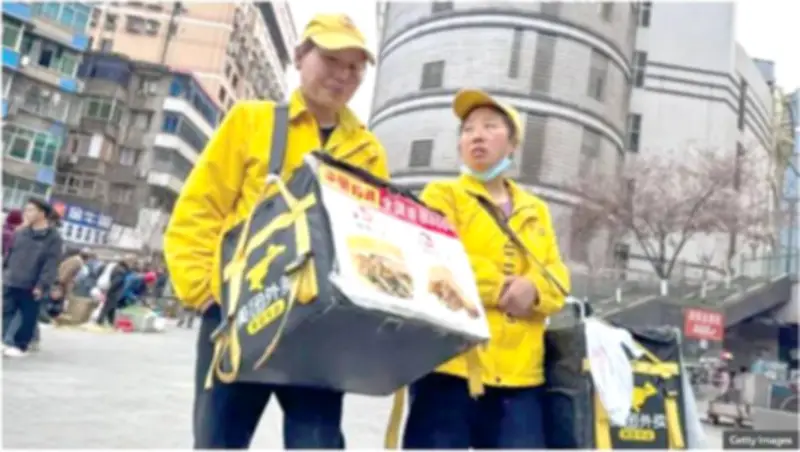
Food delivery platforms were complicit in these arrangements. A staff member from one delivery app reportedly told officials that if they were too strict in their review, merchants would move to other platforms. Online food delivery in China is a fiercely competitive industry. Last year, a price war among major delivery apps led to government warnings about a race to the bottom. Delivery riders bear the brunt of ever-speedier takeouts, scrambling to meet tight deadlines for low pay.
In April, the State Administration for Market Regulation announced fines totaling 3.6 billion yuan ($530 million) against seven e-commerce platforms, including Taobao, JD.com, Meituan, and Pinduoduo, mostly over deliveries from ghost kitchens.
Industry Response
As the campaign against ghost kitchens continues, merchants are trying to assure consumers of food safety. According to a Xinhua report, more than 20 takeout stalls in the eastern city of Hangzhou have installed transparent kitchens with live broadcasting features, allowing consumers to view food preparation in real time. In nearby Anhui province, authorities announced last week that they have signed a food safety agreement with Meituan, Taobao, and JD.com, which includes using AI models to monitor kitchens and rewarding delivery riders for whistleblowing on illegal restaurants.