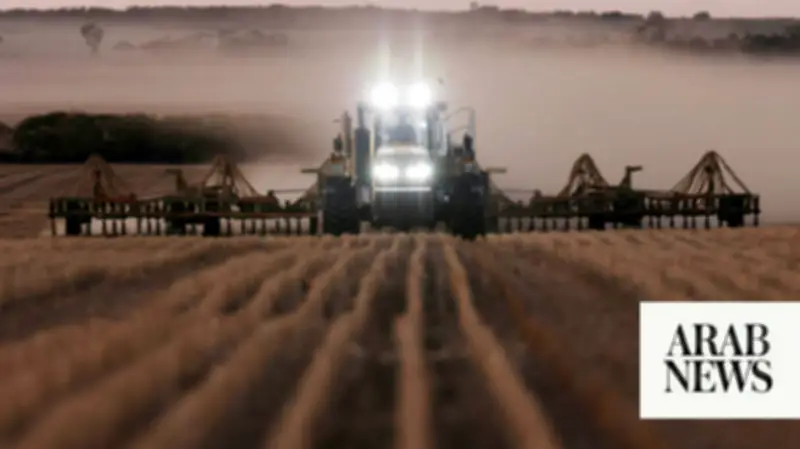
Australia's upcoming wheat harvest is expected to be the smallest in three years, as high fertilizer costs stemming from the war in Iran and dry conditions in key growing regions reduce planting and yields, the government said on Tuesday. Australia, a major global exporter of wheat and other crops, plays a significant role in global food supply chains. A lower output from Australia would tighten global supply, putting upward pressure on prices that recently reached two-year highs following crop losses in the United States.
Forecast and Comparison
The Australian Bureau of Agricultural and Resource Economics and Sciences (ABARES) released its quarterly crop report, estimating that Australia will harvest 26.7 million metric tonnes of wheat later this year. This figure is approximately 9 million tonnes less than last season and about 8 million tonnes below the average of the last five seasons, according to ABARES data. The decline highlights the impact of both geopolitical and climatic challenges on agricultural production.
Fertilizer Costs and Yield Potential
Fertilizer costs have surged since the war in Iran disrupted deliveries from Gulf nations. High prices are likely to lead farmers to reduce fertilizer application, which in turn lowers yield potential, explained ABARES, which operates under the Agriculture Ministry. The reduced use of fertilizers, combined with other factors, threatens to further diminish crop output.

Weather Conditions and Outlook
Large parts of eastern Australia have experienced months of low rainfall. Although widespread rain in May improved crop conditions, the country's weather bureau still predicts an El Nino event and below-median rainfall in the coming months. ABARES emphasized that adequate and timely fertilizer supply and sufficient rainfall are crucial to meet current yield projections. The uncertainty surrounding weather patterns adds another layer of risk to the harvest outlook.
Land Use and Crop Shifts
ABARES estimated that the area planted with wheat will decline by 12 percent from last season to 10.9 million hectares, the smallest since the 2019/20 season. In contrast, barley planting, which requires less fertilizer than wheat, is set to increase by 4 percent to 5 million hectares. However, barley production is still expected to fall by 15 percent to 14.1 million tonnes. The area planted with canola, a crop that needs substantial fertilizer but is more valuable than wheat, should decrease by 6 percent to 3.5 million hectares, with the harvest likely 20 percent smaller at 6.2 million tonnes.
Conclusion
Australia's sowing period is just concluding, and the harvest is expected toward the end of the year. The combination of high input costs, adverse weather, and reduced planted area underscores the challenges facing Australian farmers and the potential implications for global grain markets.