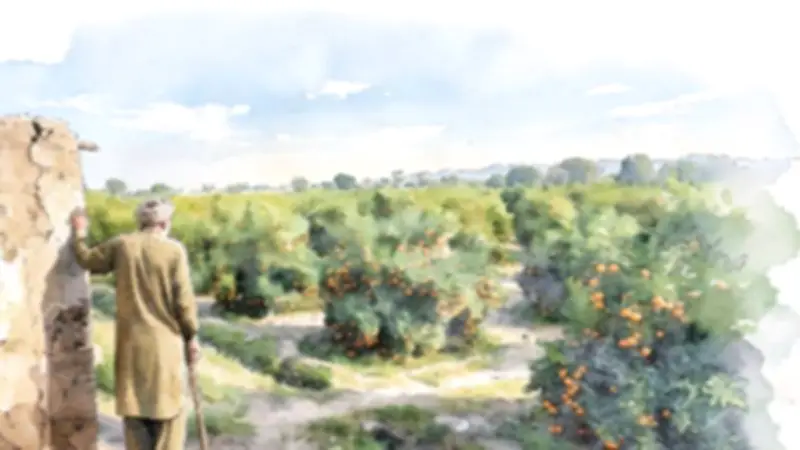
There is a particular kind of silence that settles over a citrus grove in the early hours of a Sargodha morning, the dew still heavy on the kinnow, the air carrying that clean, sharp sweetness that no perfumer has ever quite replicated. I grew up inside that silence. It was the silence of abundance, the silence of a place that fed the world and knew it. Sargodha was not merely a city. It was a statement of agricultural supremacy. Known globally as the City of Eagles, it was equally the undisputed capital of kinnow production, responsible for roughly 95% of Pakistan's citrus exports and celebrated in markets from the Gulf to Europe as the gold standard of the fruit. That world is now disappearing. The groves are being uprooted. In their place stand boundary walls, broker offices, and the skeletal frames of housing societies with names like Royal Enclave and Green Valley, an almost obscene irony, given that what was green and genuinely valuable has been paved over to manufacture the appearance of it.
The Disappearing Groves
This article is not nostalgia. It is a legal indictment. Pakistan was once among the top ten citrus-producing nations in the world. Today, citrus orchards across Sargodha division have shrunk by an estimated 30 to 40 percent over two decades. Export quality has collapsed, gutted by counterfeit inputs, the total absence of cold-chain infrastructure, and the irreversible erosion of generational farming knowledge that no government programme has ever moved to preserve. Small citrus farmers are not selling because farming has failed them. They are selling because the state has failed farming. Water scarcity from deteriorating canal infrastructure, fake pesticides flooding an unregulated market, zero investment in orchard renewal, no crop insurance of any kind, and crushing informal debt have combined to leave farmers no exit except the land itself. And who is buying? Not other farmers. Not the government for food security. Real estate developers, men with NOC applications already drafted before the orchard is even cleared.
Zooming Out: National Crisis
Zoom out from Sargodha and the picture darkens further. Pakistan holds over 22 million hectares of arable land, one of the world's largest irrigation systems, and four climatic zones capable of producing everything from wheat and rice to mangoes and dates. Agriculture employs nearly 37% of the national workforce and contributes approximately 23% of GDP. The potential is extraordinary. The performance is a sustained disgrace. The Indus Basin Irrigation System, a colonial-era engineering marvel, has received negligible modernisation in decades. Small farmers hold no enforceable legal water rights. The Agricultural Pesticides Ordinance 1971, drafted in an era that bears no resemblance to the present, still governs pesticide regulation. Counterfeit inputs estimated at 30 to 40 percent of the market destroy yields and expose farmers to liability with no legal remedy. The rest are trapped in peshgi and arhthi debt structures so coercive that the Bonded Labour System (Abolition) Act 1992 should theoretically apply, but never does in practice. The Punjab Tenancy Act 1887, a Victorian statute drafted by a colonial administration that viewed Pakistani farmers as revenue units rather than rights-bearing citizens, remains operative today. Sharecroppers possess almost no enforceable rights. Legal reform has been promised across every decade and delivered in none.


Criminality in Land Conversion
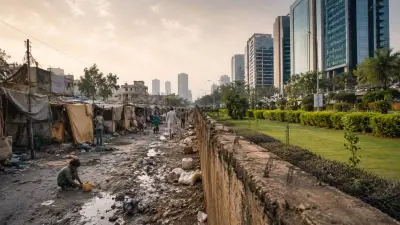
Here is where negligence becomes criminality. Across Pakistan, most visibly in the fertile belts of Punjab, in Sargodha, Faisalabad, and along the GT Road corridor, prime agricultural land is being converted into housing societies at an industrial pace. The mechanism appears procedurally clean: a developer approaches the relevant provincial authority, a No Objection Certificate is issued, and farmland is reclassified for residential use. Simple. Orderly. Catastrophic. What is not said officially, but known universally, is the parallel economy of bribery that animates this process. NOCs for housing societies on agricultural land do not move without payments running into crores of rupees. District administrations, provincial development authorities, and local government officials participate in a chain of rent-extraction that makes the conversion of farmland the single most reliable business model in Pakistan. Not agriculture. Its destruction.
Weaponised Laws
The Land Acquisition Act 1894 has been weaponised by developers to pressure holdout farmers into selling. Provincial land use regulations theoretically restrict conversion of prime agricultural land but are never enforced. PEPCO and WAPDA extend utility connections to illegal housing societies, making the state an active infrastructure partner in the annihilation of its own food base. The National Accountability Ordinance and the Prevention of Corruption Act theoretically cover the bribery of officials for NOCs. Prosecutions remain virtually non-existent. The result is a slow, systematic theft of the national food base, conducted legally on paper, criminally in practice, and with the full knowledge of every government that has held power.
Legislative Solutions
I am a lawyer. I believe in legislative solutions. The Agricultural Land Protection and Food Security Act should be enacted with the following core provisions. An absolute prohibition on conversion: any land classified as agricultural under provincial land records should be permanently ineligible for residential or commercial development unless reclassified through a transparent parliamentary committee process, not a discretionary executive NOC. Reclassification must require independent food security impact assessments. The conversion of agricultural land without lawful parliamentary reclassification should be a cognizable, non-bailable offence carrying a minimum sentence of five years imprisonment, applicable equally to developers, facilitating officials, and the sponsoring politicians who made the calls. Any public official issuing an NOC for development on agricultural land should bear the burden of proving the absence of corrupt consideration, drawing on the evidentiary standard already established in NAB jurisprudence. Courts should have jurisdiction to order physical restoration of converted land at the developer's full expense, with any housing society constructed on illegally converted land having its NOC declared void ab initio.
Technology and Transparency
Finally, Pakistan needs a digitised, publicly accessible, tamper-resistant National Agricultural Land Registry, building on blockchain-based pilots already underway in Punjab, that makes illegal conversion visible and prosecutable before the land is permanently lost. The macroeconomic case is equally urgent. Pakistan spends billions in foreign exchange annually importing edible oils, pulses, and increasingly wheat, commodities it is entirely capable of producing domestically. The foreign exchange crises that have repeatedly destabilised the rupee are, in significant part, crises of agricultural underperformance. The IMF programmes that successive governments have signed, each one a national humiliation dressed in technocratic language, contain conditions that could be substantially softened if Pakistan's agricultural export capacity were developed with even basic seriousness. A productive agricultural sector is energy security, food security, and foreign exchange security consolidated in a single soil. Instead, we are paving it over.
The Irreversible Loss
The kinnow tree takes five to seven years to reach full productive maturity. An orchard, once uprooted for a housing society, is not replanted in a season or a generation. The soil compacted under concrete does not easily recover. The farmer who sold his land does not easily return. What is being lost in Sargodha, and in Sahiwal, in Sheikhupura, in the sugarcane belts of Sindh, in the rice paddies of Gujranwala, is not merely land. It is accumulated generational knowledge, ecological equilibrium, and the economic foundation of a country that has no honest alternative to agriculture as its primary path to stability. Every government has had the data. Every government has made the speeches. Every government has then issued the NOCs. The law must step in where political will has failed. The criminalisation of agricultural land conversion is not a radical proposal. It is the minimum necessary response to a crisis that threatens Pakistan's long-term survival as a food-sovereign nation. The minimum. The groves of Sargodha did not die naturally. They were sold. And the men who bought them knew exactly what they were destroying.