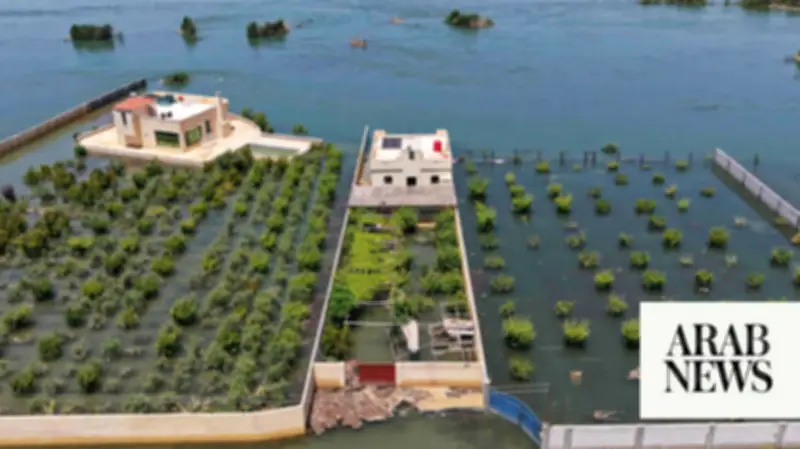
Farmer Issa Al-Moussa walks through his damaged wheat field in eastern Syria after the nearby Euphrates River flooded due to heavy rainfall and increased water releases from Turkey. Syrian authorities described the water level rise as 'exceptional,' affecting Raqqa and Deir Ezzor provinces before the river flows into Iraq.
Flooding Causes Widespread Damage
The floodwaters inundated fields and homes, knocked out bridges and crossings, and halted pumping stations for drinking water and irrigation. Moussa, standing on his partially submerged land, lamented his losses: 'I plowed my land, which is 6,000 square meters in size, and each dunam cost me 1 million liras ($75). This land is lost.' With his wheat crop destroyed, he has no other income to support his family.
The Syrian Energy Ministry attributed the flooding to 'the significant and unprecedented increase in water flows from the Turkish side.' In Moussa's town, where agriculture is the primary livelihood, water covered vast farmland areas, forcing farmers to assess their ruined crops. Some houses and small buildings were also surrounded by water.

Extent of Flooding
Authorities estimated that about 5 square kilometers of land in Deir Ezzor and 1,500 dunams in the village of Al-Mahoukiya in Raqqa were flooded. 'No one knows when this water will dry up,' Moussa said, demanding government compensation, assistance for farmers, higher prices for wheat and cotton, and support with fertilizer, medicine, and fuel.
Farmers reported receiving no early warning to save equipment and crops. 'We were not informed that dams would open... our lands are gone,' Moussa added. Syrian Energy Minister Mohammad Al-Bashir stated that 'Turkey's warning to us about the rising water levels of the Euphrates River came too late.' Syria opened the Euphrates Dam floodgates for the first time in decades last week. No official Turkish statement has been made regarding coordination with Damascus on the rising water levels.
Infrastructure and Daily Life Disrupted
The four-meter rise in water levels also disabled around 60 water pumping stations, according to water company chief Ahmad Al-Moussa. Local resident Ahmad Saadoun pointed to a collapsed temporary earthen bridge: 'We now struggle to cross from one bank to another... People are now crossing by boat, but it is also dangerous as long as the water has not calmed down.'
In response to the worst floods in 30 years, authorities reinforced earthen barriers and prepared for possible evacuations. On Sunday, Raqqa water authorities reported a 60 cm drop in the Euphrates water level within 24 hours, but the gradual decrease has not resolved the crisis.
Nighttime Surprise
In parts of Kharita, water surged suddenly at night, reaching farmers' homes. Mohammed Khodr Al-Hussein, 27, recounted: 'We were asleep when we saw the water rushing in. We ran out with only clothes on our backs. We left our cars, our livelihoods, our homes, and our farms behind. We have nothing left.' He added, 'We farmers live season by season. We borrow at the beginning of each season and wait for the harvest to pay off our debts. Today, our losses are twofold: our money is gone, our crops are gone, and the wheat is no longer fit for harvesting.'