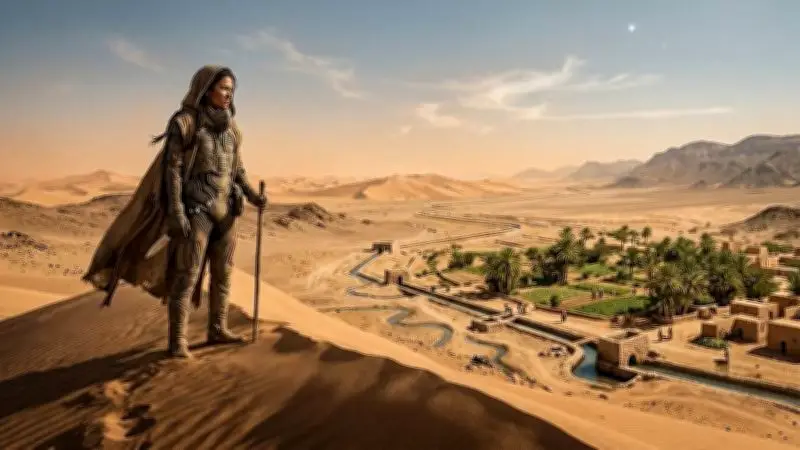
Frank Herbert's epic novel Dune, which won the Hugo and Nebula awards, has been brought to a global audience by Denis Villeneuve's films. The 2021 Dune Part 1 and 2024 Dune Part 2, with a third installment due in December 2026, feature sensible casting, impeccable direction, and a faithful commitment to the plot. These films have made the story more memorable than David Lynch's 1984 version.
Pakistanis' Easy Connection to the Fremen
Pakistanis relate to the native Fremen of Arrakis because the novel is Islamophilic, desert-based, tribal, warlike, and linguistically familiar. Prior to writing Children of Dune in 1972, Herbert visited Pakistan and India to study ecology. His son Brian Herbert, in his 676-page biography Dreamer of Dune (Tor: 2003; Gollancz: 2023), notes that Frank was interested in utilizing the planet's resources efficiently and attempted to harness solar energy decades before others.
Unauthorized Urdu Translation Decades Ago
An unauthorized Urdu translation of Dune existed long before Shaukat Nawaz Niazi's approved translation a couple of years ago. This is significant for understanding the thought processes behind the messianic, global, ecological, and spiritual story.

USDA Sand-Dune Project and Pakistani Involvement
In the late 1950s, Herbert was part of a USDA initiative testing sand-dune conversion to arable land in Portland, Oregon. Brian Herbert identifies only four countries interested in this project: Pakistan, Chile, Argentina, and Israel. Despite Pakistan not recognizing Israel at the time, these politically disparate nations came together for this environmental endeavor. While Brian does not elaborate on the meetings between Herbert and Pakistani officials, it is clear that Herbert's ties to Pakistani lore and culture run deeper than to Arab countries he never experienced first-hand.
Native American and Pakistani Influences
Brian Herbert notes that his father's novel Soul-Catcher was influenced by Native American lore through his friend Howie Hansen, who had Quileute roots. He also comments on his parents' marriage and their love for exotic locales like Mexico and Hawaii. However, the inspiration for the hardy Fremen likely came from the Sindhi and Rajasthani deserts. Herbert was impressed enough by Pakistani geography and culture to incorporate elements into his epic and to visit the country after achieving fame.
Linguistic and Cultural Allusions in Dune
In Dune, the name Harah, wife of Paul Atreides' lieutenant Stilgar, means green ("haray") landscapes, a predominant color in Pakistan's flag. The Fremen language includes lines like "Duy yakha hin mange/duy punra hin mange" (I have two eyes/I have two feet), which is closer to Urdu than to Arabic. Herbert also references a fictional Zensunni religion. Brian's assertion that Paul is modeled after 19th-century Sudanese hero Muhammad Ahmed is personal speculation; the deeper links are with Pakistan.
Legacy and Environmental Vision
These points are intriguing for appreciating the thought processes behind Dune. In his later years, Herbert contemplated climbing Mount Everest but never did. However, he realized that the deserts of Sindh could be converted into arable land if we care enough. Paul Atreides and his beloved Chani, a native Fremen, exemplified this mindset.