On June 26, the world observes the International Day Against Drug Abuse and Illicit Trafficking, highlighting the global threat of narcotics to public health, social stability, and national security. The drug trade fuels organized crime, money laundering, violence, and terrorism, generating billions in illicit profits. Pakistan remains vulnerable due to its proximity to major trafficking routes, with drug abuse spreading from marginalized communities to educational institutions and urban centers, particularly among youth.
Establishment of the Punjab Counter Narcotics Force
Punjab, the most populous province, faces unique challenges in combating drugs. In response, the provincial government established the Punjab Counter Narcotics Force (CNF), approved by Chief Minister Maryam Nawaz Sharif in October 2024. The force became operational in 2025 as a specialized directorate under the Excise, Taxation and Narcotics Control Department. While the federal Anti-Narcotics Force focuses on international trafficking, the CNF addresses local retail distribution and community-level drug activity through intelligence-led operations.
Expansion and Operations
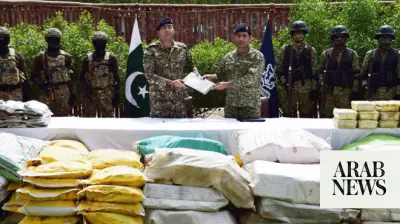
The CNF expanded gradually: first, narcotics control stations were set up in all nine divisions with 800 personnel; then operations extended to the district level. Currently, over 2,300 officers serve across all districts. Since August 2025, the force has conducted more than 2,250 operations, recovering approximately 24.5 tonnes of narcotics valued at over Rs2.2 billion, along with nearly 26,700 litres of illicit liquor. Operations also yielded over 200 weapons, 5,000 rounds of ammunition, and 16 quadcopter drones, indicating links to organized crime.

Disruption of Supply Chains
Rather than focusing only on low-level offenders, the CNF targets entire supply chains. Its actions have led to 440 registered cases and the arrest of more than 750 suspects. This approach not only curbs illegal trade but also protects families from addiction's consequences. The force emphasizes prevention and awareness, recognizing that enforcement alone is insufficient.
Prevention and Community Engagement
The CNF has conducted awareness sessions in over 250 universities, colleges, and other educational institutions across Punjab, informing youth about narcotics dangers and encouraging community participation. The force adapts to emerging challenges, such as traffickers using social media and encrypted communications, by strengthening intelligence and investigative capabilities through technology. Public cooperation is key; helpline 1012 allows citizens to report drug-related activities confidentially, improving intelligence and trust.
Public Health and Legal Reforms
The government addresses addiction as a public health issue, collaborating with rehabilitation centers to help recovering addicts reintegrate into society. Legal reforms include special courts for narcotics cases, which have accelerated prosecutions and resulted in convictions, including lengthy prison terms for major traffickers. On World Drug Day, Punjab's experience shows that political commitment, institutional capacity, and public participation can yield results. However, the fight against drugs requires involvement from parents, teachers, mosque imams, media, and civil society. Protecting future generations from narcotics is a collective responsibility and an essential investment in Pakistan's social and economic future.