Saudi Arabia's Agricultural Revolution: Transforming Deserts into Sustainable Farms
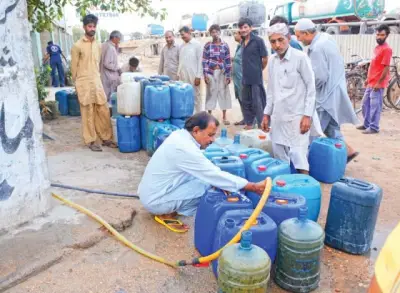
Saudi Arabia, ranking among the world's most water-stressed nations, is embarking on a groundbreaking journey to green its deserts through innovative agricultural practices. With renewable freshwater resources estimated at under 100 cubic meters per person annually—well below the threshold for absolute water scarcity—the Kingdom faces significant challenges. Climate change exacerbates these pressures, with 2024 recorded as the hottest year in the Arab region, accelerating evapotranspiration and climate variability.
Coupled with a population exceeding 35 million and Vision 2030 goals to expand local food production, demand on limited water resources is mounting. This makes water scarcity a long-term structural challenge for the sustainability of Saudi agriculture, driving the nation toward smart and controlled-environment agricultural systems.
Advanced Technologies Driving Water Efficiency
According to Roger Rabbat, PwC Middle East partner, Saudi Arabia is increasingly adopting technologies such as hydroponics, aquaponics, vertical farming, and high-tech greenhouses to overcome arid climate constraints. "Hydroponic systems can reduce water consumption by up to 90 percent compared to traditional open-field farming," Rabbat explained. "Vertical farming enables year-round production in limited spaces and significantly reduces reliance on pesticides."

Marielli Bou Harb, partner at Arthur D. Little, highlighted that over 90 percent of the Kingdom's water needs are supplied by non-renewable groundwater and desalination, with under 2 percent of land being arable. Precision systems, such as drip and smart sprinkler technologies supported by the Saudi Irrigation Organization in partnership with the Food and Agriculture Organization, are replacing traditional flood irrigation. These systems reduce water use by 20 to 60 percent while lowering pumping energy requirements.
Key technologies include:
- Soil-moisture sensors and satellite-based crop monitoring
- Automated irrigation controls for real-time optimization
- Climate-controlled greenhouses with sophisticated irrigation and fertilization systems
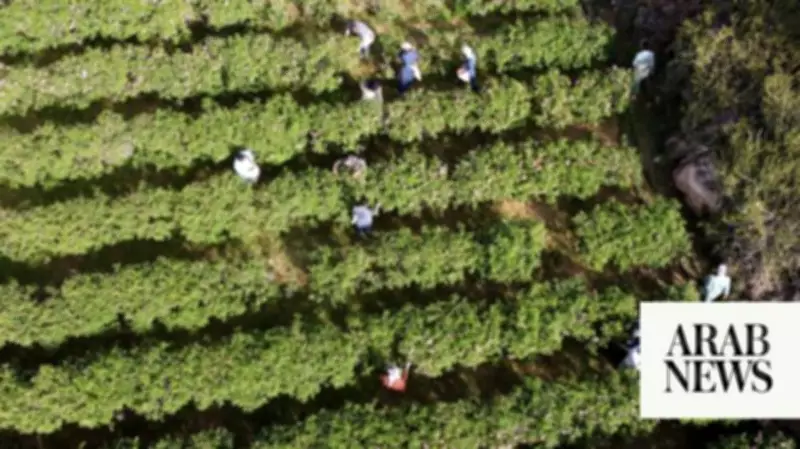
A practical example is the Al-Lith experimental farm, which combines sensor-driven drip and sprinkler irrigation, climate-controlled greenhouses, and the use of treated, diluted low-salinity seawater for irrigation. This approach significantly reduces freshwater demand while testing scalable production models.
Vision 2030 and Private Sector Collaboration
A key part of Saudi Arabia's Vision 2030 reform program focuses on food security, environmental sustainability, and modern agricultural practices, supported by national strategies and innovation-driven initiatives. Rabbat described the Kingdom as "doubling down" on agricultural research and education, with investment plans amounting to several billion Saudi riyals for greenhouse solutions.
Platforms like Saudi FoodTech are accelerating agri-tech innovation by supporting startups and partnerships, reflecting how Vision 2030 is building a resilient, technology-driven agricultural sector. Public-private partnerships are central to this strategy, with the government enabling the private sector to drive investment and innovation while retaining strategic oversight.
Examples of private sector involvement:
- Privatization of the flour milling sector, improving operational efficiency and supply chain resilience
- Investment in scalable technologies by companies like Red Sea Global
- Building local expertise and commercially viable models for replication across the Kingdom
Redefining Agriculture in Arid Climates
Sultan Moraished, group head of technology and corporate excellence at Red Sea Global, emphasized that Saudi Arabia is not just adapting to environmental constraints but redefining agriculture in arid climates. "In some cases, we've reduced water usage by over 80 percent while achieving consistent, high-quality output year-round," Moraished said. "This is not incremental progress; it's a structural transformation of the agricultural model."

Advanced solutions such as hydroponics, climate-controlled systems, and AI-powered irrigation enable precise, efficient, and resilient farming with minimal waste. Controlled-environment agriculture is significantly improving water efficiency, with hydroponics, greenhouses, and vertical farms delivering up to 95 percent water savings, enabling year-round production, and decoupling agricultural output from land and water constraints.
Moraished added that the private sector plays a critical role in translating Vision 2030 from ambition into execution. "Food security is not just about supply—it's about sustainability, resilience, and local capability," he explained. However, scaling remains the next frontier, requiring continued collaboration between government, investors, and operators to align incentives, infrastructure, and regulation.
This agricultural revolution positions Saudi Arabia as a leader in sustainable farming, turning water scarcity into a driver of innovation and setting a global example for arid region agriculture.