Social Protection in Pakistan: Debunking the 'Begging' Myth
Every time social protection is discussed in Pakistan, the same accusation surfaces: 'This is begging. This will make people lazy.' Let us answer with Pakistan's facts, global evidence, and the verdict of institutions that measure these outcomes for a living.
Pakistan's Success Stories
Punjab's PSPA Zewar-e-Taleem program keeps 1,100,000 girls in school across 16 districts. Dropouts fell by 9 percent. Child marriage declined where girls stayed longer in classrooms. An evaluation partnered with UNICEF showed that for every Rs 1,000 stipend given to a family, school-related spending rose by Rs 320. Families chose books because they finally had both.
Federal BISP supports 9.3 million families. Independent studies show reduced child stunting and higher enrollment. The World Bank calls BISP a 'best practice' for developing countries. Khyber Pakhtunkhwa and Balochistan have Sehat Card, Ensaas Rashan, and provincial girls' stipends, putting health and education within reach in the toughest terrain. Hope is crossing mountains.

Global Evidence Settles the Debate
Brazil's Bolsa Familia lifted 14 million families from extreme poverty. The World Bank found that $1 spent returns $1.78 through improved health, education, and productivity. Bangladesh's girls' stipends boosted female secondary enrollment from 33% to 54%. Today, Bangladesh exports skilled women. Mexican children grew 1.5 cm taller, studied 1.3 years more, and earned 10% higher wages as adults. Ethiopia saw child malnutrition fall by 12%. Kenya reported income up 33%. In the USA, child poverty declined by 46%.
What Development Partners Say
The World Bank states: 'Social protection is the most cost-effective investment governments can make.' The IMF in 2023 affirmed: 'Well-designed cash transfers do not hurt growth. They protect economies during shocks and pay for themselves.' UNICEF declares: 'Cash transfers are not charity. They are an investment in children’s future.' The ILO notes: 'No country has eliminated poverty without social protection.'
A Personal Perspective
As someone from a rural background who meets these families regularly, I have seen what data cannot fully capture. I have met mothers who cried because the stipend meant their daughter could keep a school uniform for the whole year. I have seen pregnant women say, 'We can finally afford food and medicines.' Social protection did not make them dependent. It gave them a floor to stand on, so they could plan beyond today. For me, this is not policy. It is dignity. And dignity, when scaled to millions, becomes national strength.
What Pakistan Must Do Now
Social protection must rise above political, linguistic, and religious boundaries. The only goal should be a transparent, efficient, and effective system that keeps evolving. Not Punjab vs KP. Not PPP vs PML-N. Not Urdu vs Punjabi vs Balochi vs Pashto. The question is simpler: Is a girl in Rajanpur in school or not? Is a child in Balochistan stunted or healthy? Data does not see party flags. Data sees outcomes.
So let us define begging honestly. Begging is a 14-year-old girl married instead of schooled. Begging is a mother in Balochistan skipping treatment. Begging is Pakistan losing 2% of GDP yearly by under-investing in human capital. Hope is different. Hope is 1.1 million girls with books. Hope is 9.3 million families with dignity. Hope is what the World Bank, IMF, UNICEF, and ILO all call investment.
Pakistan has a choice. We can keep debating morality while Kenya and Brazil turn cash into growth. Or we can accept what Zewar-e-Taleem and BISP already prove: cash is capital. Hope is not weakness. Hope is strategy. 1.1 million girls. 9.3 million families. And one principle above all: a system that is transparent, efficient, effective, and above all divisions.
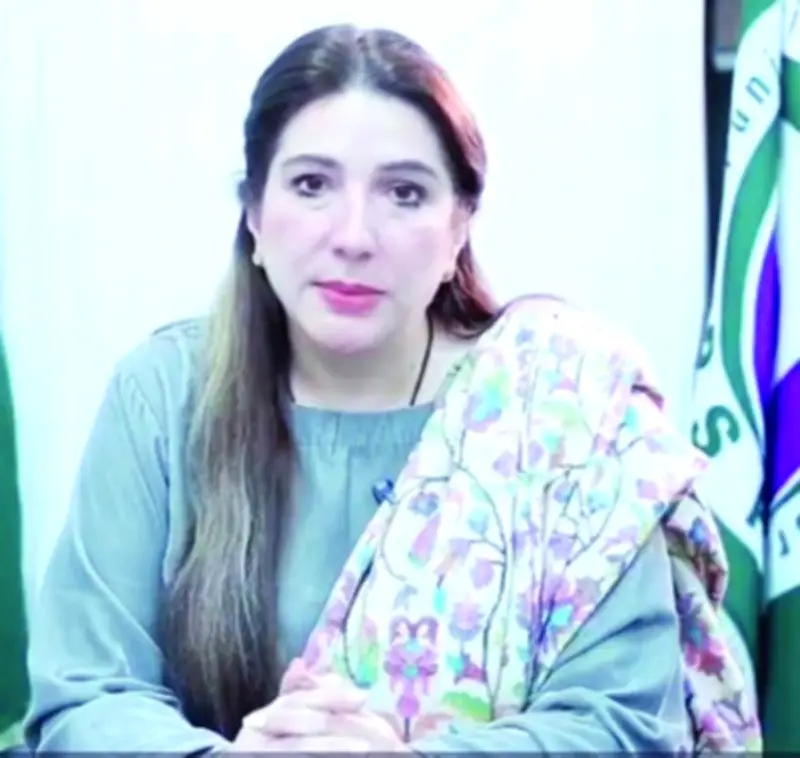
Jahan Ara Manzoor Wattoo is Vice Chairperson of PSPA. Robbery FIR registered after eight-day delay.