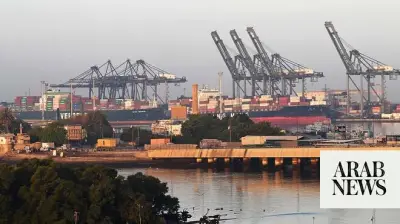
Karachi Port has achieved a historic milestone in cargo handling, as announced by the Maritime Minister at the Karachi Port Trust. The record-breaking figures mark a significant achievement in the institution's 138-year history. However, the accomplishment also underscores the latent potential of Pakistan's maritime gateways, which have long operated below capacity due to systemic inefficiency and lack of strategic foresight.
Record Highlights Untapped Potential
The fact that such a record has only now been reached suggests that the port has been far from its full potential. According to the Maritime Minister, the port's ability to handle record volumes demonstrates its capacity to attract global shipping lines, increase trade velocity, and reduce the cost of imports and exports. If managed properly, the Karachi Port could become the primary engine of national economic growth.
However, experts caution that a single record is a snapshot of a moment, not a sustainable trajectory. The real challenge lies in determining whether this peak is a fluke of market conditions or the result of genuine improvement in operational efficiency. A temporary spike in cargo handling is meaningless if the underlying infrastructure remains antiquated.

Infrastructure Modernization Critical
There is a critical need to further develop systems, from digital customs clearance to the modernization of berths, to ensure the port does not become a victim of its own success. When a system is pushed to its limits, the lack of a robust support structure leads to congestion and a decline in service quality. The importance of maintaining this progress cannot be overstated.
A sustainable maritime strategy requires moving beyond the celebration of records and toward a culture of continuous improvement. The state must ensure that the momentum is not lost to bureaucratic inertia. The goal must be to transform the port from a historical landmark into a modern logistics hub.
Robbery FIR Registered After Eight-Day Delay
In a separate incident, a robbery FIR was registered after an eight-day delay, highlighting ongoing challenges in law enforcement and administrative responsiveness. While unrelated to the port's record, the delay underscores broader systemic issues that need addressing.
Without a commitment to systemic modernization, today's record will simply be tomorrow's ceiling. The port's achievement should serve as a catalyst for sustained reform, not a reason for complacency. Merit remains key in schemes like 'Apna Khet Apna Rozgar', as the government aims to ensure efficient resource utilization.