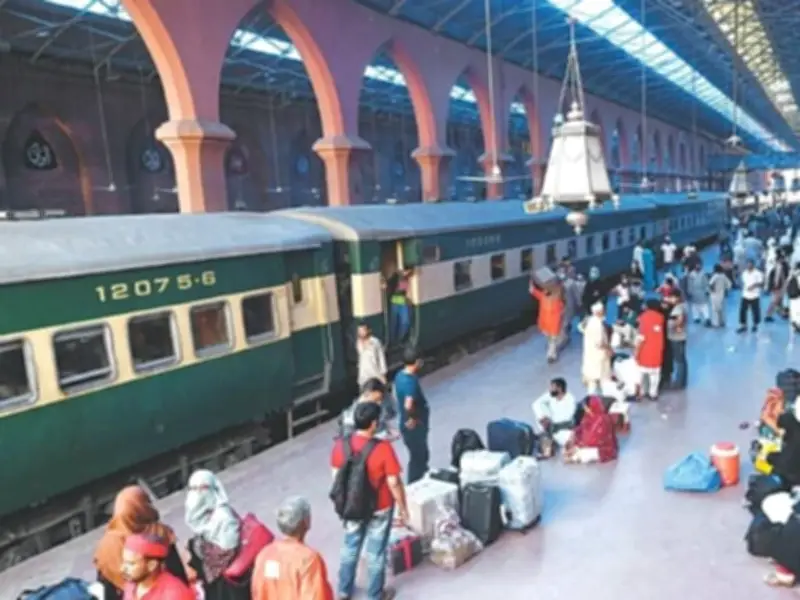
Pakistan Railways achieved a 20% increase in earnings during fiscal year 2025-26, with total revenue reaching Rs115 billion compared to Rs96 billion in the previous year, as the government focuses on expanding freight operations to strengthen the state-run entity's financial position.
Revenue Breakdown and Key Drivers
Addressing a press briefing on Monday, Railways Minister Muhammad Hanif Abbasi noted that while the initial revenue target was Rs120 billion, the actual performance was encouraging given regional and operational challenges. Freight operations emerged as a key growth driver, generating Rs41 billion against Rs36 billion in the prior fiscal year, marking an increase of nearly 14%. Passenger services remained the largest contributor, with revenue standing at Rs51 billion.
Ambitious Freight Revenue Target
The minister announced an ambitious freight revenue target of Rs65 billion for the current fiscal year, surpassing the passenger segment earnings target of Rs60 billion for FY2026-27. Achieving this goal will rely on bringing more than 40 General Utility (GU) series locomotives into freight operations. Abbasi explained that freight volumes were below expectations last fiscal year due to disruptions caused by the Iran-US conflict in the Gulf region, yet the railway still managed to increase freight earnings.

New Initiatives and Operational Efficiency
Pakistan Railways plans to begin transporting automobiles and edible oil by September. The operational cost ratio improved significantly, declining to 84.7% in FY2025-26 from 96% in the previous year, indicating better financial discipline and resource efficiency. To enhance passenger services, the department is overhauling coaches, locomotives, and power vans, while its digitisation programme is expected to be completed by the end of this year, targeting improvements in ticketing, cargo management, and customer services.
Main Line Projects and Infrastructure Upgrades
On the long-awaited Main Line projects, Abbasi stated that Pakistan Railways hopes to hold the groundbreaking for ML-1 in September, contingent on the Asian Development Bank (ADB)'s financing procedures. Completion of the planned 480-kilometre section under ML-1 would reduce Lahore-Karachi travel time by five to six hours. Upgrading ML-3 is deemed crucial for expanding trade with Iran, and tenders will be invited soon to facilitate cross-border trade and passenger movement. Meanwhile, ML-2 will be developed under a public-private partnership (PPP) model to attract private investment.
Economic Corridors and Branch Line Revival
Special economic corridors will be developed along the upgraded railway network to promote industrial activity and strengthen logistics infrastructure. In collaboration with provincial governments, Pakistan Railways is also reviving neglected branch lines. In Punjab alone, eight branch lines will be rehabilitated in the first phase, a move expected to improve connectivity for remote and rural communities and provide easier access to economic opportunities and public services.