For decades, global power struggles were defined by oil - but a quieter, more complex contest is now unfolding, one that may prove even more consequential for the 21st century. The new battleground is rare earth minerals and critical resources that sit at the heart of modern technology, defence systems and the global digital economy.
The Rise of Critical Minerals
These minerals, ranging from lithium and graphite to rare earth elements, are essential inputs for electric vehicles, semiconductors, smartphones, satellites, missile systems and artificial intelligence infrastructure. They have almost become the invisible backbone of modern industrial and military power.
That is precisely why Washington is increasingly sounding the alarm. US Secretary of State Marco Rubio has warned lawmakers that China's dominance of global critical mineral supply chains represents a serious strategic vulnerability for the wider international system. He claims no single source should be relied on for nearly 90 per cent of materials that underpin defence production, advanced technology and industrial manufacturing.

The numbers behind that warning are difficult to ignore. Over the past two decades, China has established near-dominant control over global rare earth processing capacity. While mining is geographically diversified, the real choke point lies in refining and separation, areas where China commands an overwhelming share of global output. As a result, minerals extracted in Africa, Latin America and parts of Asia often pass through Chinese processing facilities before entering global supply chains.
Washington's Strategic Response
This is why Washington now has a broader strategy to diversify supply chains and reduce dependence on Chinese infrastructure. Practically, critical minerals have moved from the margins of policy debate to the core of US foreign policy. Washington is now actively engaging dozens of countries, encouraging exploration, investment and joint ventures aimed at building alternative sources of both raw materials and processing capacity. The objective is strategic resilience.
It is within this evolving global contest that Pakistan is beginning to attract attention. Geologically, Pakistan is believed to hold significant untapped mineral potential from copper and gold deposits in Balochistan to lithium prospects and rare earth-related resources in other regions. One project, Reko Diq, is widely considered as one of the largest undeveloped copper and gold deposits in the world, and already the subject of renewed international interest.
Estimates from Pakistan's geological institutions suggest the country possesses substantial reserves of strategic minerals. Although the absence of comprehensive exploration and modern mapping is both a challenge and an opportunity.
Pakistan's Geopolitical Tightrope
For the US and its partners, Pakistan's mineral potential fits into a broader effort to build alternative supply chains outside China's control. Over the past year, diplomatic engagement has increased, with American and Western stakeholders expressing interest in Pakistan's mining sector and its long-term role in global critical mineral markets - but this comes with clear geopolitical implications.
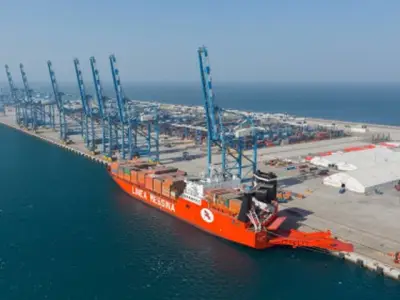
China remains its closest strategic partner, deeply embedded through the China-Pakistan Economic Corridor (CPEC) and decades of economic and defence cooperation. At the same time, the US is actively seeking to reduce China's leverage in precisely the sector where Pakistan's future mineral wealth is now being discussed. This places Islamabad in a difficult strategic position.
Key Questions Ahead
- Can Pakistan convert its mineral potential into economic opportunity without disrupting its long-standing relationship with China?
- As US-China competition intensifies, will it eventually face pressure to lean in one direction?
- Perhaps more importantly: if critical minerals eventually become the defining resource of global power, where exactly will Pakistan choose to position itself in that emerging order?
For now, there are no clear answers, but the questions themselves are becoming increasingly unavoidable.