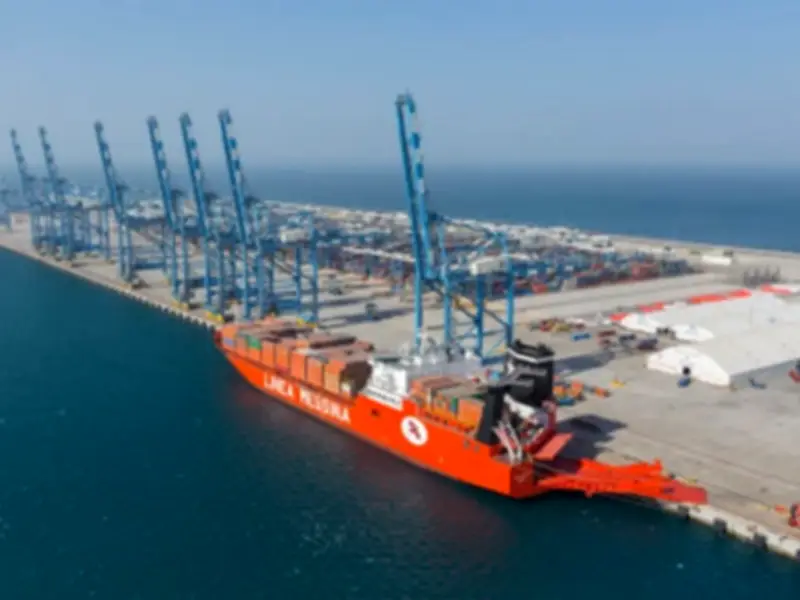
The trade and shipping activity at Gwadar Port has received a significant boost amid the US-Iran conflict, with port utilisation reaching 30% and optimism for further growth. The Middle East war is reshaping regional dynamics, leading to the emergence of new blocs and trade corridors. The United States, UAE, and Israel align on one side, while Saudi Arabia, Iran, Turkey, Qatar, and Egypt form the other. This scenario has highlighted Gwadar Port's strategic location, which can bypass the Strait of Hormuz.
Immediate Measures to Boost Activity
During the war, hundreds of ships were stranded at sea. To facilitate them, Pakistan offered both on-dock and off-dock facilities, marking the first such initiative to boost port activity. Additionally, the government opened six land routes for 3,000 containers of Iranian goods stuck at Pakistani ports. This step also provided an opportunity to establish connectivity with Central Asia, especially as Afghanistan had halted transit trade with Pakistan.
Tariff Reductions and Incentives
In a major incentive, sweeping reductions in tariff rates were announced for Gwadar Port to strengthen its position as a competitive regional logistics and transshipment hub. Under the revised tariff structure, berthing fees for container vessels and ships carrying transit or transshipment cargo were slashed by 25%. Similarly, international transshipment container cargo charges were cut by 40%, while transit container cargo charges were reduced by 31%. A one-month free storage period was announced for general cargo, compared to the standard five-day allowance at other national ports.

Regional Competition and New Corridors
Three ports are considered competitors in the region: Dubai Port, Iran's Chabahar Port, and Gwadar Port. The recent measures aim to make Gwadar more competitive, potentially challenging Dubai Port. Amid the war, Pakistan and Iran have grown closer due to Pakistan's peace efforts. A plan is being studied to connect the ports of Iran, Pakistan, and Oman, as the US and Iran have extended their ceasefire agreement. However, sustaining momentum after the war remains a question.
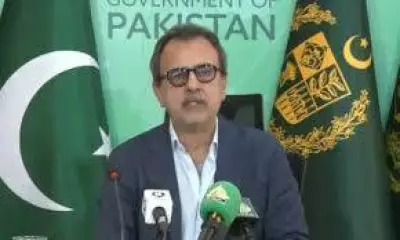
Muhammad Junaid Anwar Chaudhry, Minister for Maritime Affairs, stated, "We have been able to operate Gwadar Port at 20-30% capacity. We will continue taking measures to utilise the remaining 70% capacity under a master plan."
Central Asia and Transit Routes
Although Pakistan has opened six land routes to Central Asia via Iran, Russia and Uzbekistan are not fully satisfied due to the current war. Iran's foreign minister described Chabahar Port as a golden gateway for India. Meanwhile, Uzbekistan announced a study with Pakistan and Afghanistan for a transit trade route. Deputy Minister of Transport Jasurbek Choriev revealed that a survey had commenced, and Afghanistan, Pakistan, and Uzbekistan were in a "conceptual agreement" to create a transit corridor connecting Central Asian nations with Arabian Sea ports.
Separately, Russian media disclosed that Russia, Turkmenistan, and Afghanistan are moving toward signing a transit trade corridor deal. Russia's Business Centre Head in Afghanistan, Rustam Khabibullin, proposed a new route as an alternative to the North-South corridor, which suffered due to the Middle East conflict. Central Asian states and Russia are proposing new routes that will ultimately connect with Pakistan via Gwadar Port, bypassing Iran.
Key Hurdles and Future Prospects
Several hurdles remain, including the security situation in Balochistan and the absence of road and rail linkages to Gwadar Port. China and Russia are mediating between Afghanistan and Pakistan to reduce tensions. Transit trade routes favour Afghanistan, which will earn millions in transit fees. The TAPI gas pipeline will pass through Afghanistan, generating roughly $200 million annually in transit fees. China and Russia are investing heavily in Afghanistan, especially in minerals and rare earths. An expert remarked, "These two countries could benefit from transit trade routes if Gwadar Port becomes fully operational."

Pakistan and China are working on CPEC 2.0, focusing on B2B investments to set up industries. They have signed $20 billion in investment deals for industrial projects, including battery storage facilities. Experts say attracting industries, including from China, would boost Gwadar Port operations. Pakistan is also looking toward Saudi Arabia and Kuwait to build strategic energy reserves in Gwadar. The proposed Energy City includes LPG and LNG terminals.
Due to the lack of road and rail linkages, Pakistan has offered Central Asian states the use of cargo airlines to lift goods from Gwadar, with free storage for one month. An official noted, "Kazakhstan has already set up a cargo company to airlift goods."