Saudi Riyal Maintains Stable Position Against Pakistani Rupee in Open Market
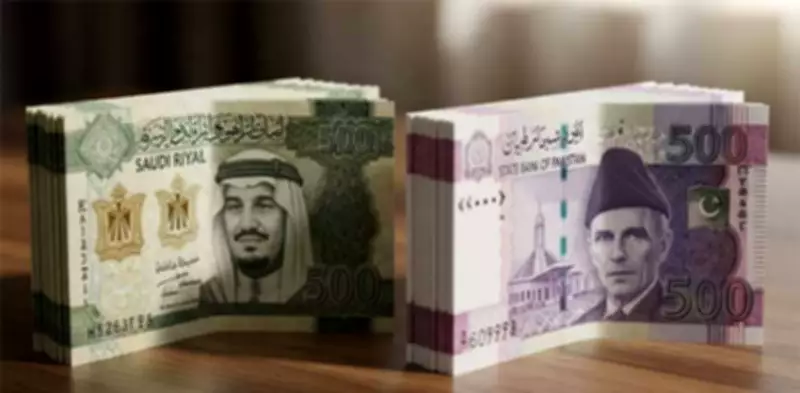
In Pakistan's open market, the Saudi Riyal is currently trading at Rs74.42 against the Pakistani Rupee, with the selling rate reported to be around Rs74.99, according to currency dealers based in Karachi. This exchange rate has been confined to a narrow, low-volatility range since the beginning of January 2026, resulting in over twelve weeks of largely flat movement. The present rate is significantly below the peak of Rs76.03 observed in July 2025 and is closer to the levels that were last recorded in late October 2025.
Remittances from Saudi Arabia Play a Crucial Role in Pakistan's Economy
Saudi Arabia continues to stand as Pakistan's largest source of remittances, with these inflows playing an essential role in supporting millions of households across the country. Data released by the State Bank of Pakistan indicates that remittances from the Kingdom reached an impressive $913.3 million in May 2025 alone. Cumulatively, between July 2024 and May 2025, these remittances contributed a substantial $34.9 billion to Pakistan's economy.
At the current exchange rate, 1,000 Saudi Riyals convert to approximately Rs74,420, reflecting a gradual decline when compared to the higher levels seen earlier in 2025. While remittances remain vital for covering essential expenses such as food, housing, and education, the softer exchange rate is slowly eroding the purchasing power for recipient families, particularly in the face of ongoing inflation pressures.

Mixed Economic Effects of the Current Exchange Rate
Analysts have highlighted that the current exchange rate presents a mix of economic effects for Pakistan. On one hand, lower Riyal values help to ease import costs, especially for critical commodities like oil and petrochemicals, while also offering modest support to Pakistan's trade balance. On the other hand, steady remittance inflows continue to play a key role in stabilizing foreign exchange reserves and supporting overall macroeconomic management.
The Saudi Riyal, which is managed by the Saudi Central Bank, remains pegged to the US dollar, ensuring a high degree of stability. In contrast, the Pakistani Rupee operates under a managed float system, influenced by factors such as inflation, trade dynamics, and remittance flows. Market observers suggest that a significant shift in the exchange rate would likely depend on changes in global dollar strength, fluctuations in oil prices, or adjustments in Pakistan's reserve position.
Until such changes occur, the Riyal is expected to remain within its current tight trading range, continuing to serve as a key financial lifeline for millions of Pakistani families who rely on these remittances for their daily sustenance and economic stability.