The Hidden Crisis: How the Strait of Hormuz Closure Endangers Global Food Security
While soaring gas prices have captured headlines since the US and Israel launched strikes on Iran in late February, a far more insidious threat is emerging from the ongoing Strait of Hormuz crisis. Brent crude oil surged past $100 per barrel for the first time in four years, briefly reaching $119 on March 19, with California drivers paying over $5 per gallon and Japan experiencing record gasoline prices. The International Energy Agency responded with the largest strategic petroleum reserve release in history—400 million barrels—yet this addresses only part of the problem.
Beyond Petroleum: The Fertilizer Trade Disruption
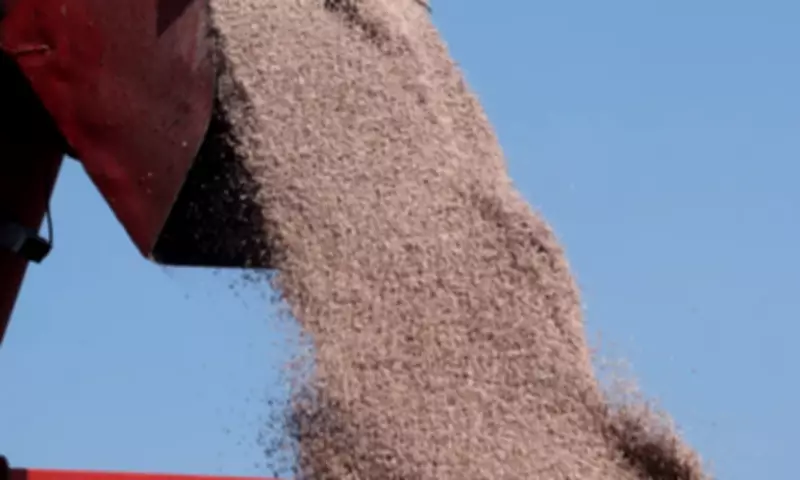
The Strait of Hormuz, now effectively closed to Western-allied commercial shipping for three consecutive weeks, serves as a critical artery for more than just oil. According to agricultural analysts, approximately one-third of the world's seaborne fertilizer trade passes through this chokepoint, including nearly half of global urea exports and 30 percent of ammonia shipments. These chemical compounds form the foundation of modern agriculture, making current food production systems possible worldwide.
"We're up for a food disaster and all we talk about is gas prices," warned Michael Werz, a senior fellow at the Council on Foreign Relations specializing in food security, in a recent interview with The Atlantic. This statement highlights a fundamental misunderstanding about fossil fuels' true role in civilization—they serve not merely as energy sources but as essential chemical inputs for food production.

The Molecular Foundation of Civilization
Czech-Canadian scientist Vaclav Smil, author of "How the World Really Works," identifies four material pillars of modern civilization: cement, steel, plastics, and ammonia. All require fossil fuels not just for energy but as fundamental chemical components. Ammonia production through the century-old Haber-Bosch process combines natural gas with atmospheric nitrogen under extreme conditions to create nitrogen fertilizers that sustain global agriculture.
Smil estimates that roughly half the nitrogen in human bodies originates from this process. Without it, global agriculture could support only 3 to 4 billion people—far fewer than the current population exceeding 8 billion. The Persian Gulf region, particularly Qatar and Saudi Arabia, serves as a fertilizer powerhouse where abundant natural gas feeds both energy markets and ammonia production facilities.
Cascading Consequences for Global Agriculture
The crisis has already triggered economic fundamentals: urea prices have surged since the conflict began, hitting farmers during critical spring planting seasons. Fertilizer represents one of the largest variable costs in crop production, meaning current price increases could translate to lower yields and higher food prices later this year. Unlike petroleum, which has established crisis response mechanisms including strategic reserves and bypass pipelines, fertilizer lacks similar infrastructure.
G7 countries maintain no strategic fertilizer reserves. The Saudi bypass pipeline carries crude oil rather than ammonia. Commercial shippers facing drone threats in the strait would prioritize more valuable oil cargo over fertilizer shipments. This systemic neglect leaves the commodity that actually feeds billions vulnerable to disruption.
Vulnerable Nations Face Compounded Risks
Countries most dependent on imported fertilizer are least equipped to compete for scarce supplies. India, which imports over half its liquefied natural gas from the Gulf region, has seen domestic fertilizer manufacturers cut urea output ahead of June's monsoon planting season. Brazil, the world's largest fertilizer importer, relies on Middle Eastern sources vulnerable to disruption.
Sub-Saharan African nations, whose fertilizer use plummeted during the 2022 price spike driven by the Ukraine conflict, previously depended on foreign aid to bridge gaps. With USAID dissolved and its functions redistributed, this safety net may have disappeared entirely.

The Energy Transition's Limitations
While renewable energy progress is notable—Germany now generates over half its electricity from solar and wind—the current energy transition primarily addresses electricity, which constitutes only about one-fifth of global final energy consumption. The physical infrastructure supporting food production, freight movement, building heating, and material manufacturing remains overwhelmingly dependent on fossil hydrocarbons.
Though "green ammonia" produced using renewable electricity exists theoretically, it represents a negligible fraction of global production, insufficient to feed even a single nation, let alone the planet. The Hormuz crisis reveals modern civilization's extraordinary yet fragile molecular foundation—methane converted to ammonia converted to nitrogen converted to food.
This crisis demonstrates the urgent need to diversify away from fossil fuel chokepoints and develop robust alternatives. Countries like Spain with substantial solar infrastructure are weathering the situation better than most. However, the current response has been inadequate, focusing disproportionately on petroleum while neglecting the fertilizer supply chains that literally feed humanity.
The Strait of Hormuz closure has rendered visible what was previously invisible: our civilization's profound dependence on fossil fuels extends far beyond transportation and electricity to the very food sustaining billions. This realization should inspire not panic but determined action to strengthen and diversify these essential supply chains before further disruptions occur.