Saudi Arabia's Jadwa Investment plans to nearly double its real estate assets under management to SR50 billion ($13.3 billion) over the next five years, up from about SR26 billion currently, according to Haitham Al-Ghannam, head of real estate and alternative investments, in remarks to Asharq Bloomberg. Al-Ghannam is betting on the rapid growth of the Kingdom's real estate sector, alongside government incentive initiatives, to help achieve this goal. He revealed that “real estate assets represent around a quarter of clients' total assets, making real estate a fundamental pillar of our business.”
Government Initiatives Boost Investment Inflows
Saudi Arabia continues to roll out initiatives aimed at enhancing the attractiveness of the real estate sector. The latest of these was the approval of the executive regulations for the law governing real estate ownership by non-Saudis, along with the designation of the geographic areas where such ownership is permitted, paving the way for new inflows of foreign capital into the market. The Kingdom is targeting $100 billion in annual foreign direct investment by 2030, with real estate identified as one of the key non-oil sectors expected to help achieve that goal. In the same context, the Royal Commission for Makkah City and Holy Sites (RCMC) recently announced the second phase of its developed neighborhoods program, awarding development contracts for seven sites through public-private partnerships worth more than SR16.3 billion.
SR30 Billion in New Investments Planned for Makkah and Madinah
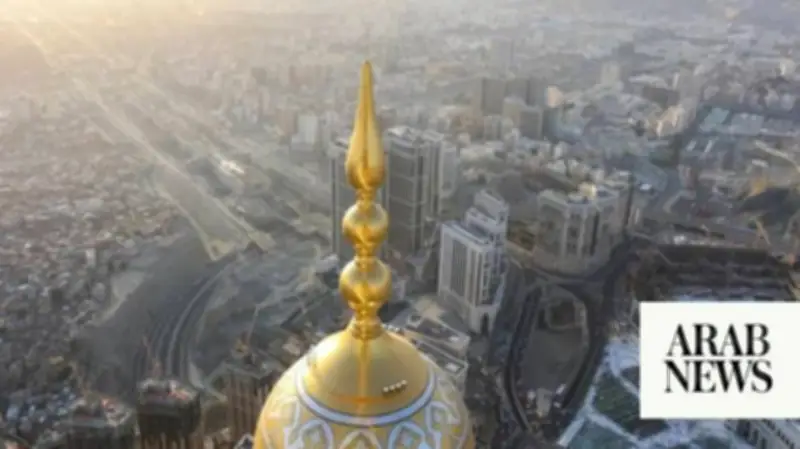
Jadwa Investment was among the consortiums awarded the projects and subsequently launched two real estate development funds in Makkah worth up to SR10 billion, in partnership with Zood Real Estate, Mohammad Al-Habib Holding, and First Avenue Real Estate Development, as well as Al-Majdiah and Rikaz. Al-Ghannam also outlined broader plans that extend beyond the two funds, saying: “We have a promising pipeline of opportunities under consideration, and we aim to invest around SR30 billion more in Makkah and Madinah over the next three to five years.” The two funds will develop projects in Makkah's central area, specifically in the Al-Hajlah and Eastern Al-Hindawiyah districts near the Grand Mosque. Regarding future funding requirements, Al-Ghannam said the current capital of the two funds is expected to be sufficient to carry out the development projects, adding: “If additional capital from investors or bank financing is needed, there is a very strong appetite for investment and lending in Makkah, and we are able to attract the necessary funding.”

Multiple Financing and Exit Options
According to Al-Ghannam, the company continuously evaluates various financing options to maximize returns for investors. He said these include bank financing, alongside off-plan sales of residential units in accordance with approved regulations. He added: “Various exit options remain available as part of each fund's strategy, including the strategic sale of assets, transferring income-generating assets into specialized funds, or offering and listing them on the capital market when market conditions are favorable.”

Demand in the Holy Cities Supports Long-Term Growth
Al-Ghannam believes the transformation taking place in Saudi Arabia's real estate sector, driven by government initiatives, will have the greatest impact on locations that are most attractive to residents and international investors, as well as on high-quality real estate products, encouraging the development of projects that meet global standards. He added that the most prominent investment opportunities lie in “mixed-use destinations, the hospitality sector, particularly in the holy cities and tourist destinations, and high-quality residential projects that meet the aspirations of growing segments of society, as well as income-generating assets with stable cash flows,” noting that the company's primary focus is on the residential and hospitality sectors. These trends align with Saudi Vision 2030 targets to increase annual Umrah capacity to 30 million pilgrims and receive 5 million Hajj pilgrims each year, a key driver of demand for real estate in the holy cities. “Our studies and market analysis indicate that demand for real estate in Makkah's central areas will remain among the strongest and most sustainable in Saudi Arabia over the long term,” Al-Ghannam said. He added: “The existing gap between real estate supply and demand for high-quality projects, particularly in the hospitality sector and residential developments near the Grand Mosque, represents a long-term structural opportunity for investors and developers.”
Ladun Investment Establishes SR4 Billion Fund for Makkah's Al-Khalidiyah District
Saudi-listed Ladun Investment Co. is establishing a SR4 billion real estate fund to develop the Al-Khalidiyah district project in Makkah, the company's CEO, Hassan Al-Hazmi, told Al-Eqtisadiah. The project is being developed in partnership with Al-Ayuni Contracting Co., with projected sales of around SR7 billion, according to a feasibility study prepared by the company. The CEO added that the Al-Khalidiyah district accounts for about 20 percent of the total area designated for redevelopment by the RCMC. Under the company's agreement with the commission, a real estate fund will be established to which the land will be transferred, while landowners will either receive financial compensation or participate in the project as investors. Al-Hazmi said demand for real estate in Makkah and Madinah remains strong, noting that international tourists spent SR176 billion in Saudi Arabia during 2025, according to the Ministry of Tourism, including SR110 billion in Makkah and Madinah, underscoring the need to balance supply and demand. He said maintaining that balance is the foundation of long-term real estate investment, adding that the company has developed 1,500 residential units in the Jawharat Al-Rusaifah project in Makkah and completed the development of more than 2.8 million square meters in the Al-Usailah suburb.
SR2.4 Billion Riyadh Contracts
Regarding the company's projects in Riyadh, Al-Hazmi said that Ladun had signed two contracts to develop land in the Al-Narjis and Al-Qairawan districts, covering a total area of 3.6 million square meters and valued at nearly SR2 billion, in addition to a project in the Namar district spanning more than 500,000 square meters. He said the combined value of the two contracts is about SR2.4 billion, which also includes the design, construction, and development of infrastructure. Al-Hazmi added that the company had secured contracts to develop about two-thirds of the land under Riyadh's Real Estate Balance Program, which aims to bring 10,000 land plots to the market, noting that Ladun will develop infrastructure for about 6,000 plots, in addition to providing design, construction, and operation, as well as maintenance and landscaping services. He further said Riyadh's real estate market had recently experienced an imbalance between supply and demand, adding that the Real Estate Balance Program and related contracts are among the main tools to address the issue, particularly in the housing sector for Saudi citizens. Al-Hazmi said the company's current projects are valued at about SR9 billion, including around SR7 billion in Makkah and SR2 billion in Riyadh, stressing that implementation continues despite challenges. He added that construction of the Ladun Tower on King Fahd Road in Riyadh has reached the eighth floor, noting that the company is also working with Cheval, the project operator, on a commercial development in the Al-Sulaymaniyah district covering 8,000 square meters. He added that Ladun is also developing another project on Khurais Road on a plot of land leased from the State Properties General Authority. He stressed that the project would introduce a new real estate product designed to meet the area's needs. Ladun CEO said that real estate developers are currently in a favorable position to build partnerships, establish investment funds, and execute projects. He also stressed that the success of any project depends on identifying its target market to ensure that its products align with the purchasing power of buyers and tenants, as well as the needs of the residential, commercial, and office sectors.