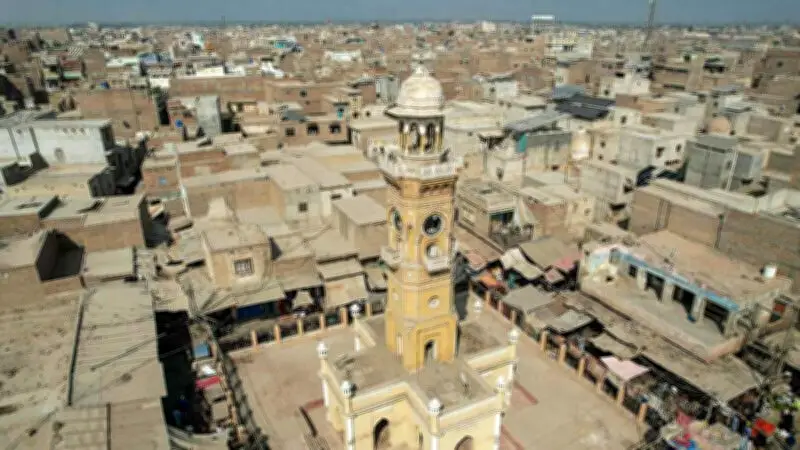
Nazia's Death and the Reality of Jacobabad
Nazia, a young woman, collapsed and died while preparing lunch for her family on 14 May 2022, the day Jacobabad recorded the highest temperature on the globe at 51 degrees Celsius. She was not a war victim; she was killed by heat the human frame cannot endure. Jacobabad is often sensationalized as "the hottest city on earth," but it is a place where people die of climate change in real time. Despite having extensive climate policies on paper, almost none are funded or legally binding.
The Wet-Bulb Threshold and Its Brutal Meaning
Jacobabad is one of only two places on Earth ever recorded to cross a wet-bulb temperature of 35°C. This measurement combines heat and humidity, capturing whether sweat can still cool the body. Above 35°C, even a healthy adult sitting in the shade and drinking water will die because the body's cooling mechanism fails. The other location is an undeveloped stretch of the UAE coast. Jacobabad is home to 200,000 people in a district of over 1 million. In the summer of 2022, the city stayed above 38°C for 51 consecutive days. Hospitals with four-bed heatstroke wards admitted 50 to 60 cases daily. Pregnant women picked melons in that heat, and according to the BMJ, every additional degree raises the odds of stillbirth and preterm birth. Nazia was a single woman; science indicates many more deaths have gone uncounted.
Floods Compounded the Crisis
About 95% of Jacobabad's population fled their homes during the 2022 floods. Over 156,000 homes in the district were damaged or destroyed. The average time to reach a health facility increased by ten hours, according to a World Bank assessment. Fire and flood struck in one summer, in one city. Pakistan has warmed far faster than the global average, and projections for Jacobabad show a warm season stretching from nine to eleven months, with very hot days quadrupling. The 2022 events are closer to the floor than the ceiling.

Pakistan's Climate Framework: Policy Without Duty
Pakistan has a National Climate Change Policy, the Climate Change Act of 2017, a National Adaptation Plan, and heatwave plans at the national and provincial levels. However, almost none of it is legally binding. A guideline is not a law. The Climate Change Act established institutions and aspirations but no firm command to fund a heat action plan for a district crossing a certain temperature. No provision ties a single rupee to the documents that bear Jacobabad's name. Intentions exist, but money does not follow, and the difference is measured in lives.
Why Policy Prevails Over Duty
Policy is a better political tool than legal duty. A plan can be announced, photographed, and applauded, yielding credit now and asking nothing later. A legal obligation binds the minister who signed it and survives elections and budget shifts. Discretion is dispensable. After the 2015 heatwave in Karachi, which killed over a thousand people in a week, the city built a real plan with warning systems, cooling facilities, and hospital protocols. It worked because of political urgency, not a binding law. Jacobabad, poorer and hotter, has never commanded that attention. In 2021, Amnesty International called it "unliveable for humans," yet it still had no heat action plan. In 2025 and 2026, reporters found no special measures and no water.
The Funding Excuse and the Real Constraint
The state argues that a poor nation cannot bind itself to adaptation spending it may not afford. But scarcity does not explain why funds are found for politically rewarding items and lost for what is not. The question is the absence of a legally protected, ring-fenced line that a future government must honour. Pakistan contributes less than one percent of global greenhouse gases. The brick-kiln worker in Jacobabad did nothing to warm the planet but pays with his body. While demanding loss-and-damage finance from wealthy nations, Pakistan refuses to place obligations on itself.

Remedies: From Performance to Law
The single load-bearing reform is structural: adaptation in high-risk districts must rest on a funding obligation hard enough to survive an election or budget cut. Ten heat action plans are worth less than one we are required to pay for. Enforceable heat-safety standards are needed: mandated shaded rest periods, maximum working-temperature limits, and water and shade written into the job, with labour inspectors empowered to enforce them. Mandatory heat-mortality surveillance would make the case for funding impossible to ignore. More than four hospital beds for 200,000 people, cool roofs, solar power, and clean cookstoves are essential so that there is not another Nazia next May.
Provincial and Local Responsibility
Under Pakistan's devolved settlement, climate resilience is substantially a provincial charge. Sindh cannot keep treating Jacobabad as a seasonal emergency rather than a permanent condition. Every plan becomes shade and water in the hands of district administration and municipal government, but local implementation will always fail while funding above it stays optional. Obligation must run the length of the chain. Jacobabad can become liveable with help from a country that finds a change of heart for its hottest citizens. A promise without funding is not policy; it is performance. Only law, binding and ring-fenced, can carry a commitment through elections and budgets to the summer when it is finally needed. The heat is not waiting. It will strike again this summer and harder summers after. The only question is whether there will be anything there to meet it besides a guideline in a drawer and a young woman making lunch in the heat.