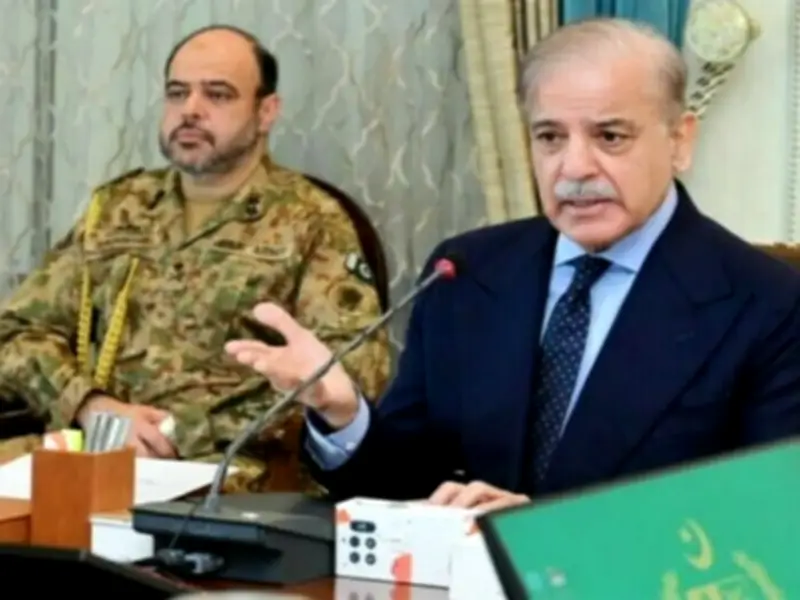
The Prime Minister's Maritime Reforms Task Force has ruled out the need for building a new seaport, stating that Gwadar Port cannot be fully developed without first resolving issues of security, connectivity, and provision of water and electricity. The statement was made by the task force's Co-chairman Admiral (Retd) Iftikhar Ahmad Rao during a press conference in Peshawar.
Gwadar Port Development Hurdles
Gwadar Port, a strategic node of the China-Pakistan Economic Corridor (CPEC), remains underdeveloped due to security concerns, inadequate road and rail connectivity, and lack of water and electricity supply, Rao explained. He noted that Pakistan and Singapore signed a 40-year concession agreement in 2007 for Gwadar's development, which was later transferred to China Overseas Port Holding Company. The original agreement was not favorable to Pakistan, as all port and free zone development rights went to the Chinese company while expenditures remained Pakistan's responsibility. Rao suggested a review of the agreement but emphasized that Pakistan would honor its commitments.
Optimize Existing Ports, Not Build New Ones
Rao highlighted that Pakistan Navy vacated almost all land allocated for the Gwadar Free Zone, except about 12 acres. He stated, "Pakistan does not need to build new seaports but there is a need to optimize the existing ports, as Gwadar Port is still at its initial stage of development." Shakil Shah, Member Customs at the Federal Board of Revenue, added that a study by the Ministry of Maritime Affairs found excess capacity, concluding no need for new ports. The National Ports Master Plan is being developed for coordinated expansion of the country's three main ports.

Blue Economy Potential and Reforms
Pakistan's blue economy has an estimated potential of $100 billion, but the country has achieved less than 1% due to past neglect. Rao credited Field Marshal Asim Munir and Prime Minister Shehbaz Sharif for focusing on maritime industry since 2024. The task force presented 99 recommendations to the PM, with 84 already implemented, revamping the maritime sector. While the economic benefit is "unlimited," Rao did not provide specific figures. DP World has shown interest in further investment, and connectivity improvements depend on upgrading Pakistan Railways' Mainline-I and II tracks.
Transshipment and Shipping Reforms
To boost transshipment, the government is developing a new package offering competitive rates compared to regional ports, said Shah. Shipping business was hindered by high taxes, now abolished in the budget. Previously, Pakistan charged 22% sales tax, compared to India's 30% subsidy. Pakistan pays $4–8 billion annually in freight charges, which could be saved by promoting local shipping lines. The National Dredging and Maritime Company has been established to enhance port activity.
Improved Port Rankings and Cargo Handling
Pakistan's ports have seen notable improvements in global rankings: Karachi Port moved from 99th to 69th, and Port Qasim rose from 74th to 56th. Secretary Maritime Affairs Nadeem Mahbub highlighted that cargo handling at Karachi Port reached 55.8 million tonnes, while Port Qasim handled 47 million tonnes. The Pakistan Shipping Policy 2026 has been finalized and will be presented to the federal cabinet in July. A dedicated transshipment policy is also ready.
Faceless Customs System Boosts Revenue
The FBR's faceless assessment system at ports has improved transparency and compliance. Shah reported, "Average revenue per Goods Declaration (GD) has increased from Rs6.8 million to Rs7.7 million, reflecting a 16% improvement." Import-related tax collection grew 14%, and customs clearance time dropped from 53 hours to 18 hours, with a target of 12 hours in 1–2 years. New bunkering regulations have been notified, and dredging at major ports will enable larger ships. Legal imports surged: tyres up 42%, fabrics 41%, toiletries 75%, and electronics 105%, indicating reduced illicit trade.