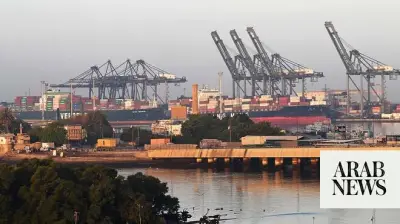
Oil prices declined on Thursday as a ceasefire agreement between Israel and Lebanon raised expectations for a broader resolution to the US-Israeli conflict with Iran, which could lead to the reopening of the Strait of Hormuz. Brent crude futures fell 87 cents, or 0.89 percent, to $96.92 per barrel by 07:58 a.m. Saudi time. Similarly, US West Texas Intermediate crude dropped 78 cents, or 0.81 percent, to $95.24, paring earlier weekly gains.
Market Context
Both Brent and WTI had risen about 2 percent on Wednesday following renewed hostilities in the Middle East, including Iranian attacks on Kuwait and US military strikes near the Strait of Hormuz. However, the ceasefire between Israel and Lebanon, announced late Wednesday, shifted market sentiment. The deal raised hopes for a potential agreement between Washington and Tehran, as Iran had conditioned any negotiations on an end to the Israel-Lebanon conflict.
Political Developments
US President Donald Trump indicated on Wednesday that progress in negotiations with Iran could occur as early as this weekend. Iranian Foreign Minister Abbas Araqchi acknowledged that contacts with the US have not ceased, but stated that no progress has been made in talks, with both sides still studying exchanged texts.

In a related political move, the Republican-led US House of Representatives approved a resolution on Wednesday to block Trump from continuing the war against Iran. The resolution requires Senate approval and a two-thirds majority in both chambers to override an anticipated presidential veto.
Supply and Demand Dynamics
US crude stockpiles fell by 8 million barrels to 433.7 million barrels in the week ending May 29, according to the Energy Information Administration. This draw was significantly larger than the 4-million-barrel decline analysts had expected in a Reuters poll.
The International Energy Agency warned on Tuesday that global oil inventories could reach critical levels ahead of peak summer demand if stock draws persist at the current pace, despite Chinese crude imports dropping by 6 million barrels per day in May compared to March.
Analyst Insights
ING analysts noted in a report: “Inventories have provided a cushion for the oil market. However, even if we see an imminent restart of oil flows through the Strait of Hormuz, the recovery will be slow and gradual. This suggests inventories are likely to continue to tighten into the third quarter, leaving upside risk to prices.”