Power Minister Sardar Awais Leghari announced on Sunday that the Power Division has formally requested the National Electric Power Regulatory Authority (NEPRA) to waive licensing fees and requirements for small-scale solar consumers. The move is aimed at providing relief to the public and removing unnecessary barriers.
Background of the Regulations
Previously, a decentralized model allowed distributed generation facilities of 25kW or below to operate without a license from NEPRA. Applications for solar consumers were processed directly by power distribution companies (DISCOS) without any fee. However, the NEPRA (Prosumers) Regulations 2026 centralized the approval process under NEPRA, imposing a licensing fee even on small-scale solar installations up to 25kW.
Government's Request
“The Power Division has formally requested NEPRA to review the recent framework and restore maximum facilitation for solar consumers up to 25kW in the form of zero license fee and no requirement of licenses up to 25kW,” Leghari wrote on social media platform X. He stated that the move reflects the government’s commitment to being “pro-solar, pro-consumer, and committed to clean energy.” “We want to remove unnecessary barriers, reduce costs and provide as much relief as possible to the people of Pakistan,” the minister added.

Power Division's Statement
In a separate statement on X, the Power Division said it had previously informed NEPRA about the adverse effects of the new regulations and requested that the framework be aligned with the old one. In a formal memorandum, the ministry argued that the previous practice provided a “significant fiscal incentive” for residential and small-scale solar users. It warned that the new regulations, which enforced application fees across the board, risked creating “procedural bottlenecks and financial deterrents.”
“Centralizing the approval of minor installations at the Authority level may lead to administrative saturation, whereas the earlier decentralized model provided a more agile route for the general public and ensured ease of doing business,” the memorandum said.
Industry Reactions
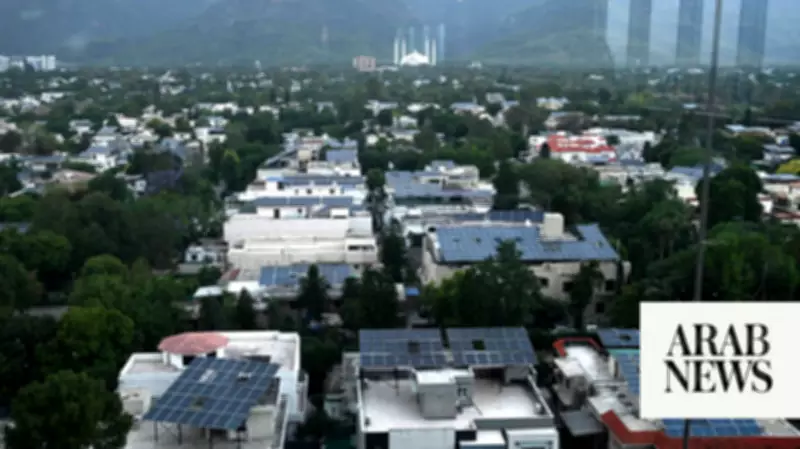
Solar energy bodies, such as the Pakistan Solar Association, had earlier objected to the 2026 regulations by NEPRA. They argued that stripping DISCOs of approval authority created “unnecessary bureaucratic hurdles.” Pakistan has seen rapid growth in rooftop solar installations in recent years, driven by high electricity tariffs and frequent power outages. However, recent regulatory changes have drawn sharp criticism from consumers and industry groups.
Solar power grew from four percent of the energy mix in 2021 to over 14–25 percent in 2024-2025, according to official figures. Driven by skyrocketing grid tariffs, Pakistan became one of the world’s top new solar adopters, importing roughly 22 gigawatts (GW) of solar panels in 2024 alone. Industry data shows tens of thousands of new solar connections are added annually across Pakistan, significantly reducing demand from the grid during daylight hours.