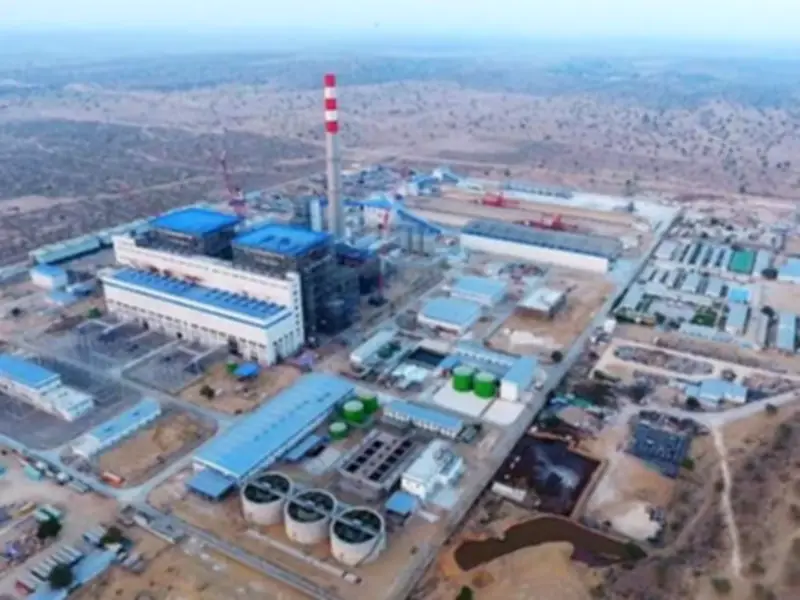
The Ministry of Energy (Power Division) has announced that Pakistan is set to save $3.239 billion over the next 26 years by converting the Jamshoro Unit-01 power plant from imported coal to 100% indigenous Thar lignite. This includes $2.113 billion in foreign currency savings.
Feasibility Study Confirms Technical and Economic Viability
A bankable feasibility study prepared by Dornier Group and EY Parthenon confirms that the transformation is technically feasible, economically compelling, and environmentally manageable. The conversion involves targeted engineering modifications rather than a large-scale boiler retrofit, preserving the value of the existing ultra-supercritical plant asset.
Cost-Benefit Ratio and Financial Benefits
The project delivers a cost-benefit ratio of 1.8x, which remains favourable across all sensitivity scenarios. Total net benefits over the 26-year project life comprise $1.720 billion in power sector benefits, including generation cost savings of $1.051 billion and Thar mine expansion benefits of $669 million. Additionally, there are $1.519 billion in government savings from reduced interest costs on foreign borrowings. The conversion capital expenditure is estimated at $86.2 million, with a total project cost of $116.6 million.

Ministerial Oversight and Project Background
Federal Power Minister Sardar Awais Ahmed Khan Leghari was briefed on the study, which was made possible with support from K-Electric (KE), Jamshoro Power Company Limited (JPCL), and the Private Power and Infrastructure Board (PPIB). A high-level steering committee convened 38 sessions to monitor and expedite the initiative, with the minister personally chairing 15 of them. The initiative flows from the Prime Minister's Power Sector Reform Plan and reflects sustained efforts to advance fuel indigenisation.
Implementation Approach and Economic Co-Benefits
The project is structured as a bankability-led brownfield modification with a stage-gate implementation approach that introduces no new coal capacity. Beyond direct financial savings, the shift to Thar lignite carries transformative economic co-benefits. It will catalyse expansion of coal mines in Tharparkar, generating employment and accelerating infrastructure development in one of Pakistan's most underserved regions. By eliminating reliance on imported coal, which is subject to international price fluctuations, exchange rate volatility, and supply chain disruptions, Pakistan will move decisively towards energy self-sufficiency.
Next Steps Towards Implementation
Following the study's presentation, the ministry will proceed to implementation readiness. Next steps include obtaining final policy approval, initiating the lender-consent workstream, preparing the regulatory consent and contract matrix, and launching basic design tender verification including modelling, mill tests, and balance-of-plant modifications. The government remains committed to timely and bankable implementation of this landmark project, which represents a cornerstone of the energy sector's transition towards indigenous resources, fiscal sustainability, and long-term energy security, according to the ministry.