Pakistan is actively courting Chinese investors to establish factories in Karachi and eastern Punjab province for manufacturing lithium-ion battery cells, an official stated on Wednesday. This initiative is part of Islamabad's strategy to increase battery exports, generate foreign exchange, create jobs, and reduce the import bill.
Memorandum of Understanding Signed
Pakistani industrial conglomerate Saigol Group and China's Juhang Energy Technology Group signed a memorandum of understanding (MoU) last week, which state media reported would pave the way for lithium-ion batteries to be manufactured in Pakistan.
Government Policy to Promote Local Manufacturing
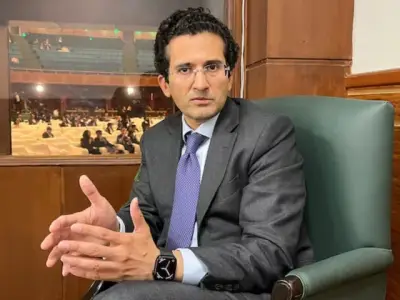
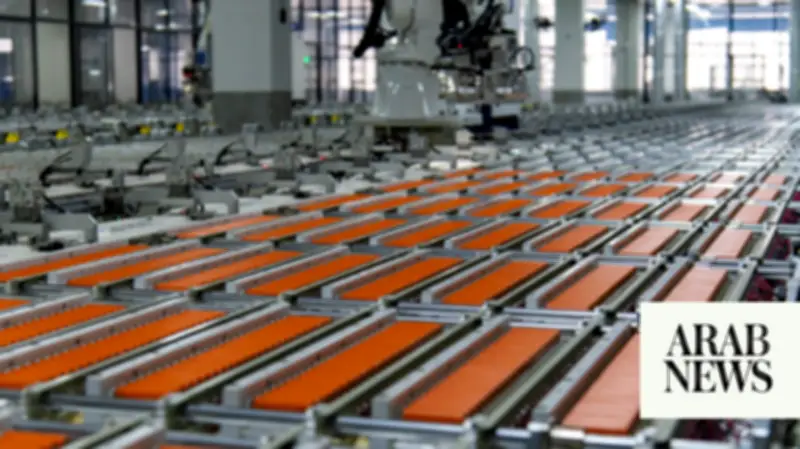
Pakistan's Engineering Development Board (EDB) CEO Hammad Ali Mansoor said the government is preparing a policy to promote the local manufacturing of lithium-ion battery cells, which are basic building blocks for battery packs used in electric vehicles and energy storage systems. The policy aims to make Pakistan one of the largest exporters of batteries in the region and also cater to domestic demand. Officials estimate the demand for lithium-ion batteries to be between 65 gigawatts and 100 gigawatts by 2030, depending on economic growth.

“This policy is designed so that we eventually can go to cell manufacturing as soon as possible,” Mansoor told Arab News. He explained that Pakistan has several battery assembly plants but lacks lithium-ion cell manufacturing facilities. Most batteries currently assembled in Pakistan are used in Battery Energy Storage Systems (BESS), which are increasingly installed alongside solar power systems or in other energy storage applications.
Economic Benefits and Export Focus
The policy mirrors Islamabad's recent efforts to boost foreign exchange reserves, which declined by $1.31 billion on June 19 to $15.9 billion due to external debt repayments. Producing cells locally would help Pakistan slash its import bill, encourage technology transfer, create employment opportunities, and capitalize on the country's engineering and information technology workforce.
Mansoor emphasized that the policy is designed with exports as its primary objective. “This policy does not tend to manufacture battery cells for Pakistan only,” he said. “Its main focus is exports, because labor in Pakistan is much cheaper than in our regional peers like India, Sri Lanka, etcetera.” He declined to provide a timeline for completion of factories or when exports might begin, noting that the policy still requires the prime minister's approval.
Chinese Investment and Factory Locations
Chinese investors were closely involved in developing the policy framework. “This project is beneficial and that’s why some of China’s big investors are coming to Pakistan to set up cell manufacturing factories,” Mansoor disclosed. The official said that ultimately investors will decide where factories are located, but they are expected to be built in Karachi and multiple locations in Punjab, including the industrial hub of Faisalabad.
When asked about the expected value of Chinese investment, Mansoor said discussions are still at an early stage. “Again, this is the MoU stage, and the MoU stage is very nascent. This is a very initial stage. But if I can put a word to it, it is a very substantial investment that will be coming.” He added that the investment would help make Pakistan one of the largest producers of lithium-ion cells in the region.
Additional Agreements and Special Economic Zone
A senior official at Pakistan's Ministry of Industries and Production confirmed that multiple agreements related to lithium-ion batteries were signed with Chinese companies following the prime minister's recent visit to China. “There are a lot of Chinese companies involved when the prime minister had recently visited China,” the official told Arab News, speaking on condition of anonymity. “We are trying to bring a policy in the name of Battery Energy Storage System, BESS. A lot of Chinese investors want to come to Pakistan for the lithium-ion factories.”

The official also declined to disclose the expected value of Chinese investment but said interest from Chinese firms is “significant.” He noted that one of the planned lithium battery projects would be established at the Karachi Industrial Park's Special Economic Zone (SEZ) under a public-private partnership model, which offers benefits such as income tax and import duty exemptions.