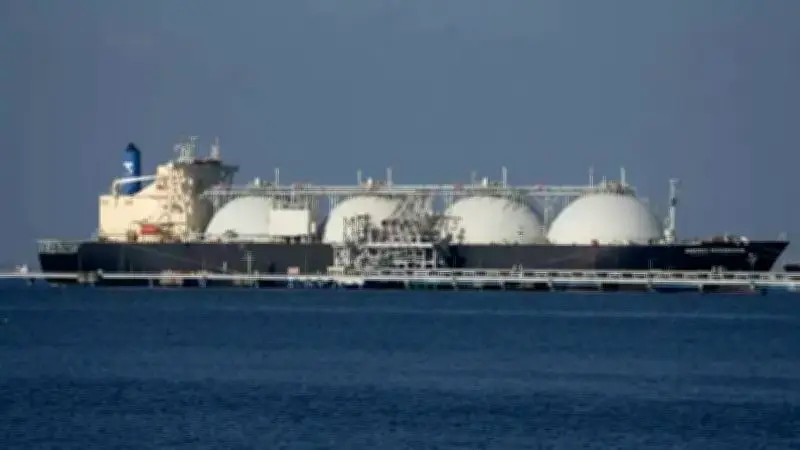
Almost all of Pakistan's re-gasified liquefied natural gas (LNG) travels through the Strait of Hormuz, sourced under long-term Take-or-Pay contracts with Qatar and the United Arab Emirates. When the Strait closed, Pakistan still owed payment. The scale of the upstream damage became clear quickly. Iranian missile strikes on Ras Laffan in mid-March knocked out approximately 17 per cent of Qatar's LNG export capacity, with repairs expected to take three to five years. QatarEnergy declared force majeure on long-term contracts in early March, subsequently extending it through mid-June. The global gas market lost roughly a fifth of its supply in March alone, according to the International Energy Agency.
Immediate Crisis and Response
Pakistan's immediate crisis was stark. With four Qatari tankers trapped in the Gulf since early March, and two attempted crossings in April aborted after Iran denied clearance, the country was forced to purchase spot LNG for the first time since 2023 — at prices of $17 to $20 per million British thermal units. Industries shut down. Power outages spread. Fuel rationing began. Leveraging its role as a mediator in the United States–Iran peace talks, Islamabad secured Iranian approval for Qatari LNG tankers to transit Hormuz via an Iranian-approved northern coastal route. Since 9 May, three Qatari tankers have successfully arrived at Port Qasim.
Yet what Pakistan has secured is managed dependency, not energy security. Each transit still requires individual Iranian clearance. The arrangement exists because Pakistan is useful to all parties as a diplomatic go-between, and not because there is a durable framework governing Hormuz passage. Maritime intelligence firm Windward described the restart as "limited but significant." The supply picture remains materially constrained. Kpler has revised Pakistan's full-year 2026 LNG demand outlook down to 4.9 million tonnes, reflecting both the supply disruption and the structural decline in domestic gas demand driven by solar growth. June cargo visibility remains thin, with consistent resumption of Qatari term volumes not expected before late June or early July.

Financial and Economic Impact
Pakistan cancelled its latest May tender for two prompt cargoes — after an earlier tender drew seven bids at $16.98 to $17.28 per million British thermal units that Pakistan declined — reflecting the punishing cost of spot LNG and the government's preference for Iranian-cleared Qatari supply over market exposure. The financial arithmetic has not changed. At $17 to $20 per million British thermal units on the spot market, LNG remains a luxury item for a country carrying Rs 3.1 trillion in circular debt. Every one-rupee per kilowatt-hour tariff increase adds Rs 85 billion annually to consumer bills. The government has preferred demand curtailment and diplomatic procurement over aggressive spot buying — a rational move under fiscal constraints, but the choice means industrial shutdowns and continued pressure on the power sector. Summer peak demand will not wait for a ceasefire.
Alternative Fuels and Environmental Costs
The fallback furnace oil costs $12 to $15 per million British thermal units, produces 2.5 times more carbon dioxide per kilowatt-hour, and its tankers also transit Hormuz. There is no clean escape route. Domestic bright spots need honest scaling. Distributed solar is expected to provide up to 20 per cent of overall energy needs by 2026 — every 1 gigawatt displaces 45 million cubic feet per day of LNG, around 6 per cent of pre-war Qatari imports. This is the most credible structural hedge against the next Hormuz closure.

Structural Vulnerabilities and Lessons
The irony is that the same solar growth was driving Pakistan towards an LNG surplus as recently as January 2026, prompting cargo diversions with Qatar and ENI to avoid over-pressuring the gas network. Seven weeks later, the country was in emergency procurement mode. What this crisis has revealed is the shape of Pakistan's actual vulnerability. The contracts designed to guarantee supply security became a trap in both directions: obligating payment during surplus, and providing no insulation when supply was cut off. Pakistan's mediation role has brought something no procurement strategy could: Iranian cooperation on energy logistics. Islamabad sits at a diplomatic intersection that most importers do not. While this is a genuinely useful form of energy leverage, it is not energy security. A strait that opens because Iran chooses to accommodate one country's diplomatic value can close the moment that value shifts again.
What Pakistan still lacks — strategic gas reserves, contracts with alternative suppliers, and renewable capacity sufficient to insulate summer peaks — cannot be acquired through diplomacy alone. The Hormuz transits offer real relief; however, the structural work remains undone.