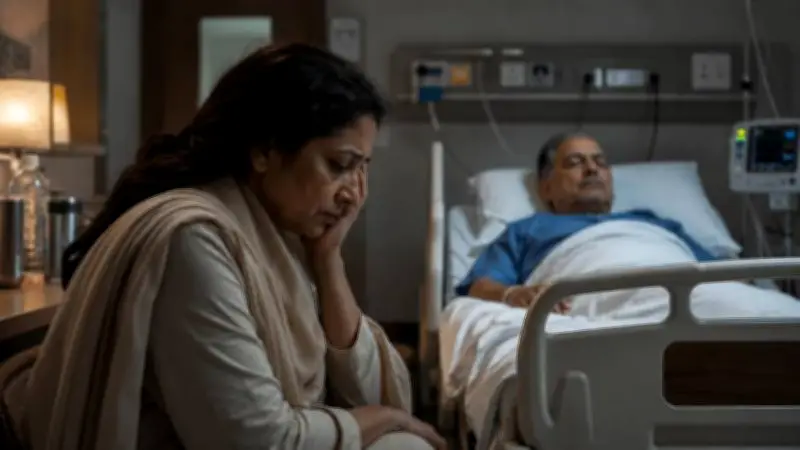
As researchers, we propose different hypotheses with rationales for investigation. We collect data, analyse it, and draft it in the form of tables and graphs, but there are moments in life when all this research stops being just data, theories, and statistics. Your research study stands in front of you. It sits beside you on a hospital bed at 2 am, exhausted yet unable to rest.
The Personal Face of Research
Measuring stress levels among spouse caregivers was the core theme of my Master's thesis. I witnessed and lived my research recently when I saw my mother carrying the invisible baggage of caregiving. My father has been facing serious health complications for quite some time. Watching our loved one fight a disease is painful enough, but it was more intense to watch my mother suffer along emotionally and physically. I saw her managing medications, accompanying him to hospital visits, spending sleepless nights, maintaining high levels of cleanliness around him, and constantly ignoring her own self-care. Like many spouses who become caregivers, she has never complained. I was seeing my research findings embodied before me in the form of my mother.
The Physical and Emotional Toll
The stress I measured through surveys and case studies was now observable on her face, disguised in her fatigue, and hidden in her body aches. The positive energy of motherhood that fills our home started fading. She stopped caring about her own meals, her own sleep, and even her own health. Physically, she was becoming weaker. Mentally, she seemed lost. Then one day, the inevitable happened when the caregiver herself needed medical attention. We took our father to the hospital, and I could see my mother sitting very drowsy beside my father in the ambulance.

A Wake-Up Call in the Emergency Room
Research often tells us that spouse caregivers experience high levels of chronic stress because they live in a constant state of emotional alertness. That was the moment I felt that something was getting noticeably serious. And when we reached there, she was also admitted to the emergency next to my father. Sitting between those two beds, I realised how deeply caregiving can consume a person. Here was a woman who had spent months prioritising someone else's pain over her own until her body could no longer cope. The emotional burden she had carried silently had finally begun affecting her physical health.
Academic Knowledge Meets Human Reality
During my research, I had studied articles discussing caregiver emotional exhaustion, burnout, anxiety, sleep deprivation, and depression among spouses caring for chronically ill partners. I had analysed graphs, reviewed findings, and written a thesis on the psychological effects of caregiving. I understood the terminology academically, but witnessing my mother's experience made me understand its true meaning on a human level. Research often tells us that spouse caregivers experience high levels of chronic stress because they live in a constant state of emotional alertness. They are not only caring for the patient's physical needs but are also carrying emotional, financial, and social responsibilities simultaneously. Many caregivers isolate themselves from their own support systems. I saw every single one of these realities reflected in my mother.
The Silent Suffering of Caregivers
What hurts the most is that caregivers rarely ask for help. Society praises their sacrifices but often ignores their suffering. We admire their strength and overlook their exhaustion. We expect them to continue functioning endlessly and disregard that they, too, are human beings with emotional and physical limits. Now, as I watch my mother sitting quietly in the hospital, I wonder how many other caregivers are silently struggling around us. How many spouses are losing themselves while trying to save their loved ones? How many are carrying invisible stress that no one notices because they continue smiling through it?
A Call for Change
My research once existed only in a thesis before. Now it exists in hospital corridors, in sleepless nights, and in tired eyes that still choose love every single day. This experience taught me that caregivers need care too. They also need rest and a break in addition to appreciation. They need social approval to prioritise themselves without feeling selfish.