Headline Inflation Expected to Moderate
Pakistan's headline inflation is projected to ease slightly to 11.5% year-on-year in June 2026, compared with 11.7% recorded in May, according to market estimates. The moderation is driven by lower transport costs as global oil prices declined following a de-escalation in the Middle East, offsetting rising food prices.
On a month-on-month basis, the Consumer Price Index (CPI) is expected to rise by just 0.1%, a sharp deceleration from the 0.52% increase in May. Ismail Iqbal Securities (IIS) attributed this slowdown primarily to a correction in transport costs.
Transport Index Decline Provides Relief
IIS expects the transport index to decline 4.9% month-on-month, contributing a 0.3 percentage point drag on headline inflation. The decline is mainly driven by a 9.2% fall in the motor fuel index as global crude prices retreated after easing geopolitical tensions. This reverses the pressure that had pushed headline inflation into double digits during April and May.

Despite this relief, inflation remains significantly higher than the 3.2% recorded in the same period last year. The brokerage noted that the moderation largely reflects the unwinding of favourable base effects that had suppressed inflation during much of the previous year.
Food Inflation Remains Firm
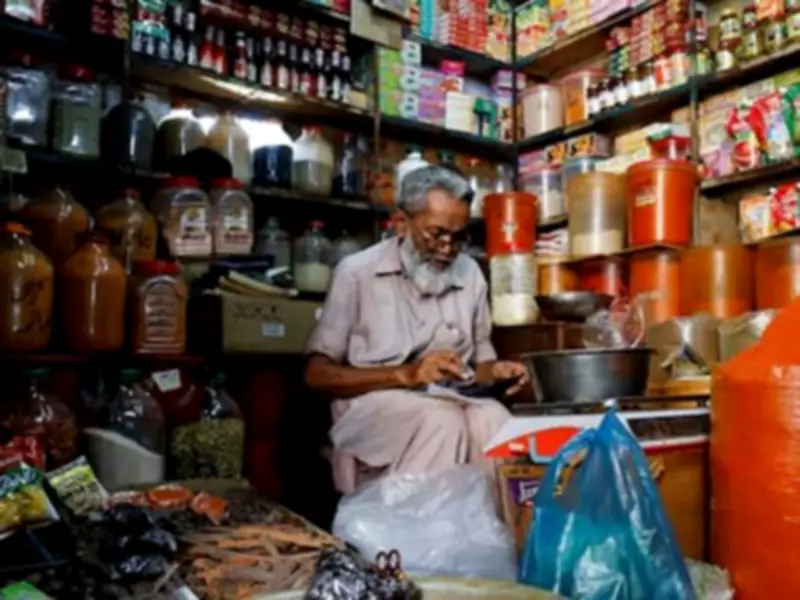
Food inflation is expected to remain elevated. IIS projects the food index to rise 1.0% month-on-month, reflecting higher prices of wheat and wheat products, potatoes, and onions, alongside a seasonal 61.1% surge in tomato prices. These increases are partially offset by a 17.7% decline in chicken prices.
The housing index is forecast to ease 0.5% following a 5.7% decline in the electricity index after the latest quarterly tariff adjustment.
Core Inflation Persists as a Concern
Despite the expected moderation in headline inflation, IIS said core inflation remains the more persistent concern. Non-food non-energy (NFNE) core inflation, which rose to 8.8% year-on-year in May from 8.2% in April, is projected to edge up further to 8.9% in June, compared with 7.6% in the corresponding period last year.
The report noted that June's relief stems almost entirely from volatile fuel and perishable food components, while underlying inflationary pressures remain intact. The continued firming in core inflation reflects second-round effects from earlier energy price shocks that continue to feed into transport and production costs, supporting the view that inflation will return to the State Bank of Pakistan's (SBP) 5-7% medium-term target only gradually.
Policy Rate Outlook
Against this backdrop, IIS said the Monetary Policy Committee's decision to keep the policy rate unchanged at 11.5% earlier this month appears appropriate, given that the broader macroeconomic outlook remains largely unchanged. The committee balanced the return of double-digit inflation, largely driven by base effects and conflict-led energy prices, against moderating economic activity and contained external sector pressures.
Looking ahead, IIS expects the policy rate to remain unchanged in the near term. However, as favourable base effects fade and inflation gradually eases through FY27, the brokerage believes room for monetary easing could reopen, although the timing will depend on Pakistan's external account position.
Debt Market Conditions Improve
The brokerage also pointed to improving conditions in the debt market, noting that secondary market yields have declined sharply across both short and long-term tenors as geopolitical risks eased and lower oil prices reduced expectations of further monetary tightening. Yields on the three-month, six-month and 12-month papers have fallen 31, 75 and 90 basis points, respectively, during the month, while five-year and 10-year yields declined 61 and 55 basis points.
Key Risks to Outlook
IIS warned that the biggest risk to the inflation and interest rate outlook remains a renewed escalation of tensions in the Middle East that could trigger another spike in global oil prices, pressure Pakistan's current account and the rupee, and force the SBP to maintain its current policy stance for longer.