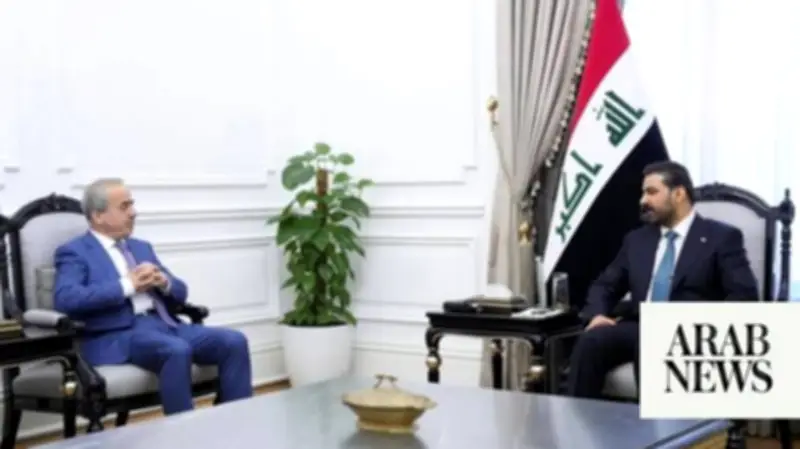
Iraqi Prime Minister Ali al-Zaidi has declared that his government's anti-corruption campaign is irreversible and that all weapons must be brought under state control, warning that there will be no protection for the corrupt and no tolerance for armed groups operating outside the law.
Corruption as an Existential Threat
In an exclusive interview with Asharq Al-Awsat, al-Zaidi stated that corruption has become a threat to the very existence of the Iraqi state. He emphasized that there is no turning back, describing the fight as a duty to God and the Iraqi people. The prime minister noted that from 1980 to 2003, Iraq's wealth was consumed by wars and sanctions, and from 2003 to 2026, a distorted mindset of plunder emerged. He is determined to end that era and open a new chapter for Iraq.
Raids and Detentions: The Night the Big Fish Were Caught
The interview took place shortly after security forces, acting on judicial warrants, raided the homes of influential politicians, lawmakers, and provincial officials across multiple provinces. The operation, which Baghdad residents called “the night the big fish were caught,” resulted in detentions for questioning over allegedly stolen public funds. Al-Zaidi had not slept for 24 hours, having closely followed the raids.

Personal Commitment and Rejection of Gifts
Al-Zaidi launched his tenure by forgoing his salary and official allowances, declaring he would accept no gifts, “not even a necktie.” He revealed that a man accused of offering him $200 million to draw him into a corruption network is now under investigation. The prime minister stated he will not seek a second term or establish a political party, emphasizing his mission is for God and the people.
National Sovereignty Conference and Weapon Handover
Al-Zaidi announced a National Sovereignty Conference by the end of 2026 to establish the state's exclusive authority over the use of force. He confirmed that armed factions, including Saraya Al-Salam, Asaib Ahl Al-Haq, and the Imam Ali Brigades, have already handed over weapons to the state. The remaining weapons will be transferred soon, severing the link between factions and fighters.
Economic Reforms and Debt
The prime minister dismissed claims of a severe financial crisis, stating that state employees' salaries are secure. He revealed Iraq's debt stands at about 208 trillion dinars, with oil accounting for 93% of revenues. Al-Zaidi outlined plans to move toward a market economy, reform conflicting legislation, and establish an Energy and Development Fund with participation from Saudi Arabia, the UAE, Qatar, and international funds.
OPEC and Production Quota
Al-Zaidi called for a fair production quota from OPEC, citing Iraq's history of wars, terrorism, and reconstruction costs. He noted that Iraq's population has reached 47 million, while its production quota is 3.4 million barrels per day. The prime minister argued that Iraq's sacrifices, including the fight against ISIS, must be considered.
Foreign Relations and No Dictates
Al-Zaidi stressed that Iraq will not submit to foreign dictates from East or West. He confirmed upcoming visits to Washington, Türkiye, Iran, and Saudi Arabia. Regarding the US, he said President Donald Trump has shown willingness to support Iraq's plans, but Iraq's interests come first. He also noted that relations with Syria are moving positively, with a foreign minister visit planned.
Rejecting Skeptics and State Authority
When asked about skeptics who view the weapons plan as symbolic, al-Zaidi responded, “If we listen to the skeptics, we will never achieve any results.” He affirmed that there is no force other than the state and that the rule of law will be enforced. He concluded, “Nothing is stronger than the state.”