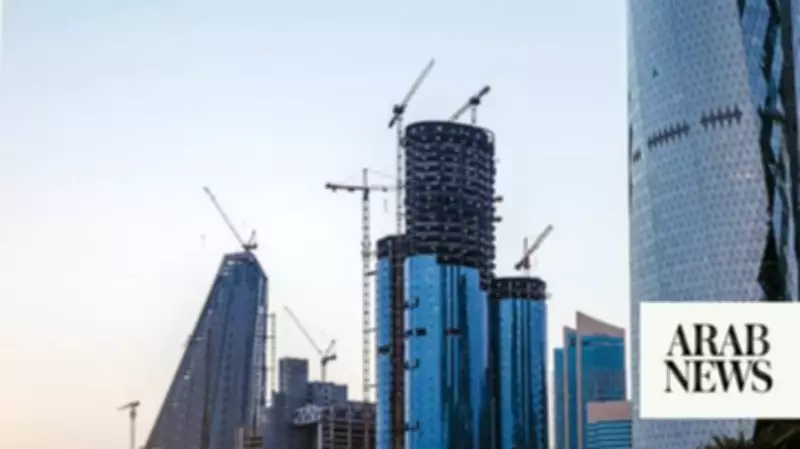
Saudi Real Estate Market Records 1.6% Price Decline in First Quarter 2026
The Saudi Arabian real estate market experienced a notable downturn in the first quarter of 2026, with official statistics revealing a significant year-on-year price decline. According to data released by the General Authority for Statistics, the Kingdom's real estate price index fell by 1.6 percent compared to the same period in 2025, settling at 103.3 points.
Residential Sector Leads Market Decline
The residential sector, which carries the heaviest weight in the overall index, was primarily responsible for the market's downward trend. Residential property prices plummeted by 3.6 percent year-on-year, driven by substantial decreases across multiple property types. Residential land prices saw the sharpest decline at 3.9 percent, while villa prices dropped by 6.1 percent and apartment prices fell by 1.1 percent. Interestingly, residential floor prices bucked the trend with a modest 0.6 percent increase.
When compared to the previous quarter, the residential sector showed some resilience with a 0.5 percent price increase, largely attributed to a 1.7 percent rise in residential land prices during the first three months of 2026.

Commercial Sector Shows Strength Amid Market Challenges
In contrast to the struggling residential market, the commercial sector demonstrated remarkable strength with a 3.4 percent year-on-year price increase. This growth was primarily fueled by a 3.6 percent rise in commercial land plot prices and a 2.6 percent increase in building prices. However, not all commercial property types performed equally well, with gallery and shop prices declining by 3.5 percent.
Quarter-over-quarter analysis reveals a different picture for the commercial sector, with prices decreasing by 2.3 percent compared to the final quarter of 2025. This decline was driven by a 2.4 percent drop in commercial land prices and a 1.3 percent decrease in building prices.
Regional Variations Highlight Market Diversity
The GASTAT report revealed significant regional disparities in real estate performance across Saudi Arabia. The Eastern Region emerged as the strongest performer with a substantial 6.9 percent price increase, followed by Najran at 3.5 percent, Tabuk at 1.5 percent, and Asir at 1.1 percent.
Conversely, several regions experienced significant price declines:
- Al-Baha recorded the steepest drop at 9.2 percent
- Hail followed with an 8 percent decrease
- Northern Borders region saw a 6.6 percent decline
- Al-Qassim experienced a 5.1 percent reduction
- Riyadh region, despite government interventions, recorded a 4.4 percent decline
- Makkah region saw a more modest 0.7 percent decrease
Government Measures and Market Outlook
The market decline coincides with government efforts to stabilize property prices, particularly in the capital city. In September 2025, the Saudi cabinet introduced new regulations aimed at controlling rising rents in Riyadh, including a five-year freeze on rent increases for both residential and commercial properties within the city's urban boundaries.
These regulatory measures come at a crucial time as Saudi Arabia continues to pursue its Vision 2030 economic diversification agenda, which identifies real estate development as a key pillar for reducing oil dependency and establishing the Kingdom as a global business and tourism hub.
The Real Estate General Authority maintains an optimistic long-term outlook, projecting the property market to reach $101.62 billion by 2029 with an anticipated compound annual growth rate of 8 percent from 2024. This projection suggests that while short-term fluctuations are occurring, the fundamental growth trajectory of Saudi Arabia's real estate sector remains positive.
The mixed performance across sectors and regions indicates a complex market environment where commercial strength is partially offset by residential weakness, creating opportunities for strategic investment while presenting challenges for homeowners and residential developers.