Pakistan's Climate Crisis: A Nation on the Front Lines
For decades, discussions about climate change in Pakistan have echoed through conference halls, filled policy documents, and shaped government strategies. Yet while these debates persist, the tangible reality of climate change unfolds quietly—and often painfully—across the entire country. From the majestic glaciers of the Himalayas and Karakoram to the flood-prone plains of the Indus River, climate change has become an inescapable daily reality for millions. Farmers battle to salvage crops amid increasingly unpredictable seasons, cities swelter under relentless heatwaves, and wildlife struggles for survival on the brink of extinction. Collectively, these events paint a sobering portrait of a nation positioned on the front lines of a rapidly warming planet.
The Melting Mountains: Glacial Retreat and Its Consequences
The story of Pakistan's climate crisis begins high in the northern mountains. Pakistan's northern ranges, home to some of the world's largest glaciers outside the polar regions, are undergoing transformations that scientists describe as unprecedented. According to data from the Pakistan Meteorological Department, glaciers in the Karakoram and Himalayan regions are retreating at an accelerated pace. These frozen reservoirs serve as the primary source for the Indus River, which functions as Pakistan's lifeline for agriculture, hydropower generation, and urban water supply systems.
As the ice melts faster, the timing and volume of river flows are becoming increasingly erratic and unpredictable. Furthermore, unstable glacial lakes, swelling behind fragile natural dams, pose sudden and catastrophic threats to mountain communities. In recent years, glacial lake outburst floods have caused significant damage to homes, roads, and agricultural land, leaving residents trapped between rising waters and crumbling infrastructure with limited options for escape or recovery.

Flooding Plains: Recurring Catastrophes and Incremental Erosion
Once these glacial waters reach the plains, the consequences multiply dramatically. The devastating floods of 2010 remain etched in national memory, affecting over 20 million people, claiming more than 1,700 lives, and washing away vast expanses of fertile farmland. Twelve years later, the 2022 floods repeated this tragedy on an almost equal scale, displacing approximately 33 million people and submerging approximately one-third of the entire country under water.
Even during non-catastrophic years, seasonal floods remain relentless, gradually creeping into riverine communities and incrementally eroding livelihoods and stability. For many affected residents, rebuilding has become a Sisyphean task—homes repaired today are often inundated again tomorrow, creating cycles of displacement and despair that undermine long-term recovery efforts.
Parched Lands: Drought and Water Scarcity in Southern Regions
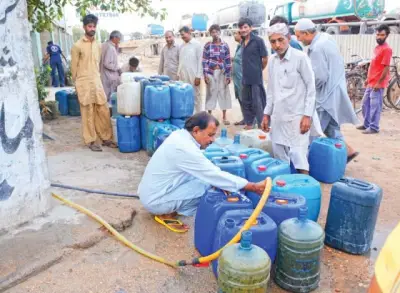
While floods represent one extreme of Pakistan's climate crisis, the opposite extreme—prolonged drought—is taking a severe toll across Sindh and Balochistan provinces. Agricultural reports from 2022-2023 reveal that crop yields in these regions fell by 25-40% due to erratic rainfall patterns and rapidly shrinking water sources. Wells are running dry, pastures are diminishing, and farmers are traveling increasingly long distances in search of water for basic needs.
Children and elderly populations bear the brunt of these water shortages, often walking for hours each day to fetch water for drinking, cooking, and sustaining livestock. In these regions, climate change is not merely a headline event or abstract concept—it is a daily grind that silently undermines nutrition security, household income, and the fundamental dignity of entire communities.
Scorching Cities: Heatwaves as the New Normal
While some parts of Pakistan face flooding and others endure drought, a third crisis—extreme heat—is emerging as a disturbing new normal. Meteorological data indicates that Pakistan's average summer temperatures have risen by more than 1.2°C over the past three decades, with extreme heatwaves becoming both longer in duration and more frequent in occurrence.

Karachi has endured multiple deadly heatwaves that overwhelmed hospital systems and claimed numerous lives, particularly among outdoor laborers and elderly populations. Similarly, Lahore's streets shimmer under intense solar radiation, making even routine outdoor work hazardous. The consequences extend far beyond human discomfort: elevated temperatures stress agricultural crops, dramatically increase electricity demand for cooling, and disrupt daily routines, thereby compounding the economic and social costs of climate change across multiple sectors.
Ecological Disruption: Wildlife Under Threat
The human story represents only one dimension of Pakistan's climate crisis. The nation's diverse wildlife is confronting equally profound challenges. In the Hindu Kush and Karakoram mountain ranges, the elusive snow leopard is increasingly confined to shrinking habitats, forced to move higher up the mountains as warmer winters and unpredictable snowfall patterns alter prey availability and distribution.
Similarly, endangered Himalayan species such as the ibex and Himalayan monal face comparable pressures from habitat alteration and climate-induced ecological shifts. The decline of these species represents not merely a loss of biodiversity but creates reverberations throughout entire ecosystems, affecting grazing lands, water regulation mechanisms, and even the livelihoods of communities that depend directly on natural resources for sustenance and economic activity.
The Path Forward: From Rhetoric to Practical Action
Pakistan is experiencing climate change across every dimension—glacial melt, catastrophic floods, prolonged droughts, deadly heatwaves, and widespread ecological disruption. These interconnected phenomena represent clear signals of a climate system in crisis. Yet despite this unfolding reality, policy responses have consistently lagged behind the accelerating pace of climate impacts.
Awareness campaigns, international conferences, and policy frameworks have failed to translate into meaningful ground-level resilience building. Communities remain dangerously exposed, infrastructure remains fragile, and livelihoods remain precarious in the face of climate variability. Action must therefore move decisively beyond rhetoric toward implementation.
Pakistan requires climate strategies that are:
- Practical and implementable with clear timelines and accountability mechanisms
- Inclusive of vulnerable populations including women, children, and marginalized communities
- Context-specific to address regional variations in climate impacts
Flood-prone communities require reinforced river embankments, improved early warning systems, and comprehensive emergency preparedness measures. Drought-stricken regions need sustainable irrigation technologies, rainwater harvesting infrastructure, and support for climate-resilient crop varieties. Urban centers must adapt to rising temperatures through green infrastructure development, improved public transportation systems, and comprehensive heat management strategies.
Simultaneously, wildlife protection must be systematically integrated into climate planning frameworks, ensuring that conservation efforts and human development initiatives proceed in tandem rather than in conflict. Ultimately, the story of climate change in Pakistan transcends mere numbers, forecasts, and statistics about lost agricultural hectares—it is fundamentally the story of real people, of lives disrupted, resilience tested, and futures uncertain in the face of an escalating planetary crisis.