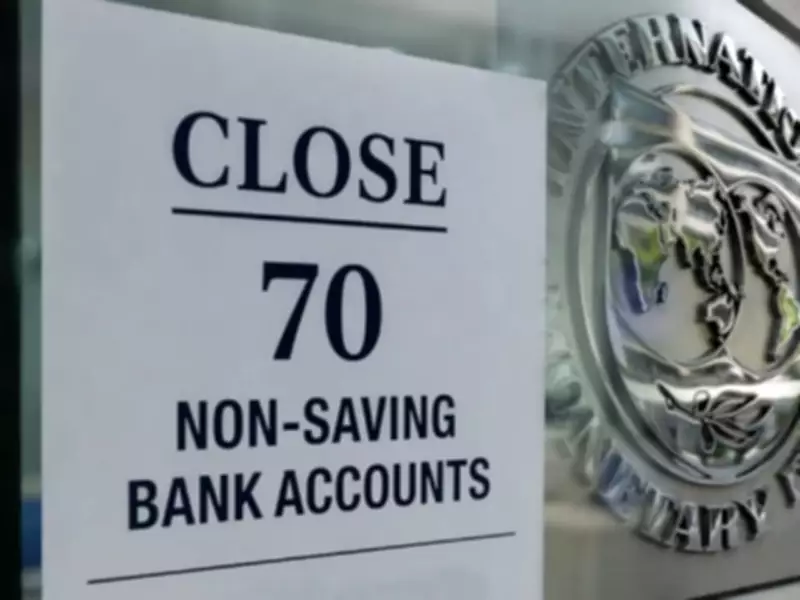
ISLAMABAD: Pakistan has reached an agreement with the International Monetary Fund (IMF) to close 70 bank accounts of government departments and transfer approximately Rs300 billion in balances to the national treasury. This move is expected to help consolidate public funds and reduce the cost of debt. Additionally, Pakistan has committed to reducing debt refinancing risks by extending the maturity period of domestic debt to four years and two months by June 2027, up from about two and a half years at the start of the $7 billion bailout package.
Details of the Agreement
According to the staff-level agreement reached last month, around 70 non-interest bearing bank accounts with average balances of Rs300 billion will be shifted to the treasury single account. This is in addition to 242 accounts previously transferred, which held around Rs200 billion. Finance ministry officials stated that they plan to close all remaining non-interest bearing accounts, estimated at around 250, and retain about Rs400 billion in balances.
IMF's Stance and Government's Position
The IMF has long demanded that government departments, state-owned entities, and autonomous bodies consolidate their cash holdings into a single treasury account. However, during this program, the issue was not a top priority, as some new accounts were opened and closed ones reactivated. The IMF argues that many government entities keep money in private bank accounts, earning interest, while the government borrows from these banks at higher rates. The finance ministry, however, maintained that it cannot force independent authorities to surrender their interest-bearing accounts, as it could compromise their financial autonomy.

Phased Implementation
In the first phase, the finance ministry has agreed to close 70 non-saving accounts of government ministries and attached departments, transferring an estimated Rs300 billion to the national exchequer. Overall, the government plans to close all non-saving accounts, moving roughly Rs400 billion to the federal consolidated fund. In the second phase, saving accounts of ministries and departments will be targeted, but autonomous bodies may be exempted. The finance ministry believes that autonomous bodies not reliant on the federal budget should retain their bank accounts.
Future Framework
The finance ministry will release a framework with timelines for closing federal government bank accounts and shifting balances to the treasury single account. Pakistan has assured the IMF it will continue consolidating cash holdings and has abandoned plans for a sector study on which accounts to close, instead following the Public Finance Management Act and Treasury Single Account rules. The Senate Standing Committee on Finance recently expressed concerns over 200 state-owned entities and regulators holding Rs1 trillion in private bank accounts, violating the Public Finance Management Act 2019.
Debt Management Reforms
Pakistan has also agreed to increase the domestic debt maturity period to four years and two months by June 2027, reducing refinancing risks and gross financing needs. The current ratio is about three and a half years, up from two and a half years before the program. Pakistan assured the IMF it would address debt vulnerabilities from high gross financing needs and the sovereign-bank nexus. The finance ministry has enhanced transparency in provincial participation in government securities auctions and will continue to gradually retire domestic debt held by the State Bank of Pakistan. It is also prioritizing the development of the domestic government securities market and widening the investor base. The government will refrain from any issuance that could expose the debt portfolio to excessive risks. The debt management office is finalizing plans to reform the retail debt program and explore digital channels for more efficient debt securities distribution.