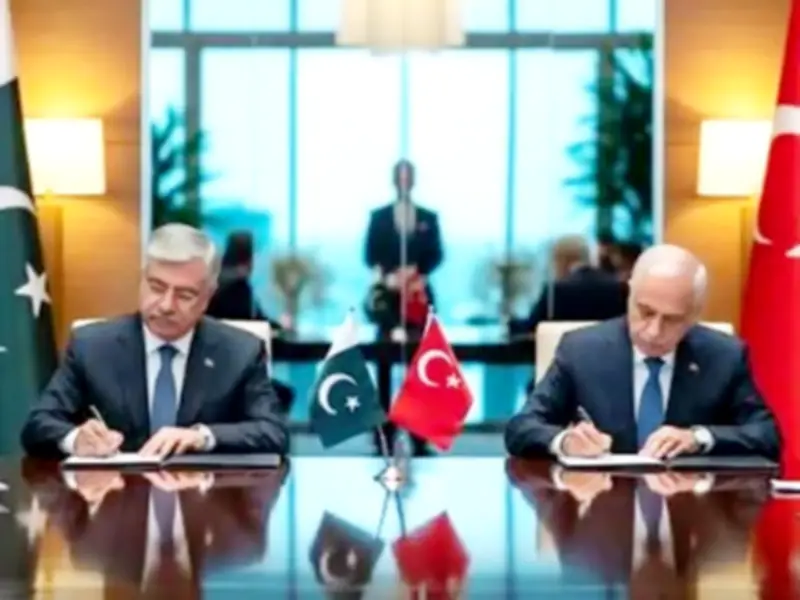
During Prime Minister Shehbaz Sharif's ongoing visit to Turkiye, the Turkish Ministry of Trade has raised serious concerns over the methodology used by Pakistan's National Tariff Commission (NTC) in its anti-dumping investigation of soda ash imports from Turkiye and Kenya. The Turkish authorities argue that the NTC deviated from its past practice by applying a 10% profit margin instead of the 5% margin used in previous investigations, resulting in an inflated injury margin and providing undue protection to domestic industry at the expense of downstream producers.
Turkish Objections to NTC Methodology
In an official letter dated July 2, 2026, addressed to the NTC, Turkiye's Directorate General for Imports stated that the commission had applied a 10% profit margin while calculating the non-injurious price for the domestic industry in its preliminary determination. The Turkish authorities maintained that this approach lacks consistency with the NTC's established practice and urged the commission to revise the calculation by applying a 5% profit margin in line with previous determinations. Sources told The Express Tribune that there were apprehensions that Turkiye's Ministry of Trade may take up the matter with the Pakistani delegation on a priority basis.
Background of the Anti-Dumping Investigation
Pakistan initiated the anti-dumping investigation into imports of soda ash from Turkiye and Kenya on July 18, 2025, and issued its preliminary determination, including provisional anti-dumping duties, on January 15, 2026. The Turkish side has requested the NTC to take its comments into account before reaching a final determination. Recently, the embassy of Turkiye urged the NTC to ensure a fair and objective evaluation in the investigation. In a letter to the NTC chairman, the embassy's Office of the Commercial Counsellor said the Turkish government had already submitted its official views, assessments, and responses to the allegations made by Pakistani petitioners, along with replies provided by Turkish exporting companies to the NTC questionnaire.

Conflict of Interest Allegations
International Silicate (Private) Limited has formally requested the NTC chairman to order an independent investigation into what it describes as a serious conflict of interest and administrative bias in the ongoing anti-dumping investigation. In a letter dated July 2, 2026, the company claimed that the preliminary determination contains biased calculations and warned that imposing anti-dumping duties could significantly increase raw material costs for downstream industries, potentially leading to factory closures, job losses, and wider economic consequences.
Impact on Downstream Industries
Turkish authorities noted that the NTC's deviation from its past practice amounts to providing undue protection to an industry producing intermediary goods, which are consumable by the downstream industry, to the disadvantage of downstream industries producing high value-added finished products. The downstream industries, which rely on soda ash as a raw material, could face higher costs if anti-dumping duties are imposed, affecting their competitiveness and viability.