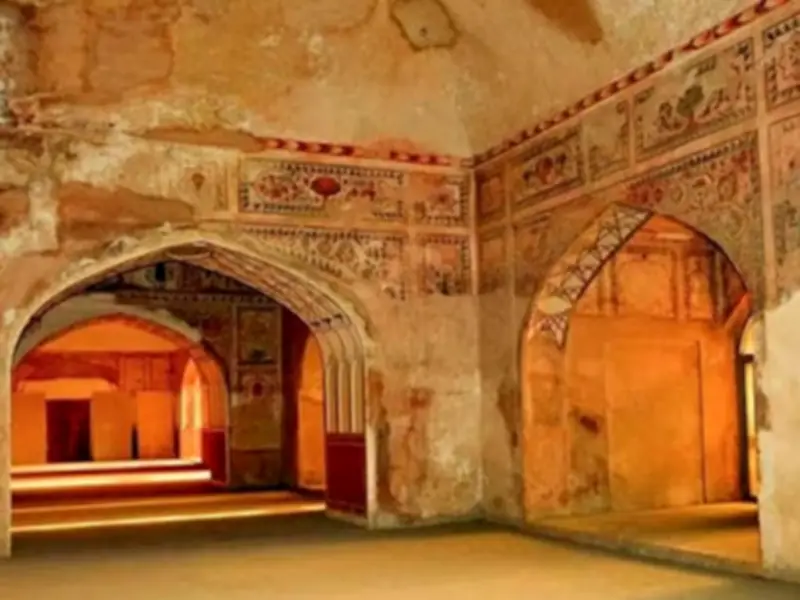
LAHORE: Few visitors to the Lahore Fort realize that beneath their feet lies a maze of underground chambers and corridors that have remained shrouded in darkness and mystery for centuries. The subterranean network consists of dozens of interconnected rooms and passageways that have re-emerged during restoration efforts.
Over time, varying theories have developed around their purpose. Some believe they served as shelter for members of the Mughal royal family during times of crisis. Others suggest they may have functioned as detention cells or punishment chambers for prisoners. Yet many historians argue that the structures were simply part of the fort's complex architectural and defensive system.
"This is one of those rare chapters of history where many pages are missing," says Aga Khan Cultural Services Pakistan Conservation Manager Naheed Iftikhar, standing in one of the fort's dimly lit underground chambers. "Historical records do not provide clear evidence about how these spaces were used," she explains.

According to her, when restoration work began, the chambers were buried beneath layers of soil, dust and moisture. Several ceilings had deteriorated, while deep cracks had appeared in many walls. "We knew there was something unusual here," she recalls. "But as debris was removed, new stories seemed to emerge with every layer."
Above ground, the fort presents visitors attractions such as the Sheesh Mahal, Alamgiri Gate and a range of other magnificent Mughal structures. Descending underground, however, reveals a different landscape. Narrow staircases lead to vaulted passageways and labyrinth-like corridors connecting approximately 35 chambers. The arrangement creates the impression of a second fort hidden beneath the first.
Some rooms contain no visible source of natural light or ventilation. Niches carved into walls suggest places where oil lamps may once have illuminated the darkness. Experts believe sections of the underground complex were constructed during different periods. Some appear to date back to the reign of Emperor Jahangir, while others display architectural features associated with the era of Shah Jahan.