A fragile calm appeared to return to the Middle East on Monday after Israel and Iran signaled a halt to their latest exchange of attacks, while US President Donald Trump intensified efforts to secure what he described as an "immediate ceasefire" between the two regional adversaries.
The developments came after fresh strikes threatened to unravel a truce reached two months ago following a conflict that has shaken global energy markets, disrupted international shipping routes, and heightened fears of a wider regional war. Both Israel and Iran indicated they were suspending offensive operations for now, although each warned that further attacks would trigger a forceful response.
Iran's Warning and Israel's Stance
Iran said that any new Israeli action, particularly in southern Lebanon, would be met with "much more severe and crushing measures than before." Israeli Prime Minister Benjamin Netanyahu similarly suggested the latest round of fighting had concluded while warning that Israel remained prepared to retaliate if Iran launched new attacks. "If Iran makes the mistake and returns to attacking us, we will respond with force," Netanyahu said in a video statement.

US Diplomatic Intervention
The latest flare-up represented the most serious escalation since the April ceasefire and prompted urgent diplomatic intervention from Washington, where Trump publicly urged both sides to stop hostilities. Trump said Israel and Iran were seeking an "immediate CEASEFIRE." Posting on social media, Trump also claimed that negotiations aimed at a broader peace agreement were advancing. He warned, however, that "ignorance or stupidity" could still derail efforts to secure a lasting settlement. "Final negotiations on peace are proceeding," Trump wrote.
According to US and Israeli officials cited by international media, Trump personally intervened to prevent a potentially larger Israeli military response. Sources said Netanyahu had been preparing a significant strike on Tehran following Iranian missile launches when Trump telephoned him and urged restraint. It was reportedly the second conversation between the two leaders within hours. While Netanyahu ultimately announced a halt to attacks, reports suggested he had initially resisted US requests to avoid retaliation, arguing that Israel needed to respond to Iranian missile fire.
The Escalation and Aftermath
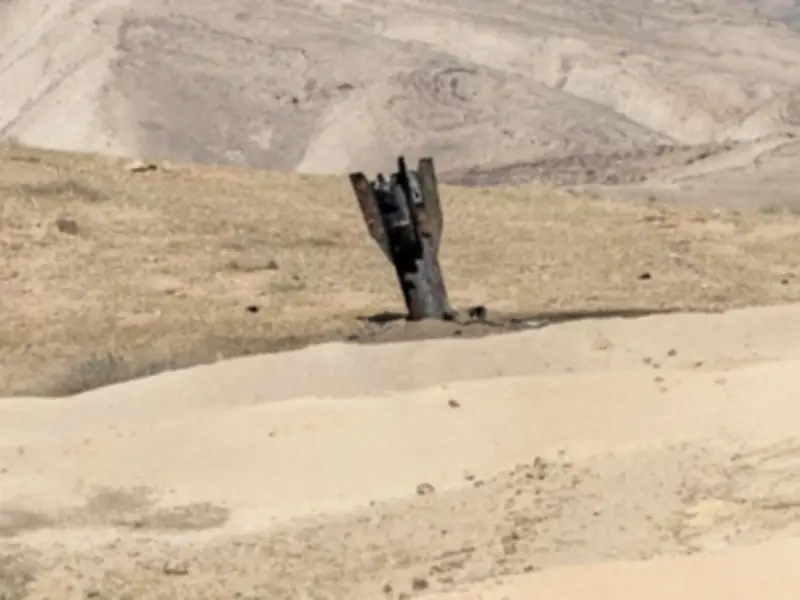
The latest confrontation began after Israel carried out strikes in central and western Iran. Israeli officials confirmed attacks on facilities linked to Iran's missile program, a petrochemical plant in Mahshahr that Israel alleged was involved in producing materials for ballistic missiles, and mobile missile launchers. Iranian media reported explosions across several cities, including Tehran, and said at least 15 people were injured. Iran responded with multiple missile barrages aimed at Israel. Iran's Revolutionary Guard Corps claimed responsibility for attacks targeting two Israeli military bases.
Tehran accused Washington of bearing responsibility for the escalation. "No one believes that the Israeli regime would take any action without coordination with the United States," Iranian Foreign Ministry spokesman Esmail Baghaei told reporters.
Despite the renewed violence, signs emerged that both countries were attempting to return to normal conditions. Iranian authorities announced that airspace restrictions affecting civilian flights had been lifted and operations at Tehran's international airport were expected to resume.
Broader Regional Tensions
The military confrontation unfolded against a backdrop of continuing economic and strategic tensions across the region. One of the most significant concerns remains Iran's control over the Strait of Hormuz, a vital maritime corridor through which roughly one-fifth of global crude oil supplies normally pass. In his social media post, Trump said the US blockade of Iranian ships would continue.
The European Union (EU) announced sanctions against two Iranian individuals and a unit of the Islamic Revolutionary Guard Corps Navy, marking the first use of new EU powers aimed at protecting freedom of navigation. Iranian Deputy Foreign Minister Kazem Gharibabadi dismissed the measures as a "political and hypocritical" move and vowed that Tehran would continue asserting its sovereign rights over the strategic passage.

Meanwhile, tensions in Gulf waters intensified after the US military disabled an Iran-bound oil tanker in the Gulf of Oman. According to US Central Command, the Palau-flagged tanker M/T Marivex ignored repeated instructions and attempted to breach the blockade imposed on Iranian ports. An American fighter aircraft struck the vessel's engineering and steering systems, rendering it unable to continue its voyage. Indian authorities confirmed that all 24 Indian crew members aboard the ship were safe despite a fire that broke out after the strike.
Iranian Defiance and Regional Alliances
Iranian officials responded defiantly to continuing American pressure. Mohammad Baqer Qalibaf, a senior Iranian political figure involved in negotiations with the West, said Tehran would ultimately defeat the US blockade and achieve stable security. Separately, the commander of Iran's Quds Force, Esmaeil Qaani, declared that a new regional security belt involving Iran-aligned groups would stretch from the Strait of Hormuz to the Bab al-Mandeb Strait near Yemen.
The conflict's regional dimensions were underscored further when Yemen's Iran-backed Houthi movement claimed responsibility for an attack on Israel and warned that vessels linked to Israel could once again become targets in the Red Sea.
Preparations for Prolonged Confrontation
Despite the tentative pause in fighting, military officials on both sides indicated preparations remained in place for a prolonged confrontation if diplomacy fails. Iranian media quoted military sources as saying the country was fully prepared for a long-term conflict involving both Israel and US interests in the region.